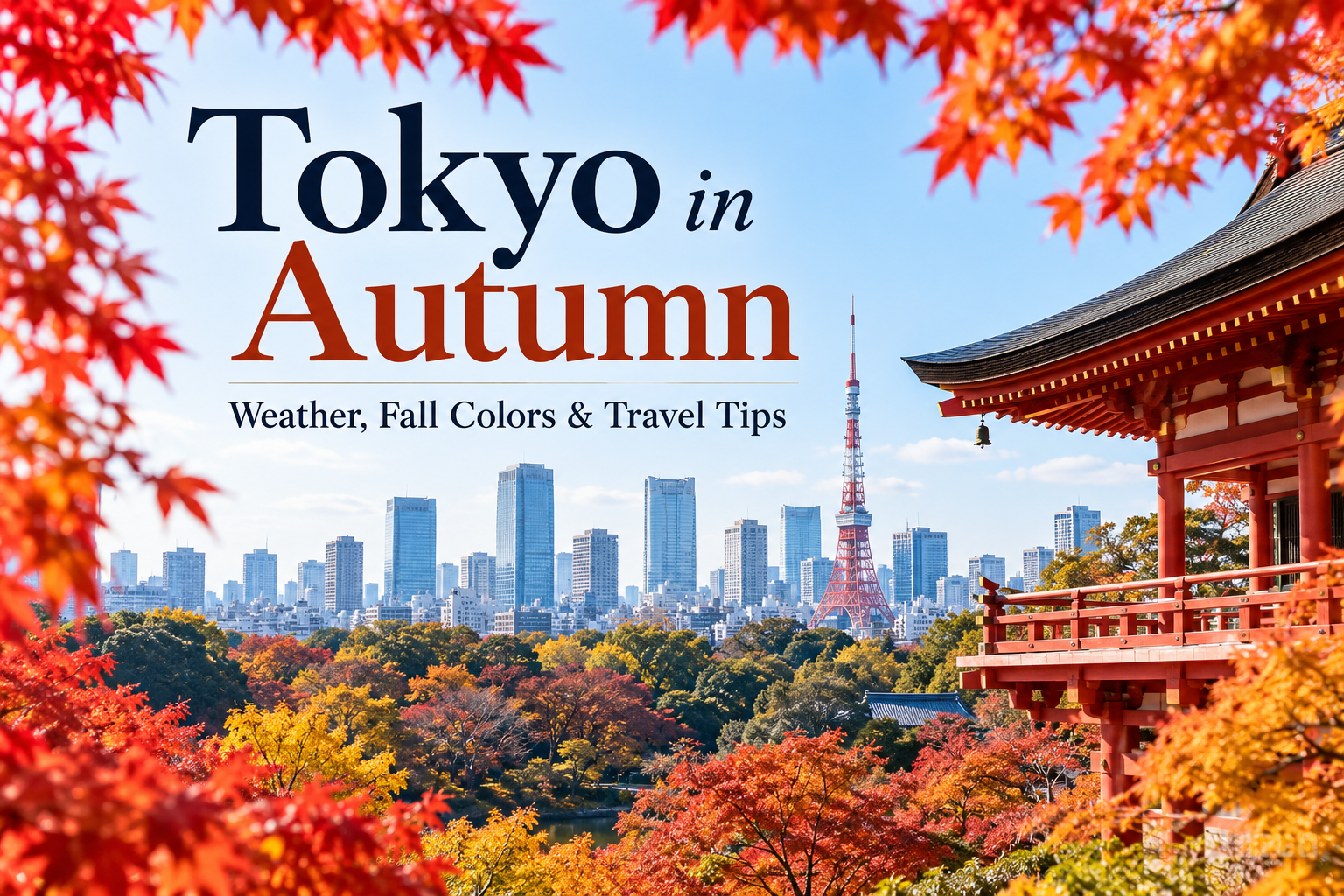
Autumn is one of the most comfortable and visually beautiful seasons to visit Tokyo. As the intense summer heat gradually fades, the city becomes easier to explore on foot, and parks and gardens begin to display seasonal colors.
Tokyo’s autumn generally covers September through November, but conditions change significantly throughout the season. September can still feel hot and humid, October usually brings milder weather, and November often offers cooler temperatures and some of the best opportunities to see autumn foliage.
Fall colors are one of the main reasons travelers choose this season. Ginkgo and maple trees transform parks, gardens, temple grounds, and streets across Tokyo, although the timing of peak colors varies every year.
Autumn weather is generally favorable for sightseeing, but travelers should still prepare for rain and changing temperatures. Tropical weather systems can also occasionally affect Japan, particularly earlier in the season.
This guide explains what Tokyo is like in autumn, including weather in September, October, and November, fall foliage, what to wear, crowds, costs, seasonal food, and practical travel tips.
Whether you want to see Tokyo’s autumn colors or simply prefer comfortable conditions for exploring the city, understanding the differences between each month will help you choose the right time for your trip.
Is Autumn a Good Time to Visit Tokyo?
Autumn is one of the best times to visit Tokyo, especially for travelers who prefer comfortable sightseeing weather and seasonal scenery.
As summer ends, temperatures generally become milder and walking around the city becomes more comfortable. October and November are particularly well suited to exploring neighborhoods, parks, gardens, temples, and outdoor attractions.
Autumn foliage is another major attraction. Ginkgo trees, Japanese maples, and other trees add yellow, orange, and red colors to parks, gardens, and streets across Tokyo.
However, autumn conditions vary considerably between September and November. September can still feel like summer, while November is much cooler. Rain and severe weather can also occasionally affect travel plans, particularly earlier in the season.
Popular foliage locations can become crowded when colors are near their peak, especially on weekends and public holidays.
Overall, autumn is an excellent season for a first trip to Tokyo, but choosing the right month depends on whether you prioritize warmer weather, comfortable sightseeing conditions, or fall colors.
Advantages of Visiting Tokyo in Autumn
- Comfortable weather for sightseeing, especially in October and November
- Beautiful autumn foliage
- Excellent conditions for walking and outdoor attractions
- Seasonal foods and experiences
- Good conditions for day trips from Tokyo
- Generally easier outdoor sightseeing than during the hottest summer months
- Parks and traditional gardens can be particularly scenic
Disadvantages of Visiting Tokyo in Autumn
- September can still be hot and humid
- Rain or severe weather can occasionally affect travel plans
- Popular foliage locations can become crowded
- Peak fall color timing cannot be guaranteed
- Temperatures can vary significantly between September and November
- Accommodation demand may increase during popular travel periods
Tokyo Autumn Weather
Tokyo’s autumn weather changes significantly between September and November. September can still feel like summer, while October generally becomes milder and November brings noticeably cooler conditions.
This gradual change makes the best month dependent on your priorities. Travelers looking for warmer weather may prefer earlier autumn, while those hoping for cooler sightseeing conditions and fall colors may prefer later in the season.
Weather varies from year to year, so check the latest forecast shortly before your trip.
Tokyo Weather in September
September is the beginning of autumn on the calendar, but Tokyo can still feel hot and humid, particularly during the first half of the month.
Daytime temperatures can remain around 25–30°C (77–86°F), although conditions generally become milder as the month progresses.
Lightweight and breathable clothing is still useful, and travelers should continue to pay attention to hydration and sun protection on hotter days.
September can also experience periods of heavy rain or tropical weather systems, so check current weather and transportation information during your trip.
Tokyo Weather in October
October generally brings more comfortable conditions for sightseeing.
Daytime temperatures are often around 20–25°C (68–77°F), with lower temperatures becoming more common later in the month.
The milder weather makes October particularly suitable for walking between attractions, exploring neighborhoods, and spending longer periods outdoors.
A light jacket or additional layer can be useful during cooler mornings and evenings.
Tokyo Weather in November
November is noticeably cooler and often provides excellent conditions for sightseeing.
Daytime temperatures are commonly around 15–20°C (59–68°F), while mornings and evenings can feel considerably cooler.
Jackets, sweaters, and layered clothing become more useful during this month.
November is also an important period for autumn foliage in Tokyo, although the exact timing and intensity of fall colors vary every year.
Regardless of the month, layering is one of the easiest ways to prepare for Tokyo’s changing autumn temperatures. Check the short-term forecast before packing, especially if your trip falls near the beginning or end of the season.
When Is Autumn Foliage Season in Tokyo?
Autumn foliage in Tokyo generally appears later than many travelers expect. While September marks the beginning of autumn, the most noticeable fall colors in central Tokyo usually develop much later in the season.
In many years, late November into early December is an important period for autumn colors in Tokyo. However, the exact timing varies depending on temperatures, weather conditions, location, and the type of tree.
Ginkgo trees often create bright yellow scenery, while Japanese maples are known for red and orange leaves. Because different trees change color at different times, Tokyo’s autumn scenery develops gradually rather than reaching its peak everywhere on the same day.
Travelers visiting in October should not assume that Tokyo will already have peak autumn foliage. October can offer excellent sightseeing weather, but many famous fall-color locations may still be predominantly green.
If seeing autumn leaves is one of your main reasons for visiting Tokyo, later November can improve your chances, but peak conditions can never be guaranteed far in advance.
Fall Color Timing Changes Every Year
The timing of autumn foliage depends heavily on weather conditions, particularly temperatures as the season progresses.
Warmer conditions can delay color changes, while cooler weather may cause leaves to change earlier. Conditions can also differ between parks, gardens, streets, and nearby mountain areas.
For this reason, check current foliage reports and official information shortly before your trip rather than relying only on historical dates.
If your travel dates are fixed, do not make peak foliage the only goal of your visit. Tokyo’s comfortable autumn weather, neighborhoods, gardens, food, cultural attractions, and day trips can still make the season an excellent time to travel even if the leaves have not reached their strongest colors.
Best Places to See Autumn Leaves in Tokyo
Tokyo offers many places to enjoy autumn foliage, from traditional Japanese gardens to large parks and tree-lined avenues.
Different locations feature different types of trees, so the colors and best viewing periods do not necessarily occur at the same time. Checking current foliage conditions before visiting can help you choose the best locations during your trip.
Meiji Jingu Gaien
Meiji Jingu Gaien is one of Tokyo’s most recognizable autumn locations, particularly because of its famous avenue lined with ginkgo trees.
As the leaves change color, the avenue becomes filled with bright yellow scenery and attracts many visitors and photographers.
It can become extremely crowded when the colors are at their best, so visiting earlier in the day can provide a more comfortable experience.
Shinjuku Gyoen
Shinjuku Gyoen combines spacious lawns, landscaped gardens, and a variety of trees, making it an excellent place to experience autumn scenery in central Tokyo.
Because different tree varieties change color at different times, visitors may be able to enjoy seasonal colors across a relatively broad period.
Opening hours, admission fees, and entry requirements can change, so check current official information before visiting.
Rikugien Gardens
Rikugien is a traditional Japanese landscape garden and one of Tokyo’s most atmospheric places to enjoy autumn foliage.
Japanese maples and other trees create red, orange, and yellow scenery around ponds, paths, and traditional garden landscapes.
Seasonal evening illuminations may also be offered in some years, but schedules and admission arrangements can change. Confirm current information before planning your visit around an illumination event.
Koishikawa Korakuen
Koishikawa Korakuen is another traditional Japanese garden where visitors can combine autumn colors with ponds, bridges, and carefully designed landscapes.
Its central location makes it relatively easy to include in a Tokyo sightseeing itinerary.
The garden is particularly appealing to travelers who want to experience fall foliage in a quieter, more traditional setting than a busy shopping or entertainment district.
Ueno Park
Ueno Park offers autumn scenery alongside museums, temples, and other attractions, making it convenient for first-time visitors.
Ginkgo and other trees add seasonal color to the park, and you can easily combine a foliage walk with sightseeing elsewhere in Ueno.
Because Ueno is a major tourist area, expect larger crowds on weekends and during particularly attractive foliage periods.
Want to explore more of the city while enjoying the season? See our Best Areas to Visit in Tokyo for First-Time Visitors to compare Ueno, Shinjuku and other major Tokyo neighborhoods.
Best Things to Do in Tokyo in Autumn
Autumn is an excellent season for exploring Tokyo because the cooler weather makes walking and outdoor sightseeing more comfortable than during the hottest summer months.
Fall foliage is one of the main attractions, but there are many other ways to experience Tokyo during September, October, and November.
Some of the best things to do in Tokyo during autumn include:
- Walk through parks and traditional Japanese gardens
- See ginkgo and maple trees as they change color
- Explore neighborhoods such as Asakusa, Ueno, Shibuya, and Shinjuku
- Visit temples and shrines in comfortable weather
- Spend time at outdoor observation areas and city viewpoints
- Try seasonal Japanese food and sweets
- Visit museums and cultural attractions
- Take a day trip outside Tokyo
- Enjoy seasonal events and evening illuminations when available
October and November are particularly well suited to walking-based sightseeing. Instead of rushing between distant attractions, consider grouping nearby neighborhoods together and spending more time exploring each area on foot.
Autumn can also be an excellent season for day trips. Destinations outside central Tokyo may experience fall colors at different times depending on their elevation and climate, giving travelers additional opportunities to enjoy seasonal scenery.
Seasonal events and illuminations change from year to year, so check current schedules before planning your itinerary around a specific event.
Looking for more sightseeing ideas? See our Best Things to Do in Tokyo for First-Time Visitors for cultural experiences, food, shopping, city views, and other highlights to add to your itinerary.
What to Wear in Tokyo in Autumn
What you should wear in Tokyo during autumn depends heavily on the month you visit.
September can still feel like summer, October is generally milder, and November often requires warmer layers, particularly in the morning and evening.
The most practical strategy is to check the forecast shortly before your trip and use clothing that can be layered as temperatures change throughout the day.
What to Wear in September
September can still be hot and humid, especially earlier in the month.
Consider wearing:
- Lightweight and breathable shirts
- Light pants, skirts, or other comfortable clothing
- Comfortable walking shoes
- A hat and sunglasses on hot or sunny days
- A light outer layer for cooler evenings or air-conditioned spaces
Rain protection such as a compact umbrella can also be useful.
What to Wear in October
October usually brings more comfortable temperatures and is well suited to layered clothing.
Consider bringing:
- Long-sleeved shirts or lighter tops
- A light jacket or cardigan
- Long pants or other comfortable walking clothes
- Comfortable walking shoes
- A compact umbrella
Mornings and evenings can feel cooler than the afternoon, particularly later in the month.
What to Wear in November
November is noticeably cooler, so warmer layers become more important.
Consider bringing:
- Sweaters or long-sleeved tops
- A jacket or light-to-medium coat
- Long pants
- Comfortable walking shoes
- Layers that can be added or removed during the day
Travelers visiting toward the end of November should be prepared for colder mornings and evenings.
Regardless of the month, comfortable footwear is essential. Autumn’s pleasant weather makes walking especially enjoyable, and a typical sightseeing day in Tokyo can involve considerably more walking than first-time visitors expect.
What to Pack for Tokyo in Autumn
Packing for Tokyo in autumn requires some flexibility because weather conditions can differ significantly between September and November.
September may still require summer-style clothing, while travelers visiting in November should prepare for noticeably cooler temperatures. Layering is therefore one of the most practical approaches.
Consider packing:
- Comfortable walking shoes
- Clothing that can be layered
- A light jacket or cardigan
- A warmer jacket for November
- A compact umbrella
- A small day bag
- A reusable water bottle
- Sunglasses
- A portable phone charger
- Basic rain protection
- Any personal medications you normally use
If you are visiting in September, lightweight and breathable clothing may still be important because hot and humid days are possible.
For October, a combination of lighter clothing and an additional outer layer usually provides more flexibility as temperatures change between morning, afternoon, and evening.
By November, sweaters and a warmer jacket become more useful, particularly if you plan to spend significant time outdoors after sunset.
Avoid packing based only on the word “autumn.” Tokyo’s weather at the beginning of September can be very different from conditions at the end of November, so check the forecast shortly before departure and adjust your clothing accordingly.
Not sure what else to bring? See our Tokyo Packing List: What to Bring for Your First Trip to Japan for a complete checklist covering clothes, shoes, electronics, travel documents, medicine, and other essentials.
How Crowded Is Tokyo in Autumn?
Autumn is a popular season for visiting Tokyo, but crowd levels vary depending on the month, location, weekends, public holidays, and foliage conditions.
September may be less focused on autumn sightseeing because temperatures can still feel like summer. By October, more comfortable weather makes outdoor attractions increasingly popular.
November can become particularly busy at famous autumn foliage locations as leaves begin to change color. Gardens, parks, and ginkgo-lined streets may attract large numbers of visitors when conditions are near their best.
However, Tokyo is a large city, and crowds are not distributed evenly. Visiting popular locations earlier in the day and exploring less-famous parks or neighborhoods can make sightseeing more comfortable.
Peak Autumn Foliage Period
Famous foliage locations such as Meiji Jingu Gaien, Shinjuku Gyoen, and Rikugien can become especially crowded when autumn colors are near their peak.
Weekends and public holidays generally attract more visitors, so weekday mornings can be a better choice when your itinerary allows.
Because foliage timing changes every year, avoid assuming that one particular week will always be the busiest. Check current foliage conditions shortly before your visit.
Public Holidays and Weekends
Weekends and Japanese public holidays can increase crowds at popular attractions, shopping areas, parks, and destinations outside Tokyo.
If you plan to take a day trip during a busy autumn weekend, consider starting earlier and checking transportation arrangements in advance.
You do not need to avoid these periods completely, but allowing extra travel time and keeping some flexibility in your itinerary can make the experience easier.
Planning to explore beyond the city during autumn? See our Best Day Trips from Tokyo for First-Time Visitors to compare popular destinations and plan an easy escape from central Tokyo.
Tokyo Autumn Travel Costs
The cost of visiting Tokyo in autumn depends more on your travel dates, accommodation choices, and activities than on the season itself.
October and November are popular months for sightseeing because of the comfortable weather and autumn scenery. Accommodation in convenient areas may therefore become more expensive or have limited availability during busy periods, weekends, and public holidays.
International and domestic flight prices can also vary considerably depending on your route, booking timing, and travel dates.
Everyday expenses such as local transportation, casual meals, convenience stores, and regular attractions do not necessarily become more expensive simply because it is autumn.
If you want to manage your autumn travel budget, consider:
- Booking accommodation early for popular travel periods
- Comparing several neighborhoods before choosing where to stay
- Using trains and subways instead of taxis
- Combining paid attractions with free parks, neighborhoods, temples, and seasonal walks
- Visiting popular foliage locations on weekdays when possible
- Checking transportation and accommodation prices before planning day trips
Many autumn experiences in Tokyo can also be enjoyed for free or at relatively low cost. Walking through parks, exploring neighborhoods, and viewing seasonal trees along public streets can add memorable experiences without significantly increasing your sightseeing budget.
Travelers visiting specifically for autumn foliage should remember that paying more for a particular date does not guarantee peak colors. Foliage conditions change every year.
For a detailed breakdown of accommodation, food, transportation, and sightseeing expenses, see our Tokyo Travel Budget: How Much Does a Trip to Tokyo Cost?
Autumn Food and Seasonal Experiences in Tokyo
Autumn is strongly associated with seasonal food in Japan, making it an excellent time for travelers who want to experience Japanese cuisine beyond the year-round classics.
Restaurants, cafés, convenience stores, department stores, and traditional sweet shops often introduce limited-time products featuring autumn ingredients and flavors.
Seasonal foods and experiences to look for include:
- Sweet potatoes — often enjoyed roasted or used in desserts
- Chestnuts — found in sweets, cakes, and traditional Japanese desserts
- Persimmons — a classic autumn fruit in Japan
- Pears and seasonal fruits
- Mushrooms in seasonal dishes
- Pacific saury and other seasonal seafood
- Autumn-themed wagashi and Japanese sweets
- Seasonal café drinks and desserts
Roasted sweet potatoes, known as yakiimo, are particularly associated with the cooler months and can be found in various forms, from traditional roasted sweet potatoes to modern desserts.
Department store food halls, known as depachika, can also be interesting places to discover seasonal foods. Their displays often change throughout the year, making them an easy way to see what ingredients and flavors are associated with the season.
Autumn is also an excellent time to combine food with outdoor sightseeing. A walk through a garden or park followed by a seasonal meal, café visit, or traditional sweet can provide a simple way to experience both sides of Tokyo’s autumn.
Seasonal menus and products vary by year and location, so treat specific items as discoveries rather than guaranteed offerings.
Want to explore Japanese food beyond seasonal specialties? See our What to Eat in Tokyo: Must-Try Japanese Foods for First-Time Visitors for sushi, ramen, tempura, yakitori, curry, sweets, and more.
Tokyo Autumn Travel Tips
Autumn is one of the easiest seasons for sightseeing in Tokyo, but conditions can change significantly between September and November. A little preparation will help you make the most of the season.
Keep these practical tips in mind:
- Check the weather forecast before packing. September can still be hot, while November requires warmer clothing.
- Check current foliage conditions. Fall colors develop at different times each year and vary by location.
- Visit popular foliage spots earlier in the day. Famous gardens and ginkgo avenues can become crowded during peak periods.
- Use layers. Temperatures can change considerably between morning, afternoon, and evening.
- Carry a compact umbrella. Rain is possible throughout autumn.
- Wear comfortable walking shoes. The milder weather makes autumn ideal for exploring Tokyo on foot.
- Keep your itinerary flexible. If one foliage location is extremely crowded or not yet colorful, consider visiting another park, garden, or neighborhood.
- Plan day trips according to foliage conditions. Areas outside central Tokyo may change color earlier or later because of differences in elevation and climate.
- Check current event information. Seasonal illuminations and events may change their dates, hours, or admission arrangements each year.
If autumn foliage is a major priority, avoid building your entire trip around one predicted peak date. Instead, choose several possible locations and check current conditions as your trip approaches.
This flexibility can also help you take advantage of good weather and spend more time outdoors when conditions are comfortable.
For more practical advice before your trip, see our Tokyo Travel Tips for First-Time Visitors for transportation, money, etiquette, luggage, restaurants, airports, and other essentials.
Is September, October or November Best for Tokyo?
September, October, and November offer very different autumn experiences in Tokyo, so the best month depends on your priorities.
September can be a good choice for travelers who prefer warmer weather, but the beginning of the month may still feel like summer. Heat, humidity, heavy rain, and tropical weather systems can occasionally affect sightseeing plans.
October is an excellent choice for travelers who prioritize comfortable weather and outdoor sightseeing. Temperatures generally become milder, making it easier to explore neighborhoods, parks, temples, and other attractions on foot. However, travelers hoping for peak autumn foliage may find that October is still too early in many parts of central Tokyo.
November is generally the strongest choice for travelers who want both cooler sightseeing weather and a better chance of seeing autumn colors. Later in the month, ginkgo and maple trees may create some of Tokyo’s most attractive seasonal scenery, although peak foliage timing varies every year.
As a simple guide:
| Month | Best For | Main Consideration |
|---|---|---|
| September | Warmer weather and early autumn travel | Heat, humidity, and possible severe weather |
| October | Comfortable outdoor sightseeing | Often too early for peak foliage |
| November | Autumn colors and cooler weather | Popular foliage spots can become crowded |
For many first-time visitors, October offers some of the most comfortable conditions for general sightseeing, while November is the better choice if autumn foliage is one of your main priorities.
September can still be enjoyable, but travelers expecting cool autumn weather should be aware that summer-like conditions may continue, particularly earlier in the month.
If seeing fall colors is important to you, do not choose your travel dates based only on historical averages. Check current foliage reports as your trip approaches because the timing changes every year.
Final Thoughts
Autumn is one of the best seasons to visit Tokyo, offering comfortable sightseeing weather, seasonal food, and beautiful fall scenery.
September, October, and November each provide a different experience. September can still feel like summer, October generally offers some of the most comfortable weather for exploring the city, and November brings cooler temperatures and a better chance of seeing autumn foliage.
For travelers interested in fall colors, remember that peak foliage timing changes every year. Rather than planning your entire trip around one predicted date, keep your itinerary flexible and check current foliage conditions as your visit approaches.
Even if your trip does not coincide with peak colors, autumn remains an excellent time to explore Tokyo’s neighborhoods, parks, gardens, temples, food, and cultural attractions.
Comfortable temperatures also make the season particularly suitable for walking and day trips, allowing first-time visitors to experience more of Tokyo without the intense heat of summer.
With the right timing and preparation, autumn offers an excellent balance of comfortable weather, seasonal scenery, and memorable experiences.
Ready to plan the rest of your trip? Start with our Tokyo Travel Guide for First-Time Visitors for an overview of where to stay, what to do, transportation, food, and other essentials.
