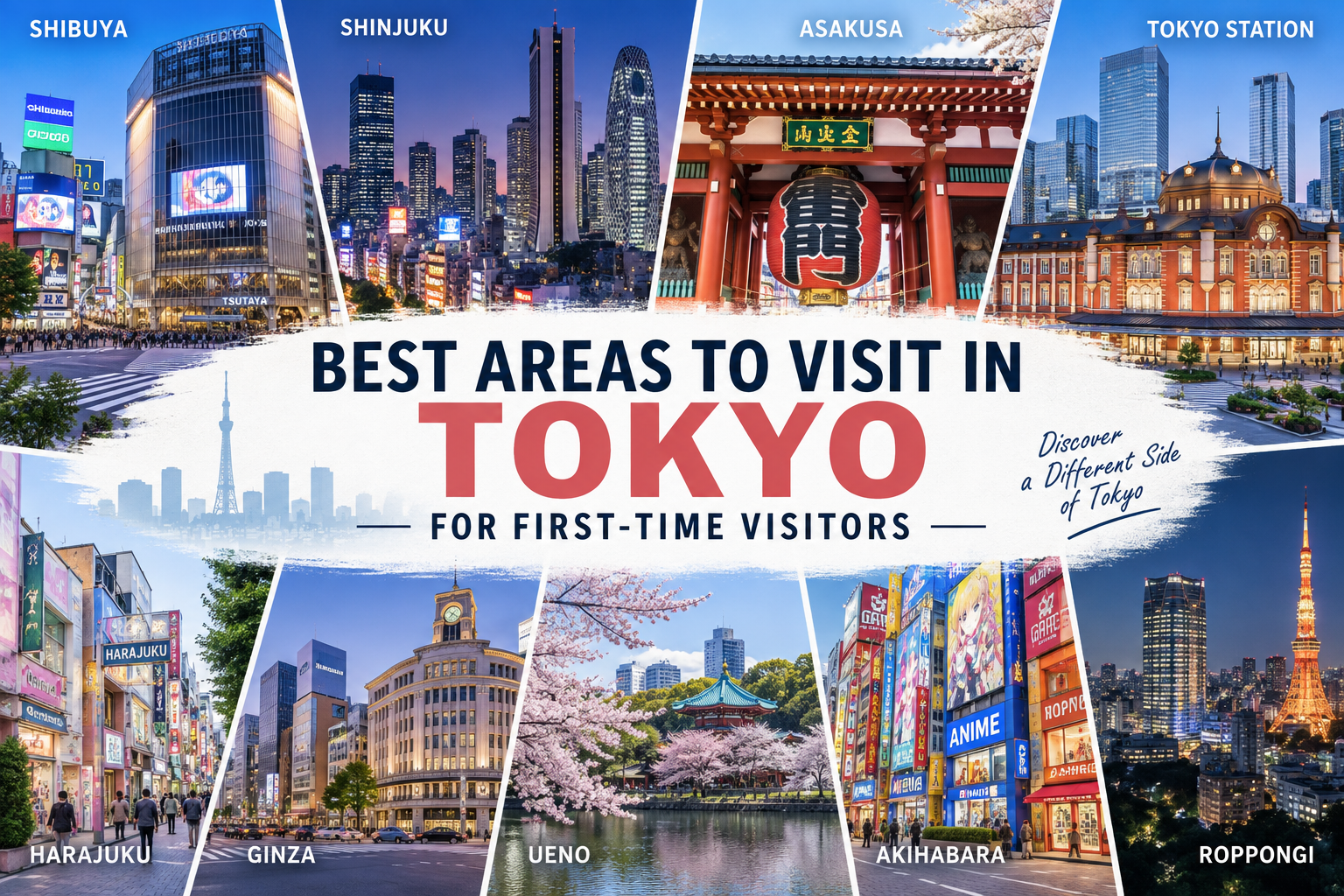
Tokyo is a vast city made up of many neighborhoods, each offering a completely different experience. One area may be filled with skyscrapers and neon lights, while another is known for historic temples, traditional streets, museums, shopping, or anime culture.
For first-time visitors, deciding which areas to visit can be one of the most difficult parts of planning a Tokyo trip. Popular neighborhoods such as Shinjuku, Shibuya, Asakusa, Ginza, Ueno, and Harajuku are spread across the city, and trying to visit too many in one day can leave you spending more time traveling than exploring.
This guide introduces some of the best areas to visit in Tokyo for first-time visitors, what makes each neighborhood worth exploring, and how much time you may want to spend there.
You do not need to visit every area on your first trip. Instead, choose the neighborhoods that match your interests and group nearby areas together. A well-planned selection of areas will usually give you a better Tokyo experience than trying to see everything.
Still deciding what you want to experience in Tokyo? Explore our Best Things to Do in Tokyo for First-Time Visitors for iconic attractions, food, culture, shopping, city views, and more.
Which Areas Should You Visit in Tokyo?
The best areas to visit in Tokyo depend on what you want to experience. Some neighborhoods are ideal for modern city views and shopping, while others are better for traditional culture, museums, food, nightlife, or anime and pop culture.
For most first-time visitors, Shinjuku, Shibuya, and Asakusa are excellent places to start because they show very different sides of Tokyo. From there, you can add areas such as Ginza, Ueno, Harajuku, Akihabara, or Odaiba depending on your interests.
Location also matters when planning your day. Tokyo’s transportation system makes it relatively easy to travel between major neighborhoods, but crossing the city repeatedly can take valuable sightseeing time.
Instead of choosing areas only because they are famous, think about what you actually want to see and do. This will help you create a Tokyo itinerary that feels varied without becoming unnecessarily busy.
A Simple Area Plan for First-Time Visitors
If you are visiting Tokyo for the first time, start by choosing three to five priority areas for your trip.
For example, you might choose Asakusa for traditional Tokyo, Shibuya and Shinjuku for the modern city experience, Ueno for museums and parks, and Harajuku for Meiji Shrine, fashion, and youth culture.
Once you have chosen your priorities, group nearby neighborhoods together rather than traveling back and forth across Tokyo. You can then add additional areas if your schedule allows.
Think of your plan as a flexible framework rather than a checklist. Leaving some free time makes it easier to explore interesting streets, shops, cafés, restaurants, and attractions you discover along the way.
1. Shinjuku – Skyscrapers, Nightlife and City Views
Shinjuku is one of the best areas to experience the energy and scale of modern Tokyo. The neighborhood combines skyscrapers, enormous train stations, department stores, restaurants, entertainment districts, and lively streets filled with neon lights.
During the day, you can explore the skyscraper district on the west side of Shinjuku Station, visit Shinjuku Gyoen National Garden, or spend time shopping around the station. After sunset, the eastern side becomes particularly lively, with restaurants, bars, entertainment venues, and illuminated streets.
Shinjuku is also a useful area for simply walking and experiencing the atmosphere of Tokyo. You do not need to visit a long list of attractions—the contrast between the business district, shopping streets, green spaces, and nightlife is part of what makes the neighborhood interesting.
Best Things to Do in Shinjuku
Popular experiences in Shinjuku include:
- Walking through the skyscraper district
- Visiting Shinjuku Gyoen National Garden
- Exploring the streets around Kabukicho
- Seeing the narrow alleys of Omoide Yokocho
- Shopping at department stores and electronics shops
- Enjoying Tokyo’s nighttime atmosphere
- Seeing the city from an observation deck
Shinjuku changes significantly throughout the day, so visiting in the late afternoon and staying into the evening can be a good way to experience both sides of the neighborhood.
How Much Time Should You Spend in Shinjuku?
Allow around half a day if Shinjuku is one of your main sightseeing areas.
A shorter visit of two to three hours can work if you only want to explore the streets, shop, or experience the neighborhood at night. If you also plan to visit Shinjuku Gyoen, spend time shopping, eat dinner, and explore after dark, you can easily spend most of the day here.
Avoid trying to cover every part of Shinjuku. The area is large, and choosing a few experiences that interest you will usually make your visit more enjoyable.
2. Shibuya – Tokyo’s Iconic Modern Cityscape
Shibuya is one of Tokyo’s most recognizable neighborhoods and a great place to experience the city’s modern, fast-paced atmosphere.
The area is best known for Shibuya Crossing, where large crowds move through the intersection beneath giant screens and illuminated signs. However, Shibuya offers much more than the crossing itself, including shopping centers, restaurants, cafés, entertainment, and panoramic views of the city.
The streets around the station are constantly evolving, with new buildings and commercial complexes appearing alongside long-established landmarks. Walking a little farther from the busiest streets also reveals quieter cafés, smaller shops, and neighborhoods with a more relaxed atmosphere.
For first-time visitors, Shibuya works particularly well as a combination of sightseeing, shopping, food, and city atmosphere rather than a destination built around a single attraction.
Best Things to Do in Shibuya
Popular experiences in Shibuya include:
- Walking across Shibuya Crossing
- Seeing the Hachiko statue
- Exploring Shibuya Center-gai
- Shopping in the area’s department stores and shopping complexes
- Visiting Shibuya Sky for panoramic city views
- Exploring cafés, restaurants, and entertainment around the station
- Walking toward Harajuku or Omotesando if your schedule allows
Shibuya is especially impressive from late afternoon into the evening, when the lights and crowds create the energetic atmosphere many travelers associate with modern Tokyo.
How Much Time Should You Spend in Shibuya?
Around three to five hours is enough for many first-time visitors to experience the main sights, explore the streets, and spend some time shopping or eating.
You may want to stay longer if you plan to visit Shibuya Sky, do extensive shopping, or have dinner in the area.
Shibuya can also be combined naturally with Harajuku and Omotesando because the areas are relatively close to one another. This can help reduce unnecessary transportation during your sightseeing day.
Planning to shop during your trip? See our Tokyo Shopping Guide for the best shopping areas, what to buy, souvenirs, tax-free shopping, and practical tips for first-time visitors.
3. Asakusa – Traditional Tokyo and Senso-ji Temple
Asakusa is one of the best areas for first-time visitors who want to experience a more traditional side of Tokyo.
The neighborhood is centered around Senso-ji, one of Tokyo’s most famous temples. The approach to the temple begins at Kaminarimon Gate and continues along Nakamise Shopping Street, where visitors can find traditional snacks, souvenirs, crafts, and small shops.
Beyond the main temple area, Asakusa is worth exploring on foot. Side streets contain restaurants, traditional shops, cafés, and quieter corners that offer a different atmosphere from Tokyo’s modern commercial districts.
Asakusa is also close to the Sumida River, and Tokyo Skytree can be seen from many locations around the neighborhood. This combination of historic streets and modern city views makes the area particularly interesting for first-time visitors.
Best Things to Do in Asakusa
Popular experiences in Asakusa include:
- Visiting Senso-ji Temple
- Walking through Kaminarimon Gate
- Exploring Nakamise Shopping Street
- Trying traditional Japanese snacks and sweets
- Walking through the surrounding side streets
- Visiting the Sumida River area
- Enjoying views of Tokyo Skytree
Asakusa is especially enjoyable when you allow time to explore beyond the main route between Kaminarimon and Senso-ji.
How Much Time Should You Spend in Asakusa?
Around three to four hours is enough for many first-time visitors to see Senso-ji, explore Nakamise, walk through the surrounding streets, and stop for food or snacks.
If you want to explore at a slower pace, visit nearby attractions, or continue toward Tokyo Skytree, you can easily spend half a day or longer in the area.
Visiting earlier in the day can also give you more time to explore before moving to another neighborhood later in your itinerary.
4. Ginza and Tokyo Station – Shopping, Architecture and Central Tokyo
Ginza and the Tokyo Station area offer a more polished and refined side of central Tokyo. Located relatively close to one another, these areas can easily be explored together during the same sightseeing day.
Ginza is famous for department stores, luxury brands, restaurants, cafés, and elegant streets. Even if high-end shopping is not your priority, walking through the neighborhood can be enjoyable for its architecture, window displays, food halls, and sophisticated atmosphere.
Around Tokyo Station, the red-brick Marunouchi Station Building provides a striking contrast to the surrounding modern skyscrapers. The nearby Marunouchi district features broad streets, office towers, shops, restaurants, and views toward the Imperial Palace area.
Tokyo Station itself is also worth exploring. In addition to being one of the city’s major transportation hubs, the station and its underground areas contain numerous shops, restaurants, souvenir stores, and food options.
Best Things to Do in Ginza and Tokyo Station
Popular experiences in this area include:
- Walking through Ginza’s main shopping streets
- Exploring department store food halls
- Visiting shops and cafés around Ginza
- Seeing the historic Marunouchi side of Tokyo Station
- Walking through the Marunouchi district
- Exploring shops and restaurants inside and around Tokyo Station
- Walking toward the Imperial Palace area if your schedule allows
This part of Tokyo works particularly well for travelers who enjoy shopping, architecture, food, and exploring the city at a relaxed pace.
How Much Time Should You Spend Here?
Around three to five hours is enough for many visitors to explore Ginza and the Tokyo Station area together.
You may want to allow half a day or longer if you plan to shop extensively, enjoy a longer meal, explore Tokyo Station in detail, or walk around the Imperial Palace area.
Because both areas are centrally located, they can also fit naturally into an arrival day, departure day, or a less intensive sightseeing day.
5. Ueno – Museums, Parks and Local Atmosphere
Ueno is an excellent area for first-time visitors who want to combine museums, parks, temples, shopping, and a more casual local atmosphere in one part of Tokyo.
Ueno Park is the neighborhood’s main attraction and is home to several major museums and cultural institutions. The spacious park also provides a welcome change of pace from Tokyo’s dense shopping and entertainment districts.
Near Ueno Station, Ameyoko offers a completely different experience. This lively shopping street is filled with small shops, food stalls, restaurants, and stores selling everything from snacks and seafood to clothing and cosmetics.
The contrast between the cultural attractions around Ueno Park and the energetic streets of Ameyoko makes Ueno a particularly varied area to explore.
Best Things to Do in Ueno
Popular experiences in Ueno include:
- Walking through Ueno Park
- Visiting one of the area’s museums
- Exploring Ameyoko Shopping Street
- Visiting temples and shrines around the park
- Trying casual food and snacks around Ameyoko
- Walking around Shinobazu Pond
You do not need to visit every museum. Choose one that matches your interests and leave enough time to explore the neighborhood itself.
How Much Time Should You Spend in Ueno?
Around three to four hours is enough if you mainly want to explore Ueno Park and Ameyoko.
If you plan to visit a major museum, allow at least half a day. Travelers who particularly enjoy museums, history, or slower sightseeing could easily spend most of the day in the area.
Ueno is also relatively easy to combine with nearby areas such as Asakusa or Yanaka, making it useful when planning a sightseeing day around northeastern Tokyo.
6. Harajuku and Omotesando – Fashion, Youth Culture and Meiji Shrine
Harajuku and Omotesando offer an interesting combination of traditional culture, youth fashion, shopping, cafés, and modern architecture.
One of the area’s most important attractions is Meiji Shrine, located beside Harajuku Station. Surrounded by a large forest, the shrine provides a peaceful contrast to the busy shopping streets nearby and is an excellent place for first-time visitors to experience a different side of Tokyo.
After visiting the shrine, you can explore Harajuku’s shopping streets. Takeshita Street is famous for youth fashion, colorful shops, snacks, and pop culture, while the surrounding streets contain boutiques, cafés, and smaller stores.
Nearby Omotesando has a more sophisticated atmosphere, with fashion brands, distinctive architecture, restaurants, and cafés. Exploring these areas together allows you to experience several contrasting sides of Tokyo within a relatively compact area.
Best Things to Do in Harajuku and Omotesando
Popular experiences in Harajuku and Omotesando include:
- Visiting Meiji Shrine
- Walking through the forested approach to the shrine
- Exploring Takeshita Street
- Discovering shops in the smaller streets around Harajuku
- Walking along Omotesando
- Visiting cafés, boutiques, and fashion stores
- Continuing toward Shibuya if your schedule allows
Around three to four hours works well for many first-time visitors, although shoppers can easily spend longer here.
Because Harajuku sits between Shinjuku and Shibuya, it is particularly useful when grouping nearby areas into the same sightseeing day.
7. Akihabara – Anime, Manga and Electronics
Akihabara is one of Tokyo’s best-known destinations for anime, manga, video games, collectibles, and electronics.
The area around Akihabara Station is filled with large electronics stores, specialty shops, arcades, hobby stores, and buildings dedicated to different parts of Japanese pop culture. Even if you are not a serious fan, walking through the colorful streets can provide a very different experience from areas such as Asakusa or Ginza.
Anime and manga fans can browse stores selling figures, character goods, trading cards, manga, and other collectibles. Retro gaming enthusiasts can also find shops specializing in older games and consoles.
Akihabara is particularly enjoyable when you explore based on your own interests rather than trying to visit every famous store. Many buildings contain several floors of specialized merchandise, so browsing can take longer than expected.
Who Should Visit Akihabara?
Akihabara is especially worth visiting if you are interested in:
- Anime and manga
- Video games and retro gaming
- Figures and character merchandise
- Trading cards and collectibles
- Electronics and gadgets
- Japanese pop culture
Around two to three hours may be enough for casual sightseeing, while dedicated anime, manga, gaming, or electronics fans could easily spend half a day or longer.
If these interests are not a priority for you, a shorter visit may be enough—or you can use the time for another Tokyo neighborhood that better matches your travel style.
8. Odaiba – Tokyo Bay and Modern Attractions
Odaiba offers a different side of Tokyo, with waterfront scenery, modern architecture, shopping, entertainment, and spacious public areas around Tokyo Bay.
Unlike the dense streets of Shinjuku or Shibuya, Odaiba feels more open and relaxed. Visitors can enjoy views of Rainbow Bridge and Tokyo’s skyline while walking along the waterfront, making the area particularly enjoyable around sunset and in the evening.
Odaiba is also home to shopping and entertainment complexes, museums, and large-scale attractions. Because individual attractions can take considerable time, it is better to choose one or two priorities rather than trying to experience everything in a single visit.
The journey to Odaiba can also be part of the experience, with the Yurikamome offering elevated views as it travels toward the waterfront area.
Is Odaiba Worth Visiting on a First Trip?
Odaiba can be worth visiting if you are interested in:
- Tokyo Bay and waterfront views
- Modern architecture
- Museums and interactive attractions
- Shopping and entertainment
- Photography and city views
- A more spacious break from central Tokyo
However, Odaiba is not essential for every first-time visitor. If you only have two or three days in Tokyo, areas such as Shibuya, Shinjuku, and Asakusa may be higher priorities.
If you have five days or longer, or if a specific attraction in Odaiba interests you, spending around half a day here can fit comfortably into your itinerary.
9. Yanaka – A Quieter Side of Tokyo
Yanaka offers a quieter and more residential side of Tokyo, making it a good choice for travelers who want to experience the city beyond its busiest sightseeing districts.
The neighborhood is known for narrow streets, small temples, traditional houses, local shops, cafés, and a relaxed atmosphere. Unlike areas such as Shibuya or Shinjuku, Yanaka is less about major landmarks and more about enjoying the experience of walking through the neighborhood.
One of the best-known spots is Yanaka Ginza, a traditional shopping street lined with small stores selling snacks, sweets, groceries, crafts, and everyday goods. Exploring the surrounding streets can also reveal temples, residential areas, and quieter corners of the city.
Yanaka works particularly well for travelers who enjoy slow sightseeing, photography, local neighborhoods, and discovering places without following a strict list of attractions.
Why Visit Yanaka?
Consider visiting Yanaka if you want to:
- Experience a quieter Tokyo neighborhood
- Explore traditional streets and small temples
- Visit local shops and cafés
- Try snacks around Yanaka Ginza
- Enjoy photography and relaxed walking
- Take a break from Tokyo’s busiest commercial districts
Around two to three hours is enough for many visitors to explore Yanaka at a comfortable pace.
Yanaka is also easy to combine with Ueno, making the two areas a useful pairing for a day focused on museums, parks, traditional streets, and a slower side of Tokyo.
10. Roppongi – Art, Nightlife and City Views
Roppongi is known for its combination of contemporary art, modern architecture, international dining, nightlife, and impressive views of Tokyo.
During the day, the area is particularly appealing to travelers interested in art and culture. Major cultural complexes such as Roppongi Hills and Tokyo Midtown are surrounded by museums, galleries, shops, restaurants, and public spaces.
In the evening, Roppongi becomes more lively as restaurants, bars, and entertainment venues open for the night. This gives visitors the opportunity to combine museums or sightseeing during the day with dinner and nightlife afterward.
Roppongi is also a good area for seeing Tokyo from above. Depending on the attractions you choose, you can combine city views with art, architecture, shopping, and dining in a relatively compact area.
Who Should Visit Roppongi?
Roppongi is particularly worth considering if you are interested in:
- Contemporary art and museums
- Modern architecture
- Tokyo city views
- Restaurants and international dining
- Nightlife
- Shopping and urban entertainment
Around three to four hours can be enough if you plan to visit one museum or explore the main complexes. You may want to stay longer if you also plan to have dinner, enjoy a city view, or experience the area after dark.
Roppongi does not need to be a priority for every first-time visitor, but it can be an excellent addition for travelers interested in art, architecture, or nightlife.
Best Tokyo Areas by Travel Style
With so many neighborhoods to choose from, it can be easier to decide where to go based on the type of experience you want.
The following recommendations can help you narrow down your choices. Many areas fit more than one travel style, so use these as a starting point rather than strict categories.
For First-Time Sightseeing
Shibuya, Shinjuku, and Asakusa are excellent priorities for a first trip. Together, they provide a strong contrast between modern Tokyo, nightlife, famous city scenes, temples, and traditional streets.
For Traditional Tokyo
Asakusa and Yanaka are good choices for travelers interested in temples, older streets, traditional shops, and a slower atmosphere. Ueno can also be combined with these areas for museums and cultural attractions.
For Shopping
Shibuya, Harajuku, Omotesando, Ginza, and Shinjuku offer some of Tokyo’s best-known shopping experiences, ranging from youth fashion and department stores to luxury brands and electronics.
For Food
Excellent food can be found throughout Tokyo, but Shinjuku, Shibuya, Asakusa, Ginza, Tokyo Station, and Ueno provide particularly convenient combinations of sightseeing and dining.
For dishes to look for during your trip, see our What to Eat in Tokyo: Must-Try Japanese Foods for First-Time Visitors.
For Anime and Pop Culture
Akihabara is the most obvious choice for anime, manga, gaming, figures, and collectibles. Harajuku and Shibuya can also appeal to travelers interested in contemporary Japanese youth culture.
For Nightlife
Shinjuku, Shibuya, and Roppongi are strong choices for experiencing Tokyo after dark. Each offers a different atmosphere, from neon-lit entertainment districts to restaurants, bars, and modern nightlife.
For Museums and Art
Ueno and Roppongi are particularly strong choices for museums and art. Ueno is ideal for travelers interested in several major cultural institutions in one area, while Roppongi is especially appealing for contemporary art and modern architecture.
How Many Tokyo Areas Can You Visit in One Day?
For most first-time visitors, exploring two or three areas in one day is a comfortable pace.
Although Tokyo’s public transportation system makes it possible to move quickly between major neighborhoods, each area often involves considerable walking, shopping, eating, and sightseeing. Trying to visit too many places can make your day feel rushed.
Two areas may be enough if you plan to visit museums, major attractions, observation decks, or spend significant time shopping. Three areas can work well when the neighborhoods are close together and your activities are relatively flexible.
Rather than counting how many neighborhoods you can fit into a day, focus on how much you actually want to experience in each one.
Group Nearby Areas Together
One of the easiest ways to plan Tokyo sightseeing is to combine neighborhoods that are relatively close to one another.
Useful combinations include:
- Shibuya + Harajuku + Omotesando
- Ueno + Yanaka
- Ginza + Tokyo Station
- Asakusa + Tokyo Skytree area
- Shinjuku + nearby western Tokyo attractions
Grouping nearby areas reduces unnecessary travel and gives you more time to explore.
For practical 3, 5, and 7-day sightseeing plans that combine Tokyo neighborhoods efficiently, see our Tokyo Itinerary for First-Time Visitors: 3, 5 & 7 Days.
How to Choose Which Tokyo Areas to Visit
With limited time in Tokyo, choosing the right areas is more important than trying to visit as many neighborhoods as possible.
Start by identifying the experiences that matter most to you. Some travelers may prioritize temples and traditional streets, while others may be more interested in shopping, food, museums, anime, nightlife, or modern city views.
Once you know your priorities, you can choose neighborhoods that match those interests and organize them into a practical route.
Start with Your Must-See Places
Choose a small number of places or experiences that you would be disappointed to miss.
For example, if Shibuya Crossing and Senso-ji Temple are priorities, build Shibuya and Asakusa into your itinerary first. You can then add nearby areas based on the time available.
This approach is more effective than creating a long list of neighborhoods and trying to fit all of them into your schedule.
Consider Transportation Time
Tokyo’s trains and subways are efficient, but traveling between neighborhoods still takes time. You also need to account for walking through large stations, finding the correct exits, and reaching attractions from the station.
When possible, group nearby areas together and avoid repeatedly crossing the city during the same day.
For help understanding Tokyo’s trains, subways, IC cards, and navigation, see our Tokyo Transportation Guide for First-Time Visitors.
Do Not Try to See Everything
Tokyo rewards slower exploration. Some of the most memorable experiences can come from walking through side streets, discovering a small shop, stopping at a café, or spending longer than expected in a neighborhood you enjoy.
Leave some flexibility in your schedule instead of filling every hour with attractions.
Missing a few neighborhoods is better than rushing through the entire city without having enough time to enjoy any of them.
Where Should You Stay for Easy Sightseeing?
Choosing where to stay can make a significant difference to how easily you explore Tokyo.
For first-time visitors, staying near a well-connected train or subway station can reduce unnecessary travel and make it easier to reach different parts of the city. Areas such as Shinjuku, Shibuya, Ueno, and the Tokyo Station area are popular partly because they provide convenient access to many major neighborhoods.
However, the best area to stay is not necessarily the area with the most attractions. Your ideal base depends on your budget, preferred atmosphere, transportation needs, and the places you plan to visit most often.
Before booking your accommodation, compare the advantages of Tokyo’s main hotel areas and consider how they fit with your sightseeing plans.
For a detailed comparison of Shinjuku, Shibuya, Asakusa, Ginza, Ueno, and other accommodation options, see our Where to Stay in Tokyo for First-Time Visitors.
Tokyo Area Tips for First-Time Visitors
Exploring Tokyo becomes much easier when you prepare a few simple things before each sightseeing day.
You do not need to plan every detail, but knowing where your priority places are and understanding how the neighborhoods connect can help you spend more time enjoying the city and less time deciding where to go next.
Save Locations on Your Map
Before your trip, save important attractions, restaurants, stations, and other places you want to visit on your preferred map app.
Seeing your saved locations together makes it easier to understand which places are close to one another and can help you build more efficient sightseeing routes.
It is also useful to save a few optional places rather than only your highest-priority attractions. If you finish somewhere earlier than expected, you will already have ideas nearby.
Allow Time for Walking
Tokyo involves more walking than many first-time visitors expect.
Large stations can take time to navigate, and many neighborhoods are best explored on foot after you arrive. Distances that appear short on a map may also take longer when you stop at shops, cafés, viewpoints, or attractions along the way.
Avoid planning every activity back-to-back. Giving yourself extra time makes delays and unexpected discoveries much easier to handle.
Visit Popular Areas at Different Times of Day
Some Tokyo neighborhoods offer very different experiences depending on when you visit.
Asakusa can be enjoyable earlier in the day when exploring temples and traditional streets, while Shibuya and Shinjuku become particularly atmospheric after sunset. Areas with observation decks can also provide different views during the daytime, sunset, and evening.
Consider the atmosphere you want to experience when deciding where each neighborhood fits into your itinerary.
Keep Your Itinerary Flexible
Tokyo offers far more than you can experience in a single trip, so do not worry if your plans change.
Weather, crowds, opening hours, shopping, meals, or simply enjoying one neighborhood more than expected can affect your schedule.
Treat your itinerary as a guide rather than a strict timetable. If you discover somewhere interesting, giving yourself permission to stay longer can be more rewarding than rushing to the next place simply because it was on your original plan.
Final Thoughts
Tokyo is made up of many distinct neighborhoods, and choosing the right areas can make your first visit much easier and more enjoyable.
You do not need to see every famous part of the city. Start with a few priority areas that match your interests, such as Shibuya and Shinjuku for modern Tokyo, Asakusa for traditional culture, Ueno for museums, or Akihabara for anime and pop culture.
Group nearby neighborhoods together, allow enough time for walking and transportation, and leave some flexibility in your schedule. A slower day exploring two or three areas will often be more rewarding than rushing across Tokyo simply to check more places off a list.
Most importantly, use these neighborhoods as starting points rather than a checklist. Tokyo is a city where unexpected streets, shops, cafés, restaurants, and small discoveries can become just as memorable as the major attractions.
Ready to plan the rest of your trip? Our Tokyo Travel Guide for First-Time Visitors covers transportation, food, seasons, sightseeing, and other essentials for planning your first visit to Tokyo.
