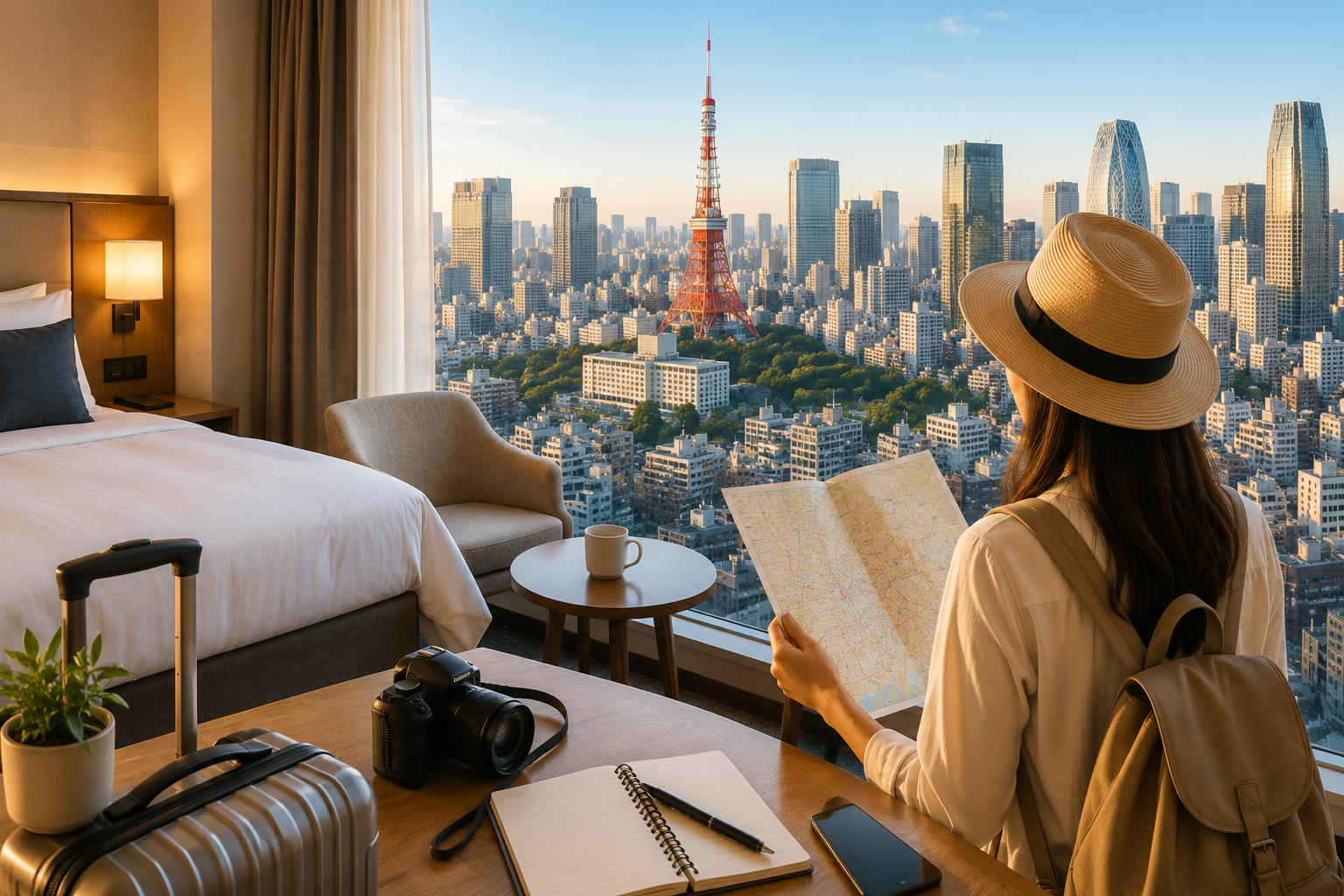
Choosing where to stay in Tokyo can feel overwhelming, especially on your first trip.
Tokyo is enormous, and each neighborhood offers a very different experience. Stay in Shinjuku and you will be surrounded by skyscrapers, restaurants, nightlife, and excellent transport connections. Choose Asakusa and your trip will have a quieter, more traditional atmosphere.
The good news is that there is no single “perfect” area for everyone.
The best place to stay in Tokyo depends on how you want to spend your trip, your budget, and which parts of the city you want to explore.
In this guide, we compare five of the best areas for first-time visitors — Shinjuku, Shibuya, Asakusa, Ginza and the Tokyo Station area, and Ueno — so you can choose the right base for your Tokyo adventure.
If this is your first visit to the city, you may also want to read our complete Tokyo Travel Guide for First-Time Visitors for help planning your trip.
Quick Answer: Best Areas to Stay in Tokyo
If you want a quick recommendation, start here.
| Area | Best For | Atmosphere | Main Advantage |
|---|---|---|---|
| Shinjuku | First-time visitors | Energetic | Excellent transport |
| Shibuya | Shopping & nightlife | Lively and modern | Entertainment |
| Asakusa | Traditional Tokyo | Historic and relaxed | Temples & old Tokyo |
| Ginza & Tokyo Station | Comfort & convenience | Polished and central | Shinkansen access |
| Ueno | Value & Narita access | Casual and cultural | Easy airport access |
For most first-time visitors who want a convenient base for exploring different parts of Tokyo, Shinjuku is one of the easiest choices.
However, that does not necessarily make it the best choice for you.
Someone looking for traditional streets and temples may prefer Asakusa, while travelers arriving through Narita Airport may appreciate the convenience of Ueno.
The key is choosing an area that matches your travel style rather than simply choosing the most famous neighborhood.
How to Choose Where to Stay in Tokyo
Before choosing a hotel, it helps to think about how you plan to spend your time in Tokyo.
Tokyo is a huge city, but its excellent train and subway network makes it easy to explore different neighborhoods. You do not need to stay next to every attraction you want to visit.
Instead, focus on choosing a convenient base that fits your travel style. For most first-time visitors, these four factors are especially important:
1. Transportation
Staying near a major train or subway station can save you a surprising amount of time during your trip.
Areas such as Shinjuku, Shibuya, Ueno, and Tokyo Station provide convenient connections to many parts of the city. This is especially useful if you plan to explore several neighborhoods during your stay.
To understand Tokyo’s trains, subways, IC cards, and airport connections before choosing your hotel, see our Tokyo Transportation Guide for First-Time Visitors.
2. What You Want to Experience
Think about the kind of Tokyo experience you want.
If you enjoy bright lights, shopping, restaurants, and nightlife, Shinjuku or Shibuya may suit you. If you prefer temples, traditional streets, and a quieter atmosphere, Asakusa may be a better choice.
3. Your Budget
Hotel prices can vary significantly between neighborhoods.
Ginza and the Tokyo Station area generally have many upscale hotels, while areas such as Ueno and Asakusa often provide more options for travelers looking for good value.
For a broader breakdown of accommodation, food, transportation, sightseeing, and daily expenses, see our Tokyo Travel Budget: How Much Does a Trip to Tokyo Cost?
4. Airport Access
Airport access is worth considering, especially if you have an early flight, heavy luggage, or a long journey home.
Ueno is particularly convenient for travelers using Narita Airport, while several major areas of Tokyo offer direct or simple connections to Haneda Airport.
There is no need to find the “perfect” neighborhood. A well-connected area that matches your priorities will usually make a better base than choosing a hotel simply because it is close to one famous attraction.
Best Areas to Stay in Tokyo for First-Time Visitors
Tokyo has many excellent neighborhoods, but the five areas below are particularly convenient for first-time visitors.
Each offers a different balance of transportation, atmosphere, attractions, and hotel options. The best choice depends on what matters most to you.
1. Shinjuku — Best Overall for First-Time Visitors
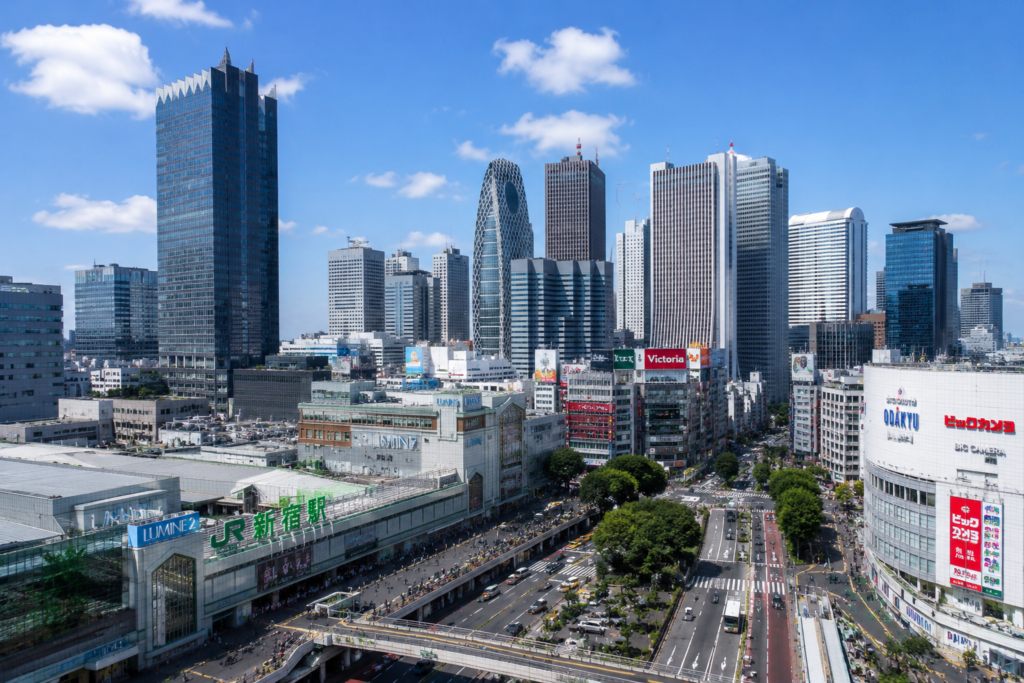
Shinjuku is one of the best places to stay in Tokyo if you want convenience, entertainment, and easy access to different parts of the city.
Shinjuku Station is one of Tokyo’s major transportation hubs, making it relatively easy to reach popular areas such as Shibuya, Harajuku, and central Tokyo. The neighborhood is also packed with restaurants, department stores, shopping centers, and entertainment.
The atmosphere changes depending on where you stay. The west side of Shinjuku is known for skyscrapers and major hotels, while the east side is much livelier, with shopping, restaurants, and nightlife around areas such as Kabukicho.
For first-time visitors who want to experience the energy of modern Tokyo while keeping transportation convenient, Shinjuku is an excellent all-around choice.
Best for:
- First-time visitors
- Travelers planning to explore many parts of Tokyo
- Shopping, dining, and nightlife
- Travelers who value transportation convenience
Things to consider:
- Shinjuku Station is extremely large and can be confusing at first.
- Some parts of eastern Shinjuku can be busy and noisy at night.
- Hotels close to the station can be more expensive.
2. Shibuya — Best for Shopping and Nightlife
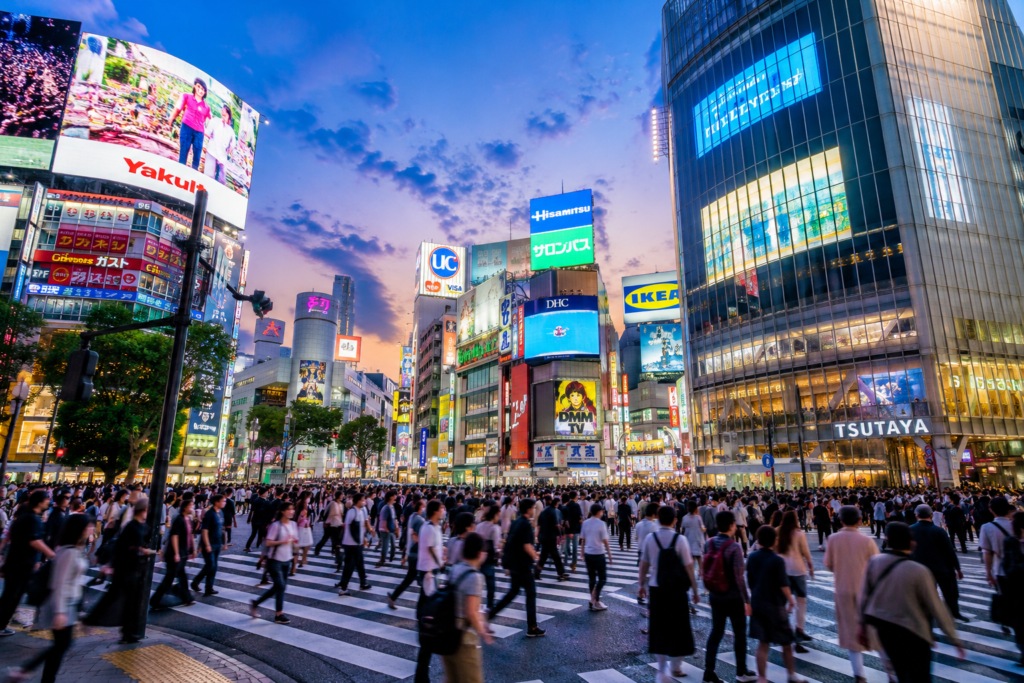
Shibuya is an excellent place to stay if you want to experience Tokyo’s modern culture, shopping, restaurants, and nightlife.
The area is famous for Shibuya Crossing, but there is much more to explore. Department stores, fashion boutiques, cafés, restaurants, and entertainment venues fill the streets around the station, giving the neighborhood an energetic atmosphere throughout the day and into the evening.
Shibuya Station also provides convenient connections to popular areas such as Harajuku, Shinjuku, and central Tokyo. This makes it a useful base for travelers who want to combine sightseeing with shopping and entertainment.
Compared with Shinjuku, Shibuya can feel slightly more compact around its main attractions, although the station itself is large and the surrounding streets can become extremely busy.
If you want to step outside your hotel and immediately feel the energy of contemporary Tokyo, Shibuya is one of the strongest choices.
Best for:
- Shopping and fashion
- Restaurants, cafés, and nightlife
- Travelers who enjoy lively neighborhoods
- Easy access to Harajuku and Shinjuku
Things to consider:
- The area around Shibuya Station can be very crowded.
- Hotel prices can be relatively high in convenient locations.
- Travelers looking for a quiet or traditional atmosphere may prefer another area.
3. Asakusa — Best for Traditional Tokyo
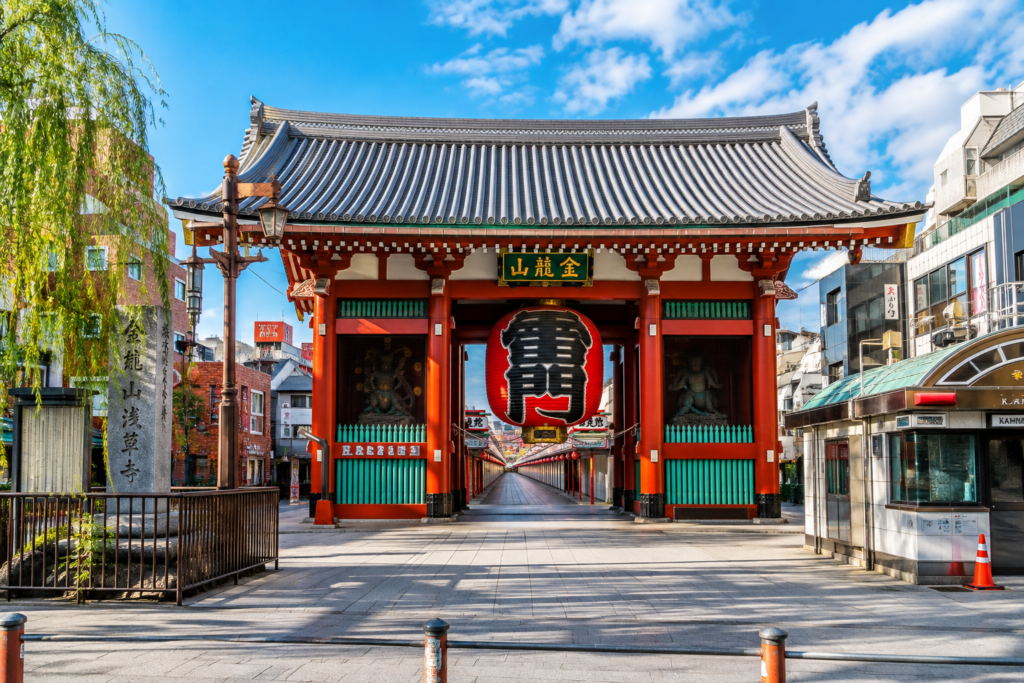
Asakusa is one of the best areas to stay if you want to experience a more traditional side of Tokyo.
The neighborhood is centered around Senso-ji, one of Tokyo’s most famous temples. Around the temple, you will find historic streets, traditional shops, local restaurants, and views of Tokyo Skytree across the Sumida River.
Compared with Shinjuku and Shibuya, Asakusa generally feels more relaxed, especially in the evening after many day visitors have left. Staying here gives you the opportunity to explore the neighborhood early in the morning, when the streets around Senso-ji can feel very different from the busy daytime atmosphere.
Asakusa also offers a range of accommodation, including smaller hotels and traditional-style stays. It can be a good option for travelers who value atmosphere and culture over nightlife and large shopping districts.
Transportation is convenient for several parts of eastern and central Tokyo, although Asakusa is not as well connected as Shinjuku for travelers planning to move frequently between neighborhoods across the city.
If temples, traditional streets, and a slower atmosphere are an important part of your image of Japan, Asakusa can be an especially memorable place to stay.
Best for:
- Traditional Tokyo atmosphere
- Temples and historic streets
- Travelers who prefer quieter evenings
- Culture and photography
Things to consider:
- It is less convenient than Shinjuku for some areas of western Tokyo.
- Nightlife and late-night entertainment are more limited.
- The area around Senso-ji can become crowded during the day.
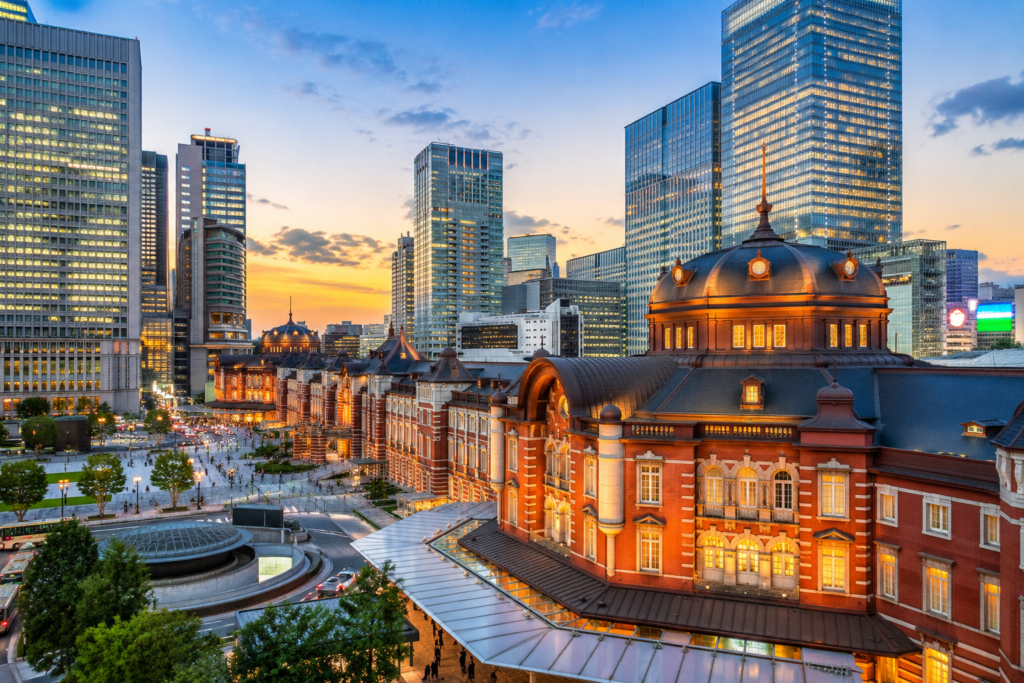
4. Ginza & Tokyo Station — Best for Comfort and Convenience
Ginza and the area around Tokyo Station are excellent choices for travelers who value comfort, convenience, and easy access to transportation.
Ginza is known for its elegant shopping streets, department stores, restaurants, and polished atmosphere. While the area is famous for luxury brands, you will also find cafés, casual restaurants, and shops that are easy to enjoy without planning an expensive shopping trip.
Nearby Tokyo Station is one of the most important transportation hubs in Japan. Staying in this area makes it especially convenient to use the Shinkansen for trips to destinations such as Kyoto, Osaka, or other parts of the country.
The location is also useful for exploring central Tokyo. Areas such as the Imperial Palace, Marunouchi, Nihonbashi, and Tsukiji are relatively easy to reach, making this a practical base for travelers who want to combine sightseeing with comfortable city travel.
Compared with Shinjuku and Shibuya, the atmosphere tends to feel more polished and business-oriented. Evenings can be calmer in some parts of the area, which may appeal to travelers who prefer a less hectic base.
If convenience, quality hotels, shopping, and easy Shinkansen access are priorities for your trip, Ginza and Tokyo Station are among the most practical places to stay.
Best for:
- Comfort and convenience
- Shopping and dining
- Easy access to the Shinkansen
- Travelers planning trips beyond Tokyo
Things to consider:
- Hotels in convenient locations can be expensive.
- The atmosphere may feel less lively at night than Shinjuku or Shibuya.
- Travelers looking for traditional neighborhood scenery may prefer Asakusa.
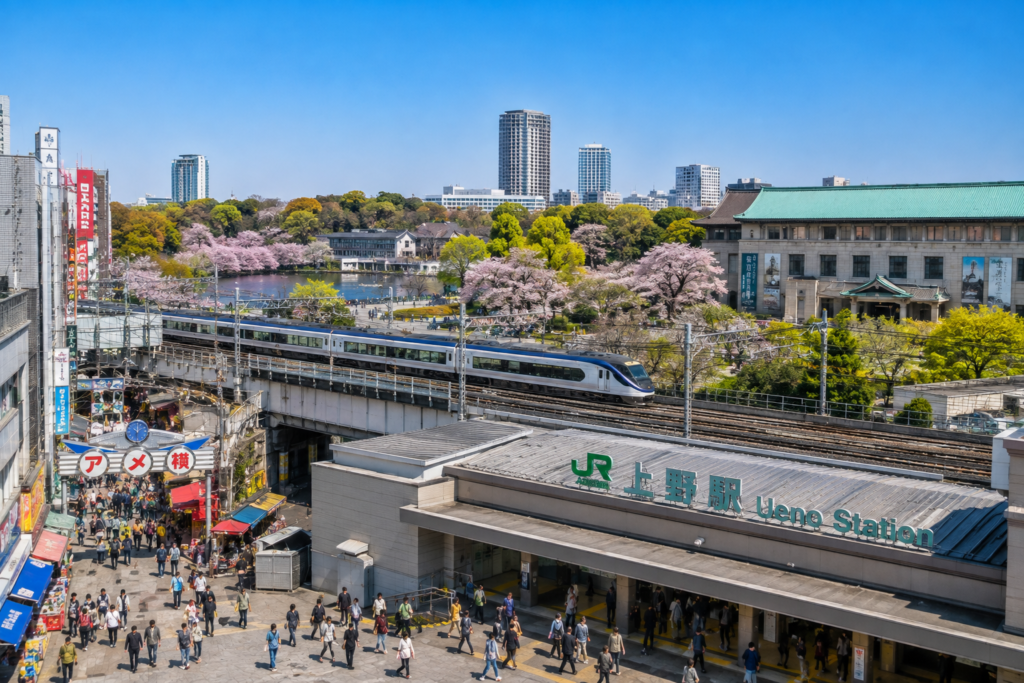
5. Ueno — Best for Value and Narita Airport Access
Ueno is a practical place to stay for travelers looking for convenient transportation, cultural attractions, and potentially better value than some of Tokyo’s most famous central neighborhoods.
One of Ueno’s biggest advantages is its access to Narita Airport. The Keisei Skyliner connects Narita Airport with Keisei-Ueno Station, making the area particularly convenient for travelers arriving from or departing for Narita.
Ueno is also home to Ueno Park, where you will find museums, cultural attractions, and spacious green areas. Nearby Ameyoko offers a completely different atmosphere, with busy shopping streets, casual restaurants, and small shops beneath and around the railway tracks.
Transportation within Tokyo is another advantage. Ueno Station is served by several train and subway lines, making it relatively easy to reach areas such as Asakusa, Akihabara, Tokyo Station, and other parts of the city.
Accommodation options range from budget-friendly hotels to more comfortable mid-range properties. While prices vary by season, Ueno can be worth considering if you want to balance convenience with accommodation costs.
If you are using Narita Airport, enjoy museums and local streets, or simply want a practical base without staying in Shinjuku or Shibuya, Ueno can be a strong choice.
Best for:
- Convenient access to Narita Airport
- Travelers looking for good value
- Museums and cultural attractions
- Easy access to eastern Tokyo
Things to consider:
- The atmosphere is less polished than Ginza or Tokyo Station.
- Nightlife is more limited than in Shinjuku or Shibuya.
- Travelers mainly exploring western Tokyo may find Shinjuku more convenient.
Which Area of Tokyo Is Best for You?
The best area to stay in Tokyo depends on what you want from your trip. There is no single neighborhood that is perfect for every traveler.
Instead of choosing the most famous area, think about what matters most to you—transportation, nightlife, traditional atmosphere, shopping, airport access, or a quieter place to return to at the end of the day.
Here is a simple way to narrow down your options.
Choose Shinjuku if…
You are visiting Tokyo for the first time and want excellent transportation connections to many parts of the city.
Best choice for: First-time visitors, sightseeing, transportation convenience
Choose Shibuya if…
You want to be surrounded by shopping, restaurants, nightlife, and the energy of modern Tokyo.
Best choice for: Shopping, nightlife, younger travelers, modern Tokyo
Choose Asakusa if…
You want temples, historic streets, traditional atmosphere, and quieter evenings.
Best choice for: Culture, traditional Tokyo, photography, relaxed stays
Choose Ginza & Tokyo Station if…
You value comfortable hotels, central transportation, shopping, and easy access to the Shinkansen.
Best choice for: Comfort, shopping, business travelers, trips beyond Tokyo
Choose Ueno if…
You want convenient access to Narita Airport, museums, local streets, and potentially better-value accommodation.
Best choice for: Narita Airport access, value, museums, eastern Tokyo
Common Questions About Where to Stay in Tokyo
Choosing where to stay in Tokyo can be difficult, especially on your first visit. Here are answers to some of the most common questions travelers have when comparing Tokyo neighborhoods.
Is Shinjuku or Shibuya Better for First-Time Visitors?
Both are excellent choices, but Shinjuku is generally the more practical option if transportation convenience is your top priority.
Shinjuku provides extensive train and subway connections and makes it relatively easy to explore different parts of Tokyo. Shibuya, on the other hand, may be a better choice if shopping, restaurants, nightlife, and a younger atmosphere are more important to you.
For many first-time visitors, Shinjuku is the easier all-around base, while Shibuya is particularly appealing to travelers who want to stay in the middle of Tokyo’s modern energy.
Is It Better to Stay Near Tokyo Station or Shinjuku?
Choose Tokyo Station if you plan to use the Shinkansen frequently, prefer a polished central location, or want convenient access to areas such as Ginza and Marunouchi.
Choose Shinjuku if most of your trip will be spent exploring Tokyo and you want easy access to a wider variety of neighborhoods, restaurants, shopping, and nightlife.
A simple rule is: Tokyo Station for intercity travel; Shinjuku for exploring Tokyo.
Where Should First-Time Visitors Stay in Tokyo?
For most first-time visitors, Shinjuku is one of the safest recommendations because of its transportation connections, large selection of hotels, restaurants, shopping, and convenient access to many parts of Tokyo.
However, it is not automatically the best choice for everyone. Travelers looking for traditional atmosphere may prefer Asakusa, while those prioritizing shopping and nightlife may prefer Shibuya.
Start with Shinjuku, then choose another area if it better matches your travel priorities.
Which Area Is Best for Narita Airport Access?
Ueno is one of the most convenient choices among the areas covered in this guide for travelers using Narita Airport.
The Keisei Skyliner connects Narita Airport with Keisei-Ueno Station, making Ueno particularly useful for travelers who want a straightforward airport transfer.
If Narita Airport access is one of your highest priorities, Ueno deserves serious consideration.
Which Area Is Best for a Quiet Stay in Tokyo?
Asakusa is a strong option if you prefer a more relaxed atmosphere, particularly in the evening.
Although the area around Senso-ji can become busy during the day, staying in Asakusa allows you to experience the neighborhood before and after many day visitors have left.
For travelers who value temples, traditional streets, and quieter evenings over nightlife, Asakusa is one of the strongest choices in this guide.
How to Choose a Hotel in Tokyo
Choosing the right neighborhood is only the first step. Even within the same area, the location and features of your hotel can make a significant difference to your experience in Tokyo.
Before booking, consider the following points.
1. Check the Walking Distance to the Station
Tokyo’s public transportation system is excellent, so staying close to a useful train or subway station can save you a surprising amount of time and energy.
Do not look only at the name of the neighborhood. Check the hotel’s actual location on a map and see how long it takes to walk to the station you expect to use most often.
A hotel that is within about a 5–10 minute walk of a convenient station can make sightseeing much easier, especially after a long day of exploring.
2. Check Which Station Exit Is Closest
Large stations such as Shinjuku, Shibuya, and Tokyo Station have multiple exits, and walking from one side of the station to another can take longer than you might expect.
When comparing hotels, check not only the distance to the station but also which exit is closest to the property.
This is especially useful when traveling with luggage or returning to your hotel after a full day of sightseeing.
3. Do Not Choose Based on Price Alone
A cheaper hotel may look attractive, but a less convenient location can mean more transfers, longer walks, and additional transportation time every day.
When comparing prices, consider the overall convenience of the location rather than simply choosing the lowest nightly rate.
Sometimes paying slightly more for a well-located hotel can make your entire Tokyo stay easier.
4. Check the Room Size Before Booking
Hotel rooms in Tokyo can be smaller than some international travelers expect, particularly in central and business-oriented areas.
Before booking, check the room size in square meters and consider whether there is enough space for your luggage.
This becomes especially important for couples, families, or travelers carrying large suitcases.
5. Think About Your Airport Transfer
Your arrival and departure days are part of your trip too. Carrying luggage through several train transfers can be tiring, especially after a long flight.
If you are using Narita or Haneda Airport, check how many transfers are required between the airport and your hotel.
Travelers using Narita Airport may find Ueno particularly convenient, while other areas may offer direct trains, buses, or relatively simple connections depending on the hotel location.
6. Think About What You Will Do at Night
Your hotel location matters even after sightseeing ends.
If you enjoy restaurants, bars, shopping, and nightlife, staying in Shinjuku or Shibuya may allow you to spend more time enjoying the neighborhood without worrying about a long journey back to your hotel.
If you prefer quieter evenings, areas such as Asakusa may be more comfortable.
Our Recommendation for First-Time Visitors
If this is your first trip to Tokyo and you are still unsure where to stay, Shinjuku is our top overall recommendation.
Its biggest advantage is convenience. With extensive train and subway connections, a huge selection of restaurants and shops, and easy access to many popular parts of Tokyo, Shinjuku works well for a wide variety of first-time itineraries.
However, choosing a different area can make sense if you have a clear priority.
Choose Shibuya for shopping, nightlife, and modern Tokyo. Choose Asakusa for temples and traditional atmosphere. Choose Ginza or Tokyo Station for comfort and convenient intercity travel. Choose Ueno for Narita Airport access and potentially better value.
The most important thing is not finding a universally “best” neighborhood. It is choosing a well-connected area that matches the way you want to experience Tokyo.
Final Thoughts
Choosing where to stay in Tokyo may seem complicated at first, but once you understand the differences between the major neighborhoods, the decision becomes much easier.
For most first-time visitors, Shinjuku offers the strongest balance of transportation, sightseeing convenience, dining, and entertainment. But Shibuya, Asakusa, Ginza and Tokyo Station, and Ueno can all be excellent choices depending on your priorities.
Before booking, check the hotel’s distance from the nearest useful station, room size, airport access, and how the location fits your itinerary.
Remember that Tokyo’s transportation network makes it easy to explore beyond the neighborhood where you stay. Your hotel is your base—not the boundary of your trip.
Once you have chosen where to stay, the next step is planning what to see and do each day. For a complete overview of the city, read our Tokyo Travel Guide for First-Time Visitors.
