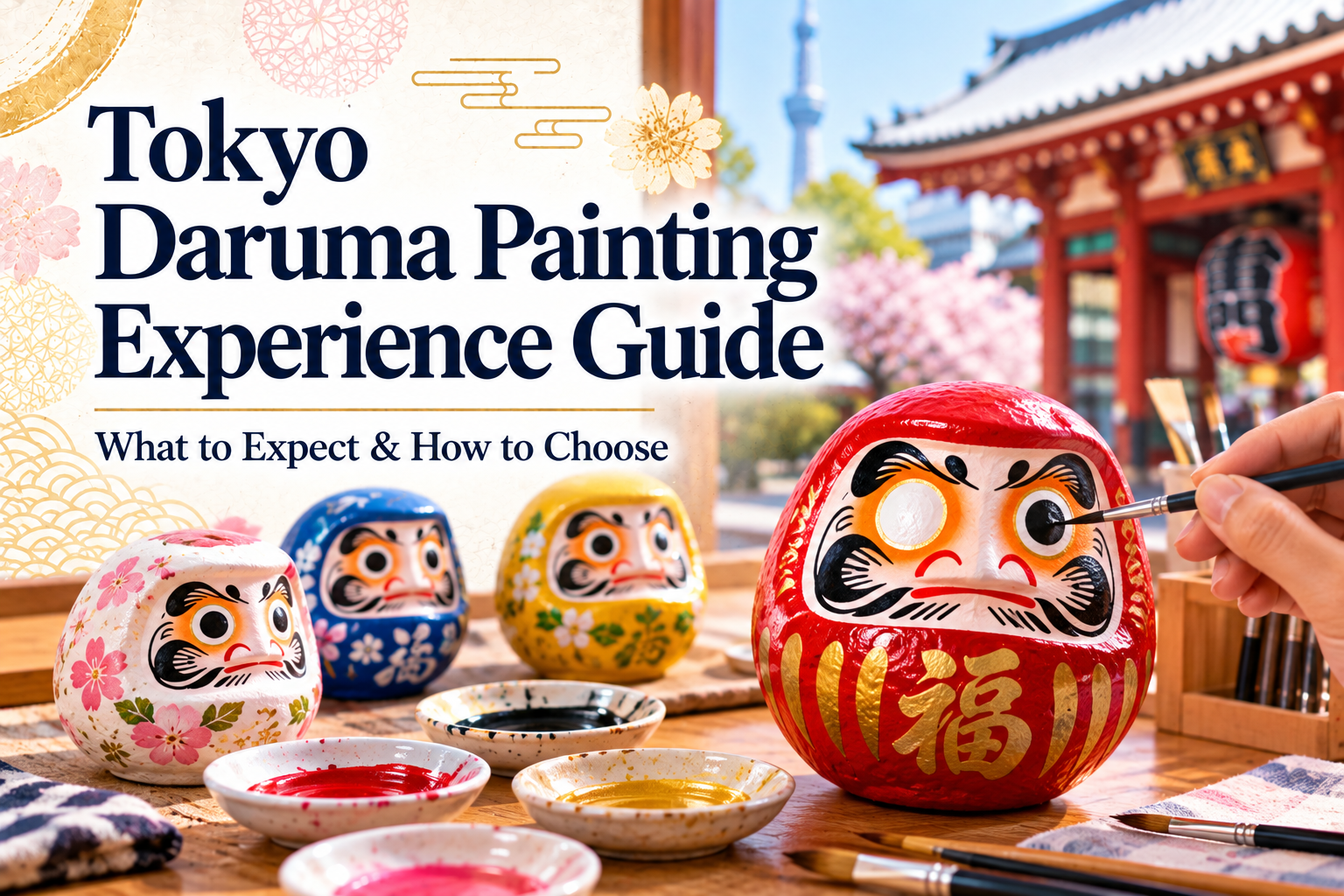
Discover Daruma Painting in Tokyo
A daruma doll is one of Japan’s most recognizable traditional good luck charms.
With its rounded shape, expressive face, and distinctive design, the daruma is often associated with perseverance, determination, and the pursuit of personal goals.
Daruma dolls are commonly displayed in homes, businesses, and other places as symbols of encouragement and good fortune.
For travelers visiting Tokyo, a daruma painting workshop offers an opportunity to explore Japanese culture through a creative hands-on activity.
Depending on the workshop, you may decorate a blank daruma doll, choose your own colors, paint facial features, and create a personalized design.
Some experiences also introduce the symbolism behind the daruma and the traditional custom of painting its eyes.
A finished daruma can become a meaningful souvenir that reflects your memories of Japan and your personal aspirations.
This guide explains what daruma dolls represent, what happens during a painting workshop, typical prices and durations, and how to choose a beginner-friendly daruma painting experience in Tokyo.
What Is a Daruma Doll?
A daruma is a traditional Japanese doll inspired by Bodhidharma, a figure associated with the origins of Zen Buddhism.
Daruma dolls are especially well known for their round shape, bold facial features, and weighted design.
Many traditional daruma dolls are designed to return to an upright position after being tilted.
This characteristic reflects the idea of perseverance and the determination to recover from setbacks.
The Meaning Behind Daruma Dolls
Daruma dolls are commonly associated with:
- Perseverance
- Determination
- Good fortune
- Personal goals
- Success
- Resilience
- New beginnings
People may purchase a daruma when starting a business, preparing for an examination, pursuing a personal ambition, or celebrating a new stage in life.
The doll serves as a visual reminder of a goal or intention.
Why Are Daruma Dolls Often Red?
Red is the traditional color most commonly associated with daruma dolls.
It has long been connected with protective and auspicious symbolism in Japanese culture.
However, modern daruma dolls are available in many colors.
Some sellers associate different colors with particular wishes, such as prosperity, health, or academic success.
These color meanings are not completely standardized and may vary by producer or retailer.
What Makes Daruma Dolls Different from Other Japanese Souvenirs?
Unlike many decorative souvenirs, a daruma can carry a personal meaning.
Travelers may choose a daruma to represent a goal, an important memory, or a new beginning.
A painting workshop adds another personal element because you create the decoration yourself.
The Tradition of Painting Daruma Eyes
One of the best-known daruma customs involves painting the doll’s eyes.
Many traditional daruma dolls are sold with blank white eyes.
A common practice is to paint one eye when making a wish or setting a goal.
The second eye is then painted when the goal has been achieved.
Which Daruma Eye Should You Paint First?
You may encounter different explanations of the traditional eye-painting order.
One commonly described custom is to paint the daruma’s left eye first from the doll’s perspective, which appears on the viewer’s right.
However, practices can vary by region, organization, and personal tradition.
If your workshop includes eye painting, follow the instructor’s explanation.
Do You Have to Paint Both Eyes?
Not necessarily.
Some travelers prefer to leave one eye blank as a reminder of an unfinished goal.
Others may create a decorative daruma with both eyes completed.
Workshop rules and traditional practices differ, so ask your instructor before deciding.
Can You Make a Wish with Your Daruma?
Yes. Daruma dolls are often used as symbols of personal wishes and goals.
You might associate your handmade daruma with a travel memory, a career ambition, a personal challenge, or another meaningful intention.
The value of the tradition lies in the personal commitment and symbolism rather than a guarantee of a particular outcome.
Why Try a Daruma Painting Experience in Tokyo?
A daruma painting workshop combines creativity with Japanese cultural traditions.
Learn About a Traditional Good Luck Charm
Participants can discover the history and symbolism of daruma dolls.
The instructor may explain how daruma are used in Japanese daily life and celebrations.
Create a Personalized Souvenir
Painting your own daruma allows you to choose colors, patterns, and decorative details.
Your finished creation can become a one-of-a-kind souvenir from Tokyo.
Enjoy a Creative Indoor Activity
Daruma painting workshops are generally held indoors.
They can be a useful option during rainy weather or when you want a break from outdoor sightseeing.
Experience Japanese Culture Through Art
A hands-on activity can offer a different perspective from visiting temples, museums, and shopping districts.
By creating a traditional object yourself, you can develop a greater appreciation for its cultural meaning.
Share an Activity with Friends or Family
Some workshops welcome couples, friends, and families.
Painting allows participants to express their creativity while enjoying a shared experience.
Age requirements and supervision rules vary by provider.
Types of Daruma Painting Experiences in Tokyo
Not every daruma workshop offers the same activities.
Understanding the different formats can help you select an experience that matches your interests.
Traditional Daruma Painting Workshops
These workshops focus on decorating a daruma in a style inspired by traditional designs.
Participants may paint facial features, eyebrows, facial hair, and decorative patterns.
The instructor may explain the symbolism of the doll’s appearance.
Creative Daruma Decorating Workshops
Some experiences allow participants to create colorful or contemporary designs.
You may be able to choose unusual colors, patterns, or personal illustrations.
This format can be appealing to travelers who enjoy artistic freedom.
Mini Daruma Painting Workshops
Small daruma dolls are often convenient for travelers.
They require less luggage space and may be easier to transport after the activity.
The available sizes depend on the provider.
Private Daruma Painting Experiences
Private workshops may offer personalized instruction.
They can be suitable for travelers who want additional guidance or a more flexible learning environment.
Private sessions may cost more than standard group workshops.
Family-Friendly Daruma Painting Workshops
Some providers offer workshops suitable for children.
The instructor may simplify the design process or provide extra assistance.
Check minimum ages and supervision requirements before booking.
What Happens During a Daruma Painting Workshop?
The exact process depends on the workshop and the type of daruma being decorated.
A typical beginner-friendly session may include the following steps.
Step 1: Introduction to Daruma Culture
The instructor introduces the history and meaning of daruma dolls.
You may learn about their connection to perseverance, goal setting, and good fortune.
Some workshops also explain the tradition of painting the eyes.
Step 2: Choose Your Daruma Doll
Depending on the provider, participants may select from different sizes, colors, or pre-prepared blank dolls.
Other workshops provide a standard doll for everyone.
Confirm the available options before booking if you have a particular design in mind.
Step 3: Prepare Your Painting Materials
The instructor provides the materials needed for the activity.
These may include:
- Paint
- Brushes
- A prepared daruma doll
- Water containers
- Protective coverings
- Decorative materials
The specific materials depend on the workshop.
Step 4: Plan Your Design
Before painting, you may decide on your preferred colors and decorative style.
Some instructors provide examples or templates.
Others encourage participants to create an original design.
Step 5: Paint Your Daruma
Participants begin decorating their dolls.
The instructor may demonstrate how to paint facial features or traditional patterns.
Depending on the project, you may paint:
- Eyebrows
- Facial hair
- Facial outlines
- Decorative symbols
- Colorful patterns
- Personal details
You can work at your own pace within the workshop schedule.
Step 6: Allow the Paint to Dry
After decorating the doll, the paint may need time to dry.
Some workshops use materials that dry relatively quickly.
Others may require additional waiting time or special handling.
Ask the instructor when the finished daruma will be ready to transport.
Step 7: Take Home Your Daruma
Many workshops allow participants to take their finished daruma home.
Some providers may offer a protective box or carrying bag.
Confirm whether your doll can be taken home immediately or whether additional drying time is required.
How Long Does a Daruma Painting Workshop Take?
The duration depends on the size of the daruma, the complexity of the design, and the workshop format.
| Workshop Type | Approximate Duration | What to Expect |
|---|---|---|
| Short introductory workshop | 30–60 minutes | Simple painting and basic cultural introduction |
| Beginner daruma painting | 60–90 minutes | Guided decoration of a small daruma |
| Creative decorating workshop | 60–120 minutes | More detailed patterns and personalized designs |
| Extended cultural workshop | 90 minutes–2 hours or longer | Cultural explanation and more elaborate decoration |
| Private workshop | Varies | Instruction adapted to the participants |
These are general planning estimates, not confirmed schedules for specific providers.
When planning your itinerary, allow additional time for arrival, preparation, and drying.
How Much Does a Daruma Painting Experience Cost in Tokyo?
Workshop prices depend on the provider, location, duration, group size, and materials.
For general budgeting, an introductory daruma painting experience may cost approximately ¥2,000–¥6,000 per person.
Private sessions, larger dolls, and more elaborate projects may cost more.
These figures are indicative estimates rather than verified prices for specific workshops.
What Affects the Workshop Price?
Several factors may influence the cost:
- Workshop duration
- Daruma size
- Materials
- Group size
- Private or group instruction
- English-language support
- Additional decorative options
- Protective packaging
- Location
- Seasonal demand
Always confirm the latest price before booking.
Are Painting Materials Included?
Many introductory workshops provide the necessary painting materials.
However, inclusions vary.
Before booking, check whether the price covers:
- The daruma doll
- Paint and brushes
- Protective materials
- Instructor guidance
- Decorative accessories
- Packaging
- The finished doll to take home
Some providers may charge extra for larger dolls or premium designs.
Can Beginners Join a Daruma Painting Workshop?
Yes. Many daruma painting workshops are designed for participants with no previous painting experience.
The instructor may demonstrate basic techniques and provide guidance throughout the session.
You do not need to be a professional artist to enjoy the activity.
What Makes a Workshop Beginner-Friendly?
Look for an experience that offers:
- Clear demonstrations
- Simple painting instructions
- All necessary materials
- Examples or templates
- Individual guidance
- Enough time to finish
- A manageable project size
- Opportunities to ask questions
A beginner-friendly workshop should focus on enjoying the creative process rather than achieving a perfect result.
Are English-Language Daruma Painting Workshops Available?
Some cultural experience providers in Tokyo offer daruma painting workshops with English-language instruction.
Other workshops may be conducted primarily in Japanese.
Language support can vary by instructor, date, and booking platform.
Before reserving, confirm:
- Whether the instructor speaks English
- Whether the entire session is conducted in English
- Whether translated materials are available
- Whether interpretation is included
- Whether private English-language sessions can be arranged
Because painting is a visual activity, demonstrations may help participants follow the process.
However, English-language guidance can make the cultural explanations easier to understand.
Where Can You Try Daruma Painting in Tokyo?
Daruma painting experiences may be offered by cultural studios, traditional craft providers, specialty shops, and independent instructors.
Availability changes, so confirm current locations and workshop schedules before booking.
Asakusa
Asakusa is a popular area for travelers interested in Japanese traditions.
A daruma painting workshop can be combined with a visit to Senso-ji Temple and the surrounding shopping streets.
The area is convenient for travelers who want to explore traditional Tokyo.
Nishiarai and Northeastern Tokyo
Nishiarai and nearby areas have connections with traditional religious and local cultural activities.
Depending on the provider, visitors may find daruma-related experiences in this part of Tokyo.
Check the exact workshop address and transportation options before making plans.
Central Tokyo
Cultural experience providers in central Tokyo may offer craft activities suitable for visitors.
Availability of daruma painting varies.
Check the workshop description rather than assuming that all Japanese craft studios offer this activity.
Other Tokyo Neighborhoods
Independent studios and instructors may organize occasional daruma painting sessions in other neighborhoods.
Some experiences may be seasonal or require advance reservations.
How to Choose the Right Daruma Painting Workshop
Choosing the right workshop depends on your interests, schedule, and preferred level of guidance.
1. Check What You Will Paint
Some workshops provide a traditional red daruma.
Others allow you to decorate a blank doll or choose different colors.
Select a format that matches your creative preferences.
2. Confirm the Doll Size
A small daruma is easier to carry during sightseeing and transport in luggage.
A larger doll may provide more space for detailed decoration.
Check the size before booking.
3. Review the Workshop Duration
Short sessions may be suitable for travelers with limited time.
Longer workshops can provide more opportunities to experiment with colors and patterns.
4. Check Language Support
Confirm whether English-language instruction is available on your selected date.
5. Ask About Drying Time
Some painted items require additional drying time.
Check whether you can take your finished daruma home immediately.
6. Review What Is Included
Confirm whether materials, packaging, and the finished doll are included in the advertised price.
7. Consider Group Size
Small-group sessions may provide more individual attention.
Private workshops may be suitable for travelers who prefer personalized instruction.
8. Check the Cancellation Policy
Review refund conditions and rescheduling rules before making a reservation.
9. Consider Accessibility
Ask the provider about seating, workspace accessibility, and assistance if needed.
Painting may involve fine hand movements and close visual attention.
Daruma Painting vs Other Traditional Japanese Experiences
Tokyo offers a wide range of cultural activities.
Comparing them can help you choose an experience that matches your interests.
Daruma Painting vs Japanese Calligraphy
Japanese calligraphy focuses on writing characters using a brush and ink.
It emphasizes brush control, composition, and the expressive qualities of written characters.
Daruma painting focuses on decorating a traditional good luck charm.
Choose calligraphy if you are interested in Japanese writing and brush techniques.
Choose daruma painting if you want to create a colorful decorative souvenir.
Daruma Painting vs Pottery Experiences
Pottery workshops introduce techniques for shaping or decorating ceramic objects.
Some pottery projects require firing and cannot be taken home immediately.
Daruma painting typically involves decorating a prepared doll.
Depending on the materials, you may be able to take your creation home on the same day.
Daruma Painting vs Mizuhiki Knotting
Mizuhiki knotting uses colorful cords to create decorative knots, accessories, and gift ornaments.
Daruma painting uses paint to decorate a traditional doll.
Mizuhiki may appeal to travelers who enjoy precise handcrafts.
Daruma painting may be more appealing to those who enjoy color and illustration.
Daruma Painting vs Traditional Craft Workshops
Traditional craft workshops in Tokyo include activities such as pottery, paper crafts, textile work, and decorative arts.
Daruma painting is distinctive because it combines a creative activity with the symbolism of perseverance and goal setting.
Daruma Painting vs Japanese Souvenir Shopping
Japanese souvenir shopping allows travelers to discover traditional crafts and local products.
A daruma painting workshop offers an opportunity to create a personalized item.
Both activities can be enjoyable parts of a Tokyo itinerary.
Can Children Join a Daruma Painting Workshop?
Some daruma painting experiences are suitable for children.
However, age requirements vary by provider.
Younger children may need adult supervision.
Before booking, check:
- Minimum age requirements
- Whether adults must accompany children
- The type of paint used
- Whether protective clothing is provided
- The complexity of the project
- Workshop duration
- Accessibility and seating arrangements
A short workshop with a simple design may be more suitable for younger participants.
Can You Take a Handmade Daruma Home from Japan?
In many cases, travelers can take a finished daruma doll home as a personal souvenir.
However, transportation and customs requirements depend on the materials and destination country.
How to Pack Your Daruma
To protect your finished doll:
- Allow paint to dry completely
- Use a protective box when available
- Wrap the doll carefully
- Avoid placing heavy objects on top
- Keep it away from moisture
- Follow the instructor’s care instructions
Can You Carry a Daruma on a Plane?
Small, fully dried daruma dolls can often be packed in hand luggage or checked baggage, subject to airline and security rules.
If the item contains unusual materials or is not fully dry, check with the airline.
Are There Customs Restrictions?
Import rules depend on the destination country and the materials used.
Most ordinary decorative souvenirs are straightforward to transport, but you should check applicable customs regulations when necessary.
How to Display and Care for Your Daruma
A finished daruma can be displayed at home or in a workspace.
Choose a Stable Surface
Place the doll on a flat, secure surface where it is unlikely to fall.
Avoid Excessive Moisture
Many traditional daruma dolls are made from paper-based materials.
Moisture can damage the surface or paint.
Protect It from Strong Sunlight
Prolonged exposure to direct sunlight may affect painted colors.
Remember Your Personal Goal
If you associate your daruma with a wish or ambition, consider placing it somewhere you will see regularly.
The doll can serve as a reminder of your commitment.
Practical Tips for Your First Daruma Painting Workshop
Book in Advance
Popular workshop dates may fill up.
Advance booking is especially helpful if you need English-language instruction.
Wear Comfortable Clothing
Painting activities may involve materials that can stain clothing.
Follow any clothing recommendations provided by the workshop.
Choose a Simple Design
If you are new to painting, start with a manageable design.
You can add more detail if time allows.
Ask About the Eye-Painting Tradition
If you want to follow the traditional custom, ask the instructor how the eyes are usually painted.
Allow Enough Time for Drying
Do not schedule your next activity too tightly if the paint needs time to dry.
Protect Your Finished Souvenir
Use appropriate packaging to prevent damage during the rest of your trip.
Take Photos When Permitted
Photographs can help you remember the experience.
Ask the instructor before taking pictures or recording videos.
Frequently Asked Questions About Daruma Painting in Tokyo
What is a daruma doll?
A daruma is a traditional Japanese good luck charm associated with perseverance, determination, and personal goals.
Can beginners try daruma painting?
Yes. Many introductory workshops are designed for beginners and provide step-by-step guidance.
How long does a daruma painting workshop take?
Some introductory workshops take approximately 30–90 minutes, while more elaborate sessions may last two hours or longer.
How much does a daruma painting experience cost?
For general planning, introductory experiences may cost approximately ¥2,000–¥6,000 per person. Actual prices vary.
Can I take my daruma home?
Many workshops allow participants to take home their finished dolls. Confirm drying time and packaging before booking.
Are English-language workshops available?
Some providers offer English-language instruction. Availability depends on the workshop and date.
Do I need painting experience?
No. Many workshops are designed for people with no previous painting experience.
What do the daruma’s eyes mean?
A common tradition is to paint one eye when setting a goal and the other after achieving it.
Can I choose the color of my daruma?
Some workshops offer a choice of colors, while others use traditional red dolls.
Is daruma painting suitable for children?
Some workshops welcome children, but minimum ages and supervision requirements vary.
Can I take a daruma on an international flight?
Small, fully dried decorative dolls can often be transported in luggage, but airline and destination-country rules should be checked.
Final Thoughts: Is a Daruma Painting Experience Worth Trying in Tokyo?
A daruma painting workshop offers a memorable way to explore Japanese culture through creativity.
It is especially suitable for travelers who enjoy hands-on activities, meaningful souvenirs, and learning about traditional customs.
By painting your own daruma, you can create an item that represents your travel memories and personal aspirations.
Before booking, compare workshop prices, duration, doll sizes, English-language support, and drying requirements.
With the right experience, you can leave Tokyo with a handmade souvenir and a deeper understanding of one of Japan’s most recognizable symbols of perseverance.
