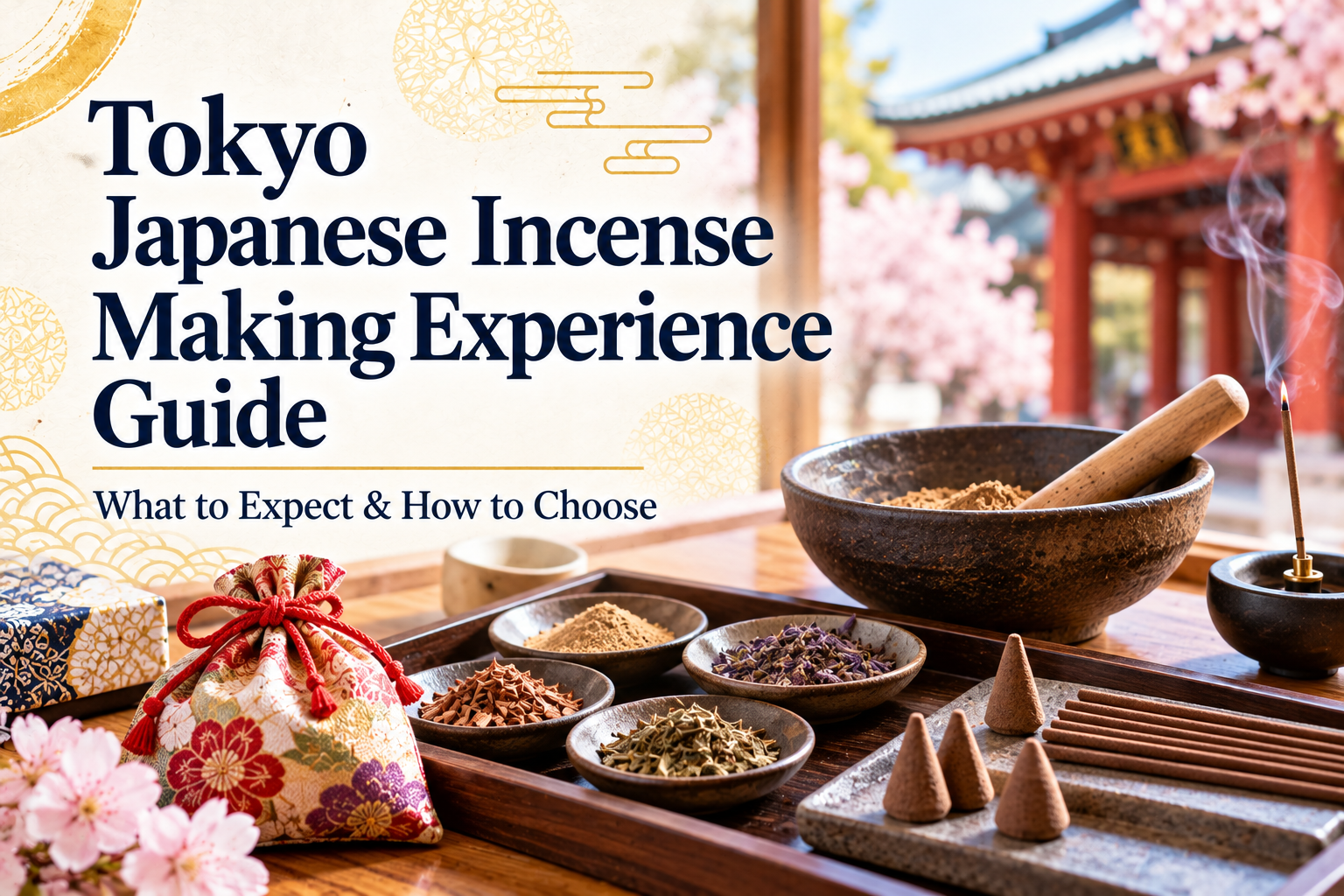
Discover Japanese Incense Making in Tokyo
Japanese incense, known as kō (香), is an important part of Japan’s traditional fragrance culture. For centuries, aromatic woods, herbs, and other fragrant materials have been appreciated in religious ceremonies, cultural gatherings, and everyday life.
Today, travelers visiting Tokyo can explore this tradition through hands-on Japanese incense making experiences.
Depending on the workshop, participants may learn about traditional ingredients, blend their own fragrances, and create incense products to take home.
Unlike simply purchasing incense at a souvenir shop, a workshop offers an opportunity to understand how different scents are combined and how fragrance connects with Japanese culture.
This guide explains what Japanese incense making involves, the types of experiences available in Tokyo, typical prices and durations, and how to choose a beginner-friendly workshop.
What Is Japanese Incense?
Japanese incense is a broad term for aromatic products made from fragrant woods, spices, herbs, and other materials.
It is commonly associated with temples and Buddhist ceremonies, but incense also has a long history in Japanese art, hospitality, and personal enjoyment.
Japanese incense comes in several forms, including sticks, cones, powdered incense, and scented sachets.
Different products are designed to release fragrance in different ways.
Some are burned to produce aromatic smoke, while others release their scent without being lit.
A Brief History of Japanese Incense
Incense arrived in Japan through cultural and religious exchanges with other parts of Asia.
It became closely associated with Buddhism and was used in temples and religious rituals.
Over time, incense appreciation also developed within aristocratic and artistic circles.
The Japanese art of appreciating incense, known as kōdō, became an established cultural practice.
Kōdō is sometimes described as the “Way of Incense” and emphasizes attentive appreciation of fragrance.
Modern incense making workshops may introduce elements of this history, although they are not necessarily formal kōdō lessons.
What Makes Japanese Incense Special?
Japanese incense traditions often emphasize subtle fragrance, carefully selected ingredients, and the experience of appreciating scent.
Common aromatic materials include:
- Sandalwood
- Agarwood
- Cinnamon
- Clove
- Star anise
- Other botanical and aromatic ingredients
The exact ingredients vary by product and workshop.
Some traditional materials, particularly high-quality agarwood, can be expensive or difficult to obtain.
Beginner workshops often use accessible ingredients suitable for hands-on blending.
Why Try an Incense Making Experience in Tokyo?
An incense making workshop offers a different type of cultural experience from sightseeing, shopping, or food-related activities.
Explore Japanese Culture Through Fragrance
Scent is an important part of many cultural traditions.
An incense workshop introduces a sensory dimension of Japanese culture that travelers may not encounter during ordinary sightseeing.
You can learn how ingredients are selected and how their aromas complement one another.
Create a Personalized Souvenir
Some workshops allow participants to create their own fragrance blend.
Depending on the experience, you may take home incense sticks, scented sachets, or another finished product.
A personalized fragrance can become a memorable souvenir associated with your visit to Japan.
Enjoy a Hands-On Indoor Activity
Incense making is usually conducted indoors.
It can be a convenient activity during rainy weather or when you want a break from outdoor sightseeing.
Workshop duration varies, but some introductory sessions can fit into a relatively short travel itinerary.
Learn Something You Cannot Experience Through Shopping Alone
Buying incense allows you to enjoy Japanese fragrances at home.
Making incense introduces the ingredients, blending process, and cultural background behind the finished product.
For travelers interested in traditional crafts, this educational element can make the experience especially rewarding.
Types of Japanese Incense Making Experiences
Not all incense workshops teach the same process.
Before booking, it is useful to understand the differences between common formats.
Incense Stick Making
Some workshops teach participants how to make incense sticks using powdered aromatic ingredients and a suitable binding material.
Depending on the method, participants may mix ingredients, form the incense, and prepare it for drying.
Freshly made incense may require additional drying time before it can be burned.
Ask the provider whether the finished sticks can be taken home immediately and when they will be ready to use.
Incense Cone Making
Incense cones are small, shaped pieces of combustible incense.
A workshop may involve blending aromatic powders with a binding mixture and shaping the material into cones.
The finished incense may need time to dry before use.
Scented Sachet Making
Scented sachets, sometimes called nioi-bukuro, contain fragrant materials inside a small fabric pouch.
They are designed to release scent without being burned.
Participants may select and blend ingredients before placing them into a decorative bag.
This format can be appealing to travelers who prefer a smoke-free souvenir.
Traditional Fragrance Blending
Some experiences focus primarily on selecting and combining aromatic materials.
Participants may compare different scents and create a personal fragrance mixture.
The finished blend might be used in a sachet or another incense product.
Incense Appreciation Experiences
Some cultural activities focus on smelling and appreciating incense rather than making it.
These may introduce elements of kōdō or traditional fragrance appreciation.
If your main goal is to create a souvenir, confirm that the experience includes hands-on incense making rather than observation or fragrance appreciation alone.
What Happens During an Incense Making Workshop?
The exact process depends on the type of incense being created.
A beginner-friendly workshop may follow the steps below.
Step 1: Introduction to Japanese Incense
The instructor explains the cultural background of Japanese incense.
You may learn about the different forms of incense and their traditional uses.
Some workshops also introduce the history of fragrance appreciation in Japan.
Step 2: Explore Aromatic Ingredients
Participants may be introduced to several fragrant woods, spices, or botanical materials.
The instructor may explain the characteristics of each ingredient.
You might smell individual materials to understand how they differ.
Step 3: Choose a Fragrance Combination
Depending on the workshop, you may select ingredients for your own blend.
The instructor can explain how stronger and subtler aromas interact.
Some workshops provide established recipes, while others allow more experimentation.
Step 4: Mix the Ingredients
For combustible incense, participants may combine powdered fragrance materials with a suitable binding mixture.
For sachets, the process may involve measuring and blending dry aromatic ingredients.
The instructor guides participants through the appropriate proportions and handling techniques.
Step 5: Shape or Package Your Incense
If you are making sticks or cones, you may shape the mixture by hand or with simple tools.
If you are making a sachet, you may place your blend into a fabric pouch.
The finished appearance depends on the workshop format.
Step 6: Learn How to Use Your Creation
Before the session ends, the instructor may explain how to store and use the finished product.
For combustible incense, this should include information about drying, safe burning, and ventilation.
For sachets, the instructor may explain where to place the pouch and how to preserve its fragrance.
How Long Does an Incense Making Workshop Take?
Workshop duration depends on the activity, the number of ingredients introduced, and the amount of cultural explanation provided.
For general travel planning, the following ranges may be useful.
| Workshop Type | Approximate Duration | Typical Activities |
|---|---|---|
| Short fragrance introduction | 30–60 minutes | Learn about ingredients and simple blending |
| Scented sachet workshop | 45–90 minutes | Select aromas, blend ingredients, and fill a pouch |
| Incense stick or cone workshop | 60–120 minutes | Blend ingredients and shape incense |
| Extended cultural experience | 90 minutes–2 hours or longer | Fragrance history, blending, and additional cultural activities |
| Private workshop | Varies | Customized instruction and hands-on practice |
These are indicative estimates rather than confirmed schedules for individual providers.
Some products may require drying after the workshop, even when the session itself is short.
How Much Does an Incense Making Experience Cost in Tokyo?
Prices vary according to the provider, workshop duration, group size, ingredients, and whether participants can take home their creations.
For general budgeting, a basic incense making experience may cost approximately ¥3,000–¥8,000 per person.
Private sessions, premium ingredients, or extended cultural experiences may cost more.
These figures are planning estimates and should not be treated as verified prices for specific workshops.
What Affects the Price?
Workshop fees may depend on:
- Session duration
- Number of participants
- Private or group instruction
- English-language support
- Type of incense being made
- Quality and quantity of ingredients
- Number of finished products
- Packaging and souvenir materials
- Additional cultural demonstrations
Check the latest workshop description before booking.
Are Materials Included?
Many hands-on workshops provide the materials required for the activity.
However, the exact inclusions vary.
Confirm whether the price covers:
- Aromatic ingredients
- Mixing and shaping materials
- Tools and equipment
- Fabric pouches or containers
- Finished incense products
- Packaging for travel
Some workshops may charge extra for premium materials or additional products.
Can Beginners Join an Incense Making Workshop?
Yes. Many introductory incense making experiences are designed for participants with no previous knowledge of fragrance blending.
The instructor typically explains the materials and demonstrates the required steps.
Some workshops provide predetermined ingredient combinations, making the process easier for beginners.
What Makes a Workshop Beginner-Friendly?
Look for an experience with:
- Clear step-by-step instruction
- A manageable selection of ingredients
- Opportunities to smell ingredients before choosing
- Guidance on blending proportions
- All necessary tools and materials
- Instructions for using the finished product
- Time to ask questions
A suitable beginner workshop should help you understand both the process and the purpose of the materials.
Are English-Language Incense Making Workshops Available?
Some cultural experience providers in Tokyo offer incense making sessions with English-language instruction.
Others may provide Japanese-language lessons with interpretation or translated materials.
Availability can depend on the date, instructor, and booking arrangement.
Before reserving a workshop, check:
- Whether the instructor speaks English
- Whether the entire session is conducted in English
- Whether English-language materials are available
- Whether interpretation is included
- Whether a private English-language session can be arranged
Clear communication is particularly useful when handling powdered ingredients and learning safe usage instructions.
Where Can You Try Incense Making in Tokyo?
Incense-related cultural experiences may be offered by traditional fragrance shops, cultural studios, and independent instructors.
Availability and locations change, so confirm the current schedule and meeting point before making travel plans.
Asakusa
Asakusa is a convenient area for travelers interested in traditional Japanese culture.
An incense making experience in or near Asakusa can complement visits to Senso-ji Temple, traditional shops, and nearby cultural attractions.
If you are already planning a day in eastern Tokyo, check whether a suitable workshop is available in the area.
Ginza and Central Tokyo
Central Tokyo offers access to shopping districts and cultural activities.
An incense workshop can be combined with department store visits or souvenir shopping.
Check the workshop’s exact address, as the meeting location may differ from the provider’s main store.
Other Tokyo Neighborhoods
Independent cultural studios and instructors may offer fragrance workshops in other parts of Tokyo.
Smaller workshops can appeal to travelers looking for personalized instruction.
Compare accessibility, session times, and language support before booking.
How to Choose the Right Incense Making Workshop
Choosing a suitable workshop involves more than comparing prices.
The type of incense, materials, and final product can significantly affect your experience.
1. Decide What You Want to Make
The first question is whether you want to create incense sticks, cones, a scented sachet, or a fragrance blend.
Each format offers a different experience.
If you want a smoke-free souvenir, a scented sachet may be preferable.
If you want to learn how combustible incense is formed, look for a stick or cone making workshop.
2. Confirm the Hands-On Activities
Some experiences focus on fragrance appreciation or demonstrations.
Others involve actively mixing and shaping ingredients.
Read the description carefully to confirm what participants will actually do.
3. Check the Workshop Duration
Short sessions may introduce only a few ingredients and techniques.
Longer experiences may provide more time for fragrance comparison and cultural explanations.
Choose a duration that matches your interests and sightseeing schedule.
4. Ask About the Finished Product
Confirm what you can take home.
For example:
- How many incense sticks or cones will you make?
- Will you receive a scented sachet?
- Is the finished product packaged for travel?
- Does it need to dry before use?
- Can you carry it home immediately?
These details can make a significant difference when planning your trip.
5. Review Language Support
If you prefer English-language instruction, confirm that it is available for your selected date.
Do not assume that every session offered by a provider includes the same language support.
6. Consider Ingredient Sensitivities
Incense workshops involve fragrant materials.
If you have allergies, asthma, fragrance sensitivity, or other relevant concerns, contact the provider before booking.
Ask about the ingredients used and whether the activity involves smoke, airborne powders, or strong scents.
7. Check the Location and Cancellation Policy
Choose a workshop that fits your travel route.
Review the cancellation deadline, refund conditions, and whether rescheduling is possible.
Japanese Incense Ingredients You May Encounter
Learning about common ingredients can make the workshop more interesting.
Sandalwood
Sandalwood is valued for its warm, woody fragrance.
It is used in many incense traditions.
The scent may be described as soft, smooth, or calming, although fragrance perception varies between individuals.
Agarwood
Agarwood, known in Japanese as jinkō, is a highly valued aromatic wood.
Its fragrance can be complex and varies according to the wood’s origin and characteristics.
Premium agarwood is expensive, so beginner workshops may discuss it without using substantial quantities.
Cinnamon
Cinnamon can add a warm, spicy note to an incense blend.
It may be used alongside woody ingredients.
Clove
Clove has a distinctive, strong aroma.
Small quantities can have a noticeable effect on a fragrance mixture.
Star Anise
Star anise has a sweet, spicy fragrance.
It may be introduced as one of several aromatic ingredients in a blending activity.
Other Fragrant Materials
Workshops may use additional botanical ingredients or prepared fragrance mixtures.
Ingredient selection varies, and not every workshop uses all the materials described above.
If you have a known sensitivity, request an ingredient list before participating.
Incense Making vs Kōdō: What Is the Difference?
Incense making and kōdō are related to Japanese fragrance culture, but they are not the same activity.
Incense Making
Incense making focuses on creating a fragrance product.
Participants may blend ingredients and shape incense or prepare scented sachets.
The emphasis is on materials, production, and personal fragrance preferences.
Kōdō
Kōdō is a traditional Japanese art centered on appreciating incense.
It has established customs and may involve structured fragrance-listening activities.
In Japanese incense culture, the act of appreciating fragrance is sometimes described as “listening” to incense.
A formal kōdō experience is different from a casual incense making workshop.
Which Should You Choose?
Choose incense making if you want a hands-on craft activity and a personalized souvenir.
Choose a kōdō introduction if you are especially interested in traditional fragrance appreciation and cultural etiquette.
Some experiences may combine elements of both.
Incense Making vs Other Traditional Japanese Experiences
Tokyo offers a wide range of cultural workshops.
Understanding the differences can help you choose the right activity.
Incense Making vs Kintsugi
Kintsugi is the Japanese art of repairing broken pottery.
Workshops may introduce decorative repair techniques using lacquer or modern alternative materials.
Incense making focuses on fragrance ingredients and blending rather than ceramic repair.
Choose kintsugi if you are interested in pottery restoration and the visual beauty of repaired objects.
Choose incense making if you prefer a sensory activity centered on fragrance.
Incense Making vs Furoshiki Wrapping
Furoshiki wrapping involves folding and tying cloth to wrap gifts or carry objects.
It teaches practical techniques that can be reused with different fabrics.
Incense making focuses on aromatic materials and creating fragrance products.
Furoshiki may be more suitable if you want a practical everyday skill, while incense making may appeal to travelers interested in scents and traditional fragrance culture.
Incense Making vs Washi Paper Making
Washi paper making introduces the traditional process of creating Japanese paper from plant fibers.
Participants may learn how paper sheets are formed and decorated.
Incense making focuses on blending fragrant materials rather than producing paper.
Both activities can offer a hands-on introduction to Japanese craftsmanship.
Incense Making vs Traditional Craft Workshops
Traditional craft workshops in Tokyo may involve ceramics, textiles, printing, paper, or other materials.
Incense making is distinctive because fragrance is the main creative element.
It may be particularly appealing to travelers who enjoy sensory experiences and personalized souvenirs.
Safety Tips for Incense Making Experiences
Most beginner-friendly incense workshops are designed to provide a supervised environment.
However, aromatic materials and combustible products require appropriate care.
Check for Allergies and Fragrance Sensitivities
Some ingredients may cause irritation or allergic reactions in sensitive individuals.
Contact the provider if you have concerns about fragrance exposure, botanical ingredients, or airborne powders.
Do not assume that natural ingredients are automatically harmless.
Avoid Inhaling Powders
If the workshop involves powdered ingredients, follow the instructor’s handling instructions.
Avoid deliberately inhaling powders or creating unnecessary dust.
Use Burning Incense Carefully
If you take home combustible incense, follow the provider’s usage instructions.
When burning incense:
- Use a stable, heat-resistant incense holder
- Keep it away from flammable materials
- Provide appropriate ventilation
- Never leave burning incense unattended
- Keep it away from children and pets
- Extinguish it completely after use
Incense smoke can affect indoor air quality, so use particular caution if you have respiratory sensitivities.
Confirm Drying Requirements
Freshly made incense may not be ready to burn immediately.
Ask the instructor how long it needs to dry and how to store it safely during that period.
Follow Workshop Instructions
Use only the materials and methods provided by the instructor.
Do not taste ingredients or apply fragrance mixtures to your skin unless the product is specifically designed and approved for that use.
Can Children Join an Incense Making Workshop?
Some incense making activities may be suitable for older children, particularly simple scented sachet workshops.
However, age requirements vary by provider.
Workshops involving powders, strong fragrances, or combustible products may have additional restrictions.
Before booking, confirm:
- Minimum participant age
- Whether adult supervision is required
- Whether the workshop involves smoke or heated materials
- Whether ingredients are suitable for children
- Whether family-friendly sessions are available
For younger participants, a smoke-free sachet workshop may be worth considering.
Can You Take Handmade Incense Home from Japan?
Many workshops allow participants to take home their finished products.
However, you should check the product’s ingredients, packaging, and travel requirements.
Packing Incense for Travel
Pack finished incense carefully to prevent breakage or spills.
Sticks and cones may be fragile.
Scented sachets should be stored in a way that protects the fabric and prevents aromatic powders from escaping.
International Travel Considerations
Customs and import regulations vary by destination country.
Some plant materials, wood products, and animal-derived fragrance ingredients may be subject to restrictions.
Ask the workshop provider for information about the product’s ingredients and check the applicable rules before traveling internationally.
Do not assume that every handmade incense product can be imported into every country.
Practical Tips for Your First Incense Making Workshop
A little preparation can help you enjoy the experience.
Book in Advance
English-language and small-group workshops may have limited availability.
Advance reservations can help you secure a suitable session.
Avoid Wearing Strong Perfume
Strong perfume or scented personal products may make it harder to distinguish subtle fragrances.
Consider avoiding them on the day of your workshop.
Arrive on Time
Fragrance workshops may begin with important instructions about ingredients and handling.
Arriving on time allows you to follow the full introduction.
Ask Questions About Ingredients
If you enjoy a particular scent, ask the instructor about the materials that create it.
Understanding the blend can make your finished souvenir more meaningful.
Take Notes When Allowed
You may want to remember the names of ingredients or the proportions used.
Ask whether photographs or notes are permitted during the session.
Confirm Storage Instructions
Before leaving, ask how to store your finished incense and how long its fragrance may last.
Storage requirements depend on the ingredients and product type.
Frequently Asked Questions About Incense Making in Tokyo
What is Japanese incense?
Japanese incense refers to aromatic products made from fragrant woods, spices, herbs, and other ingredients. It is used in religious, cultural, and everyday settings.
Can beginners make Japanese incense?
Yes. Many introductory workshops are designed for beginners and provide guided instruction.
How long does an incense making workshop take?
Some workshops take approximately 45–90 minutes, while more detailed sessions may last two hours or longer.
How much does an incense making workshop cost?
For planning purposes, basic experiences may cost approximately ¥3,000–¥8,000 per person. Actual prices depend on the provider and workshop format.
Can I take my handmade incense home?
Many workshops allow participants to take home their creations, but some products may require additional drying time.
Are English-language incense workshops available in Tokyo?
Some providers offer English-language sessions or interpretation. Confirm availability for your preferred date.
Is incense making the same as kōdō?
No. Incense making focuses on creating fragrance products, while kōdō is a traditional Japanese art centered on appreciating incense.
Can children participate?
Some workshops may accept children, but minimum ages and supervision requirements vary.
Is incense making safe for people with allergies?
It depends on the ingredients and the individual’s sensitivities. Contact the provider before booking if you have allergies or fragrance-related concerns.
Can I bring handmade incense back to my country?
Import rules vary by destination and ingredients. Check the relevant customs and agricultural restrictions before traveling.
Final Thoughts: Is an Incense Making Experience Worth Trying in Tokyo?
A Japanese incense making workshop offers an opportunity to explore traditional culture through fragrance.
It can be a rewarding experience for travelers interested in hands-on crafts, Japanese aesthetics, and personalized souvenirs.
Whether you choose incense sticks, cones, or a scented sachet, the experience can introduce you to aromatic ingredients and the traditions behind Japanese fragrance culture.
Before booking, compare the workshop format, duration, price, English-language support, materials, and finished products.
With the right workshop, you can take home both a memorable fragrance and a deeper appreciation of Japan’s incense traditions.
