Discover Kintsugi: The Japanese Art of Repairing Broken Pottery
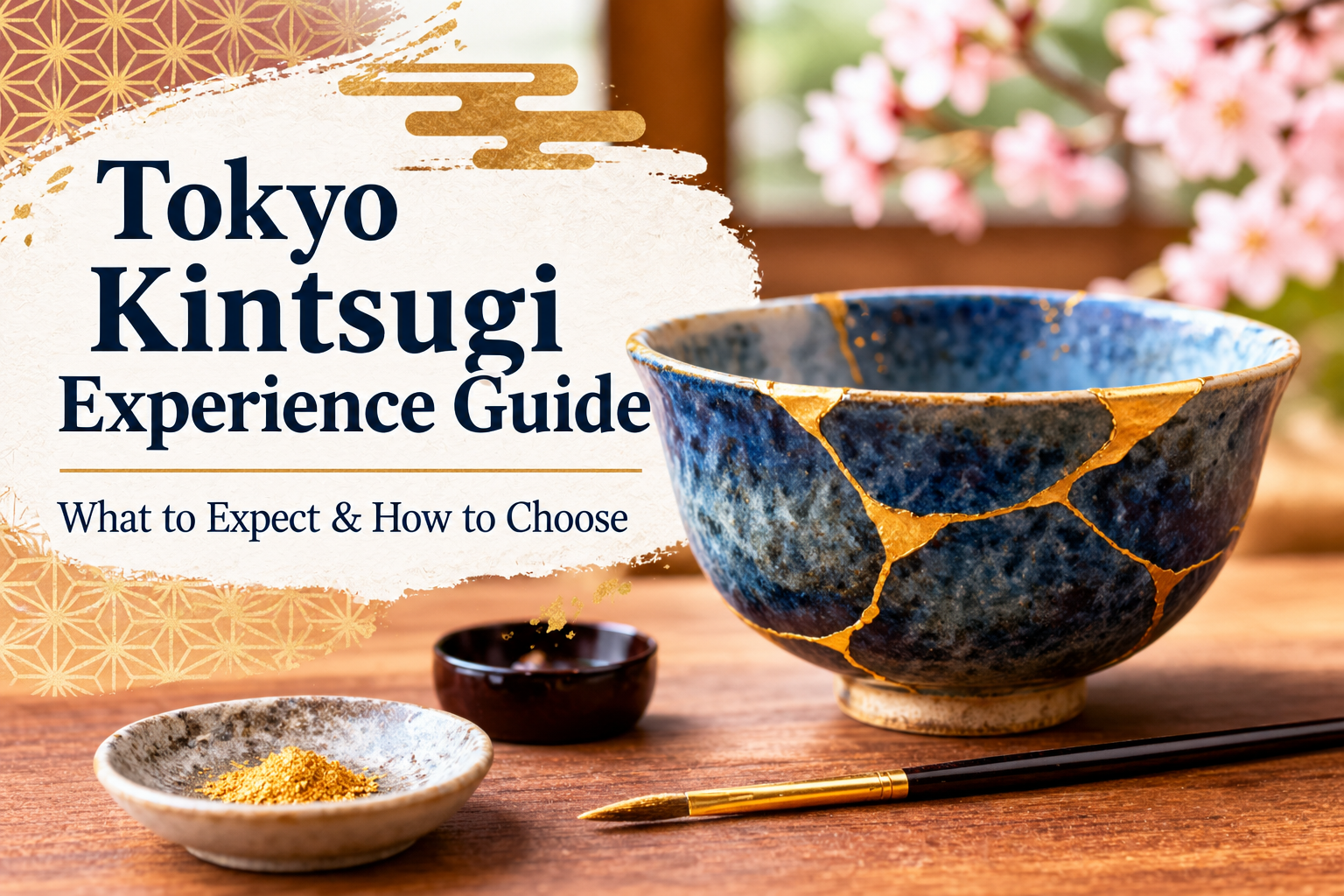
Kintsugi is a traditional Japanese technique for repairing broken pottery using lacquer and decorative materials, often including gold-colored finishes. Rather than hiding cracks, kintsugi highlights them, turning damage into part of an object’s history and appearance.
For travelers visiting Tokyo, a kintsugi workshop offers an opportunity to explore Japanese craftsmanship, creativity, and the cultural appreciation of repairing and reusing objects.
You do not need previous pottery or art experience to participate in many beginner-friendly workshops. However, the materials, techniques, and time required can vary significantly between experiences.
This guide explains what kintsugi is, how workshops work, the difference between traditional and modern methods, typical prices, and how to choose a suitable experience in Tokyo.
What Is Kintsugi?
Kintsugi, meaning “gold joinery,” is a Japanese craft associated with repairing damaged ceramic objects.
In traditional kintsugi, artisans use natural urushi lacquer to join broken pieces, fill missing areas, and finish repaired lines with decorative metal powder, which may include real gold.
The resulting lines remain visible, creating a distinctive appearance that celebrates the object’s repair rather than concealing it.
Kintsugi is often connected with broader Japanese aesthetic ideas, including an appreciation for imperfection, age, and change.
However, kintsugi is first and foremost a practical craft that requires knowledge of materials, careful preparation, and considerable patience.
Traditional Kintsugi vs Modern Kintsugi
One of the most important things to understand before booking a workshop is that not every experience uses traditional kintsugi techniques.
Traditional kintsugi generally involves:
- Natural urushi lacquer
- Multiple stages of application and curing
- Careful joining and filling of damaged areas
- Decorative finishing with metal powder
- A process that may take weeks or longer
Modern or simplified kintsugi workshops may use:
- Epoxy adhesives or other synthetic materials
- Modern putties and fillers
- Gold-colored paint or metallic powder
- Faster drying and finishing techniques
- Projects designed to be completed in one session
Both approaches can provide enjoyable learning experiences, but they are not technically identical.
If learning traditional urushi-based restoration is your main goal, confirm the materials and process before booking.
Why Try a Kintsugi Workshop in Tokyo?
Tokyo offers opportunities to experience traditional Japanese craftsmanship through workshops, cultural studios, and specialized instructors.
A kintsugi experience can be particularly appealing for travelers interested in meaningful souvenirs and hands-on cultural activities.
Learn About Japanese Craftsmanship
A workshop introduces you to the care and attention involved in repairing ceramic objects.
You may learn why different materials are selected, how broken pieces are prepared, and how decorative lines are created.
Create a Personal Souvenir
Some workshops allow participants to take home a repaired ceramic item.
Depending on the experience, you may work on a provided object or bring your own damaged pottery.
A completed piece can serve as a reminder of your time in Japan.
Explore a Different Perspective on Repair
Kintsugi encourages participants to consider repair as a creative process.
Rather than treating visible damage as something that must always be concealed, the technique allows repaired areas to become an intentional part of the design.
Enjoy an Indoor Cultural Activity
Many workshops take place indoors, making them a useful option during rainy weather or particularly hot or cold days.
They can also fit into a Tokyo itinerary alongside museums, shopping, and other cultural experiences.
What Happens During a Kintsugi Experience?
The exact workshop process depends on whether the instructor teaches traditional or simplified kintsugi.
A beginner-friendly session may include the following steps.
Step 1: Introduction to Kintsugi
The instructor explains the history, materials, and basic techniques used in kintsugi.
You may see examples of repaired pottery and learn how different styles of decorative lines are produced.
This introduction is especially valuable if you have never encountered the craft before.
Step 2: Choose or Receive a Ceramic Piece
Some workshops provide a pre-broken ceramic dish, cup, or small decorative object.
Others allow participants to choose from several available pieces.
A few specialized workshops may accept personal pottery, although suitability depends on the type and condition of the object.
Do not assume you can bring your own item unless the workshop explicitly permits it.
Step 3: Prepare the Broken Areas
The instructor may demonstrate how damaged surfaces are cleaned, aligned, or prepared for repair.
Depending on the workshop, some preparation may already be completed before your arrival.
Traditional restoration can involve several preparation stages that are difficult to reproduce in a short tourist session.
Step 4: Join or Fill the Damaged Sections
You may apply adhesive, filler, or lacquer-based materials under supervision.
In simplified workshops, modern materials are often used so that participants can experience the basic repair process within a limited period.
Traditional urushi-based repairs require controlled curing and should not be rushed.
Step 5: Create Decorative Repair Lines
Once the repair reaches the appropriate stage, the visible lines may be decorated.
Depending on the workshop, this can involve metallic powder, gold-colored paint, or other finishing materials.
The instructor will explain how to apply the decorative finish.
Step 6: Finish and Collect Your Work
Some simplified workshops allow participants to take home their finished item on the same day.
Others require additional drying, curing, or finishing time.
Traditional kintsugi generally cannot be completed from start to finish in a single short session.
Before booking, confirm whether your finished object will be ready to take home and whether shipping or later collection is available.
How Long Does a Kintsugi Workshop Take?
Workshop duration varies considerably depending on the materials and techniques used.
| Workshop Type | Approximate Duration | What to Expect |
|---|---|---|
| Short introductory experience | 60–90 minutes | Demonstration and simplified decorative techniques |
| Beginner hands-on workshop | 90 minutes–3 hours | Guided repair using accessible materials |
| Extended craft session | Half day or longer | More detailed instruction and multiple techniques |
| Traditional kintsugi course | Multiple sessions over weeks or longer | Urushi-based repair and curing stages |
These durations are general planning estimates, not guaranteed schedules.
If your Tokyo itinerary is limited, a simplified introductory experience may be the most practical option.
Travelers seeking authentic traditional restoration techniques should expect a longer learning process.
How Much Does a Kintsugi Experience Cost in Tokyo?
Prices depend on the instructor, workshop duration, materials, group size, and whether a ceramic object is included.
As a general planning reference, introductory workshops may cost approximately ¥4,000–¥12,000 or more per person.
Private sessions, specialized instruction, and workshops using traditional materials may cost considerably more.
What Can Affect the Price?
Several factors influence workshop fees:
- Duration of the session
- Traditional versus simplified techniques
- Materials and decorative finishes
- Whether pottery is provided
- Group or private instruction
- English-language support
- Shipping or later collection arrangements
Prices and inclusions change, so always check the current booking details.
Questions to Ask Before Paying
Before booking, confirm:
- Is the ceramic object included?
- Are all tools and materials provided?
- Does the workshop use natural urushi or modern substitutes?
- Is the decorative finish real gold or gold-colored material?
- Can you take the finished piece home immediately?
- Are shipping or collection fees charged separately?
Understanding these details helps you compare experiences accurately.
Can Beginners Join a Kintsugi Workshop?
Yes. Many kintsugi experiences are designed for first-time participants.
A beginner workshop generally introduces the materials and provides step-by-step guidance.
You may not need previous experience with ceramics, painting, or restoration.
However, the difficulty depends on the specific project.
What Makes a Workshop Beginner-Friendly?
Look for experiences that offer:
- Clear demonstrations
- Small groups or individual guidance
- All required materials
- A manageable ceramic project
- A realistic completion schedule
- Instructions available in a language you understand
A good introductory experience should explain what participants will actually do, rather than simply promising a finished souvenir.
Are English-Language Kintsugi Workshops Available?
Some Tokyo workshops offer instruction in English or provide English-speaking staff.
Others operate primarily in Japanese.
Language support may depend on the date, instructor, or booking arrangement.
Before making a reservation, check whether:
- The full session is conducted in English
- An English-speaking instructor is available
- Written instructions are provided in English
- Translation support is included
- A private English-language session can be arranged
Do not assume that an English-language booking page guarantees English-language instruction.
Where Can You Experience Kintsugi in Tokyo?
Kintsugi workshops may be offered by craft studios, cultural experience providers, and independent instructors across Tokyo.
Availability changes, so choosing a workshop based on its teaching method and location is more useful than relying on a fixed list of venues.
Asakusa and Surrounding Areas
Asakusa is a popular destination for travelers interested in traditional Japanese culture.
A kintsugi workshop in or near this area can be combined with visits to Senso-ji Temple, traditional shopping streets, and other cultural activities.
Central Tokyo
Workshops in central Tokyo may be convenient for travelers staying near major transportation hubs.
Consider travel time from your accommodation, particularly if the session has a fixed starting time.
Residential and Creative Neighborhoods
Some independent studios operate outside major tourist districts.
These workshops may offer smaller groups or specialized instruction.
Check the nearest station, walking directions, and whether advance reservations are required.
How to Choose the Right Kintsugi Workshop
Choosing a suitable experience requires more than comparing prices.
The most important factors are the technique, materials, time commitment, and what you can take home.
1. Decide Between Traditional and Simplified Kintsugi
If your goal is to understand traditional urushi restoration, look for a workshop that explicitly describes its lacquer-based methods.
If your goal is to enjoy a short creative experience during a vacation, a simplified workshop may be more convenient.
Neither should be confused with the other.
2. Check the Materials
Look for a clear description of the materials used.
The terms “gold repair” and “kintsugi-style” do not necessarily mean the workshop uses real gold or natural urushi.
If authenticity is important to you, ask the provider directly.
3. Confirm the Completion Time
Some projects require drying or curing after the workshop.
Check whether you can collect your item on the same day, return later, or arrange shipping.
This is especially important if you are leaving Tokyo soon.
4. Review Group Size and Instruction
Small-group experiences may offer more opportunities to ask questions.
Private workshops may be suitable for travelers who want personalized instruction.
However, group size alone does not determine workshop quality.
5. Understand What Is Included
Check whether the advertised price includes pottery, materials, protective equipment, and any finishing or shipping costs.
6. Consider the Location
Choose a workshop that fits naturally into your itinerary.
A centrally located workshop may save travel time, while a specialized studio farther away may be worth visiting for its teaching method.
Is Kintsugi Safe?
Safety depends on the materials and procedures used.
Traditional urushi lacquer contains compounds that can cause allergic contact dermatitis, sometimes producing significant skin reactions.
Proper handling, protective equipment, and instruction are essential.
Some modern adhesives and finishing materials also require ventilation or precautions.
Before participating:
- Follow the instructor’s safety instructions
- Wear protective equipment when provided
- Avoid touching uncured materials unnecessarily
- Tell the instructor about relevant material allergies or sensitivities
- Keep food and drinks away from the work area
- Ask whether children can safely participate
If you have a known sensitivity to urushi or related materials, contact the workshop before booking.
Can Children Join a Kintsugi Workshop?
Some workshops welcome families, but age requirements vary.
Projects involving sharp ceramic edges, adhesives, lacquer, or specialized tools may not be appropriate for younger children.
Family-friendly experiences may use simplified materials and prepared ceramic pieces.
Before booking, confirm the minimum age, supervision requirements, and materials used.
Do not assume that all kintsugi workshops are suitable for children.
Can You Use a Repaired Kintsugi Bowl for Food?
Not necessarily.
The food safety of a repaired ceramic item depends on the original pottery, the repair materials, curing process, and intended use.
Many short tourist workshops create decorative objects rather than tableware suitable for food or drink.
Some modern adhesives, paints, and metallic finishes are not intended for food contact.
Even traditional repairs may have restrictions related to heat, microwaves, dishwashers, and prolonged soaking.
Ask the instructor whether your completed piece is safe for food use.
Unless the provider clearly confirms that it is suitable for the intended use, treat the finished item as decorative.
Can You Bring Your Own Broken Pottery?
Some specialized instructors may accept personal ceramic objects.
However, not every piece is suitable for a beginner workshop.
The instructor may need to assess:
- Ceramic material
- Number and size of broken pieces
- Missing sections
- Surface coatings
- Previous repairs
- Intended use after restoration
If you want to repair a meaningful personal item, contact the workshop in advance and provide photographs.
Do not travel with fragile broken pottery without considering safe packaging and transportation.
Kintsugi vs Pottery Workshops
Kintsugi and pottery workshops both involve ceramic objects, but they teach different skills.
Pottery workshops generally focus on forming objects from clay.
Participants may learn hand-building, wheel throwing, or surface decoration.
Kintsugi focuses on repairing existing ceramic pieces.
It involves joining damaged areas and making repairs part of the finished appearance.
If you want to create a new bowl or cup, a pottery workshop may be more suitable.
If you are interested in restoration and decorative repair, kintsugi offers a different experience.
Kintsugi vs Other Traditional Japanese Experiences
Tokyo offers many hands-on cultural activities.
Comparing kintsugi with other crafts can help you choose the best workshop for your interests.
Kintsugi vs Washi Paper Making
Washi paper making introduces the traditional process of creating Japanese paper from plant fibers.
Participants may form sheets, explore textures, and decorate handmade paper.
Kintsugi focuses on repairing damaged ceramics rather than creating a new material.
Choose washi paper making if you enjoy paper crafts and tactile materials.
Choose kintsugi if you are interested in restoration and the visual character of repaired objects.
Kintsugi vs Indigo Dyeing
Indigo dyeing uses dye to create patterns and colors on fabric.
The activity often involves folding, binding, dipping, and revealing designs.
Kintsugi uses a different set of materials and emphasizes ceramic repair.
Both can result in a personalized souvenir, but their techniques and safety considerations differ.
Kintsugi vs Calligraphy
Japanese calligraphy focuses on brush control, ink, and the expressive formation of characters.
Kintsugi focuses on repairing and decorating ceramic surfaces.
Calligraphy may appeal to travelers interested in writing and visual expression.
Kintsugi may be a better choice for those interested in physical objects and traditional restoration.
Kintsugi vs Traditional Craft Workshops
Kintsugi is one of several Japanese craft traditions that travelers can explore in Tokyo.
Other workshops may introduce ceramics, paper making, printing, textiles, or woodworking.
When comparing experiences, consider whether you prefer creating a new object, decorating an existing one, or restoring something that has been damaged.
Practical Tips for Your First Kintsugi Workshop
A little preparation can make your experience more enjoyable.
Book in Advance
Specialized workshops may have limited spaces or operate only on selected dates.
Reserve ahead of time, particularly if you need English-language instruction.
Wear Practical Clothing
Choose clothing suitable for a craft activity.
Even when protective aprons are provided, some materials can stain clothing.
Arrive on Time
Workshops may begin with a safety briefing and introduction.
Arriving late could mean missing essential instructions.
Ask About Drying and Collection
Confirm how your finished item will be handled after the session.
If collection is required later, ensure the timing fits your travel plans.
Protect Your Finished Piece
Ceramic objects can be fragile, especially during travel.
Ask the instructor how to pack and transport your work safely.
Understand the Technique You Are Learning
A short modern kintsugi-style activity can be enjoyable, but it should not be mistaken for completing a traditional multi-stage urushi restoration.
Understanding the distinction will help you set realistic expectations.
Frequently Asked Questions About Kintsugi Experiences in Tokyo
Is kintsugi difficult for beginners?
Many introductory workshops are designed for beginners and provide step-by-step instruction. Traditional restoration is more complex and generally requires extended practice.
Can I complete kintsugi in one day?
Some simplified kintsugi-style workshops can be completed in one session. Traditional urushi-based repairs typically require multiple stages and longer curing periods.
Do kintsugi workshops use real gold?
Not always. Some workshops use gold-colored paint or metallic powders rather than real gold. Check the materials before booking.
Can I take my repaired pottery home immediately?
It depends on the workshop and materials. Some projects are ready the same day, while others require drying, curing, collection, or shipping.
Is kintsugi suitable for solo travelers?
Yes. Many hands-on workshops welcome individual participants, although minimum booking numbers may apply.
Can I join without speaking Japanese?
Some providers offer English-language instruction. Confirm the language of the actual workshop before booking.
Is kintsugi the same as pottery making?
No. Pottery making involves creating ceramic objects from clay, while kintsugi involves repairing existing ceramic objects.
Is a kintsugi-repaired cup safe to drink from?
Not automatically. Food safety depends on the repair materials and curing process. Ask the instructor and avoid food use unless it is explicitly approved.
Final Thoughts: Is a Kintsugi Experience Worth Trying in Tokyo?
A kintsugi workshop can be a memorable way to explore Japanese craftsmanship while learning how damaged ceramics can be repaired and transformed.
The best experience depends on what you want to learn.
Travelers seeking a short, creative activity may enjoy a simplified kintsugi-style workshop, while those interested in traditional urushi techniques should look for specialized instruction and allow more time.
Before booking, compare the materials, duration, language support, safety requirements, and collection arrangements.
With the right expectations, a kintsugi experience can add a thoughtful and distinctive cultural activity to your Tokyo itinerary.
