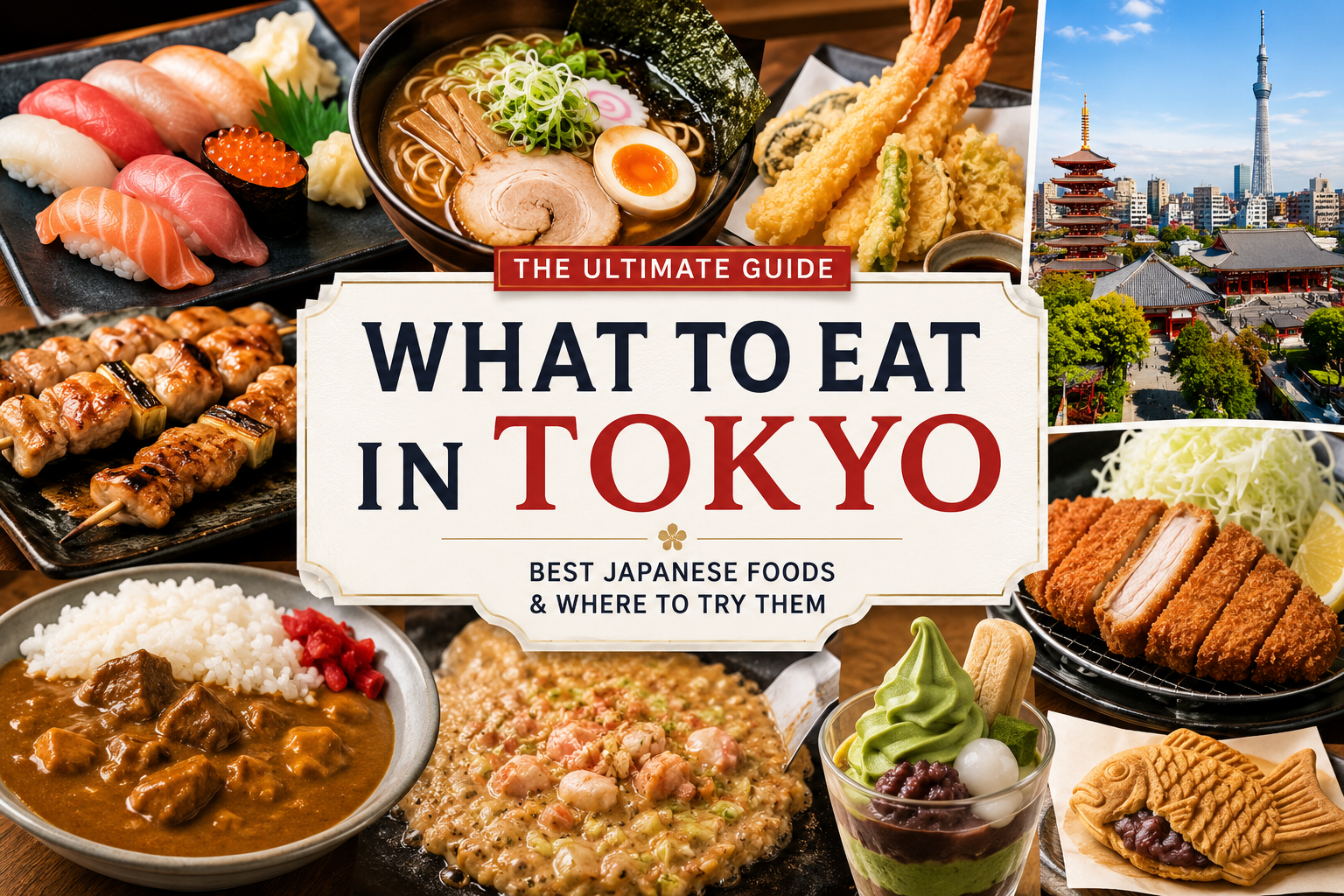
Tokyo is one of the world’s great food cities, offering everything from sushi and ramen to tempura, yakitori, Japanese curry, traditional sweets, and countless regional specialties from across Japan.
For first-time visitors, however, the sheer number of choices can make deciding what to eat surprisingly difficult. You may recognize famous dishes such as sushi and ramen, but Tokyo also offers many everyday foods and dining experiences that are easy to miss if you only visit the most well-known restaurants.
This guide introduces some of the must-try Japanese foods to eat in Tokyo, along with practical advice on where to eat, how much food costs, restaurant etiquette, and what to know about dietary restrictions.
You do not need to try everything in a single trip. Instead, choose a few dishes that interest you, mix affordable everyday meals with one or two special experiences, and leave some room for unexpected discoveries along the way.
Food is only one part of experiencing the city. For more ideas on what to see and do during your trip, explore our Best Things to Do in Tokyo for First-Time Visitors.
What Should You Eat in Tokyo?
There is no single list of foods that every visitor must eat in Tokyo. The best choices depend on your tastes, budget, dietary needs, and how adventurous you want to be.
For a first trip, a good approach is to combine several different types of Japanese food. You might have sushi for one meal, ramen or curry for another, try yakitori at an izakaya, and enjoy traditional sweets while sightseeing.
Tokyo is also an excellent place to experience both everyday Japanese food and special dining. Some of your most enjoyable meals may come from inexpensive neighborhood restaurants, while a carefully chosen sushi, wagyu, or other premium meal can become one of the highlights of your trip.
Rather than spending valuable sightseeing time traveling across the city for every famous restaurant, look for good options near the neighborhoods you are already exploring. Tokyo has an enormous number of restaurants, so memorable food experiences can be found throughout the city.
A Simple Food Plan for First-Time Visitors
If you are unsure where to start, choose three or four Japanese dishes that you definitely want to try before your trip.
Leave the rest of your meals flexible. This gives you room to discover restaurants, cafés, snacks, and local specialties while exploring Tokyo without turning every meal into another reservation or fixed appointment.
1. Sushi
Sushi is one of the foods most strongly associated with Japan, and Tokyo offers an enormous range of ways to experience it.
You can enjoy sushi at affordable conveyor-belt restaurants, casual neighborhood sushi shops, department-store restaurants, or high-end counters where the chef prepares each piece individually. This means you do not need a large budget to include sushi in your Tokyo trip.
Common choices include tuna, salmon, shrimp, squid, eel, and various types of white fish, but the selection can vary depending on the restaurant and season. If you are unfamiliar with certain ingredients, starting with a few varieties you recognize and gradually trying something new can make the experience more approachable.
Tokyo is also closely associated with Edomae sushi, a style that developed in Edo, the former name of Tokyo. Traditional techniques may include marinating, simmering, or otherwise preparing seafood rather than simply serving raw fish.
How to Enjoy Sushi in Tokyo
There is no need to choose the most expensive sushi restaurant for your first experience. Casual sushi restaurants can be an accessible way to learn what you like before deciding whether you want a more specialized meal later in your trip.
At some traditional or higher-end sushi restaurants, meals may follow a set course or omakase format, where the chef chooses what to serve. These restaurants may require reservations, so check the restaurant’s current booking policy before visiting.
If you have food allergies or ingredients you cannot eat, communicate them clearly before ordering whenever possible. This is particularly important for set menus and omakase meals where substitutions may not always be available.
2. Ramen
Ramen is one of the easiest and most enjoyable Japanese foods to try in Tokyo. Restaurants range from small shops with only a few counter seats to well-known chains with locations throughout the city.
A bowl of ramen typically combines noodles, broth, toppings, and aromatic oils or seasonings, but the flavors can vary dramatically between restaurants. This variety makes ramen worth trying even if you have eaten it outside Japan before.
Many ramen shops specialize in a particular style rather than offering a large menu. Some also use ticket machines near the entrance, where you select and pay for your meal before taking a seat.
Ramen is generally a casual meal, making it particularly convenient when you want something satisfying without spending a long time at a restaurant.
Popular Types of Ramen
Shoyu ramen uses a soy sauce-based seasoning and often has a relatively clear, savory broth.
Shio ramen is seasoned primarily with salt and is often lighter in appearance and flavor.
Miso ramen has a richer broth flavored with miso and is especially associated with Hokkaido, although it is widely available in Tokyo.
Tonkotsu ramen uses a rich pork-bone broth and originated in Kyushu. Many specialized tonkotsu ramen restaurants can also be found throughout Tokyo.
Tsukemen is another popular option in which the noodles and concentrated dipping broth are served separately. You dip the noodles into the broth as you eat.
You do not need to decide which style is “best.” Trying different ramen styles is part of the experience, so choose according to the flavors that appeal to you.
3. Tempura
Tempura is a classic Japanese dish made by lightly coating ingredients in batter and frying them until crisp. Common ingredients include shrimp, fish, mushrooms, sweet potato, pumpkin, eggplant, and other seasonal vegetables.
Good tempura is typically light and delicate rather than heavy or greasy. Depending on the restaurant, it may be served individually as each piece is cooked, as part of a set meal, or over a bowl of rice as tendon.
For first-time visitors, a tempura set meal is an easy way to try several different ingredients at once. Tendon is another convenient and often more affordable option, combining freshly fried tempura with rice and a savory sauce.
Tempura restaurants range from casual shops to specialized restaurants offering multi-course meals, so the experience can fit different budgets and travel styles.
How to Eat Tempura
Tempura may be served with a dipping sauce, grated daikon, salt, or other seasonings. Different pieces can be enjoyed in different ways, and there is no need to worry about following a complicated set of rules.
If you visit a counter-style tempura restaurant, eating each piece soon after it is served allows you to enjoy it while the batter is still crisp and the ingredient is at its best.
4. Soba and Udon
Soba and udon are two of Japan’s most common noodle dishes, and both are excellent choices for a casual meal in Tokyo.
Soba noodles are traditionally made with buckwheat and have a relatively thin texture and distinctive flavor. They can be served hot in broth or chilled with a dipping sauce. Cold soba is particularly refreshing during warmer months, while hot soba can be comforting in cooler weather.
Udon noodles are made primarily from wheat flour and are thicker, softer, and chewier than soba. Like soba, they can be served in hot broth or chilled with different toppings and sauces.
Both dishes can be found at everything from inexpensive standing noodle shops to traditional restaurants specializing in handmade noodles. This makes them useful options when you want a quick and affordable meal between sightseeing stops.
Soba or Udon: Which Should You Try?
If you prefer thinner noodles with a more distinctive, slightly nutty flavor, try soba. If you prefer thick, chewy noodles with a softer texture, udon may be a better choice.
There is no need to choose only one. Because both are widely available and often reasonably priced, trying each during your trip is an easy way to experience two different styles of everyday Japanese food.
5. Tonkatsu
Tonkatsu is a Japanese dish consisting of a breaded and deep-fried pork cutlet. Crispy on the outside and tender inside, it is a satisfying meal that is widely available throughout Tokyo.
Tonkatsu is commonly served as a set meal with shredded cabbage, rice, miso soup, pickles, and a thick savory sauce. Some restaurants specialize entirely in tonkatsu and may allow you to choose different cuts of pork, such as leaner hire (fillet) or richer rosu (loin).
For first-time visitors, tonkatsu is an approachable introduction to everyday Japanese dining. Ordering is generally straightforward, and the combination of meat, rice, soup, and vegetables makes it a complete and filling meal.
You can find everything from affordable casual restaurants to specialty shops using premium pork, so tonkatsu can fit comfortably into different travel budgets.
Hire or Rosu?
Hire is pork fillet. It is typically leaner and has a softer, lighter texture.
Rosu is pork loin. It usually contains more fat, giving it a richer flavor and juicier texture.
If you are unsure which to choose, simply decide whether you prefer leaner meat or a richer cut. Both are common choices at tonkatsu restaurants.
6. Yakitori
Yakitori is a popular Japanese dish consisting of bite-sized pieces of chicken grilled on skewers. It is commonly associated with izakaya and casual restaurants, making it a great way to experience a relaxed style of Japanese dining.
Yakitori is not limited to one type of chicken. Restaurants may serve different cuts such as thigh, breast, skin, wings, meatballs, and other parts, each with its own texture and flavor.
Skewers are typically seasoned with either shio (salt) or tare, a savory and slightly sweet sauce. Some restaurants let you choose the seasoning, while others select whichever works best for each skewer.
Yakitori is often ordered several skewers at a time and shared with drinks or other dishes. This makes it easy to try different varieties without committing to a large meal.
What Should First-Time Visitors Order?
If you are new to yakitori, familiar choices such as chicken thigh, chicken meatballs, or chicken and green onion are good places to start.
Once you know what you enjoy, you can try different cuts and textures. Some specialized yakitori restaurants offer set courses chosen by the chef, while casual izakaya often allow you to order individual skewers.
Because menus and ordering systems vary between restaurants, do not hesitate to ask staff for recommendations when possible.
7. Yakiniku and Wagyu Beef
Yakiniku is a Japanese style of dining where small pieces of meat are grilled at the table. It is a fun and interactive meal, especially if you want to try several different cuts of beef during one dining experience.
Most yakiniku restaurants provide a grill at the table, and you order individual cuts or sets of meat to cook yourself. Meals may also include vegetables, rice, soup, kimchi, and other side dishes.
Prices vary considerably depending on the restaurant and the quality of the meat. Casual yakiniku can be relatively affordable, while restaurants specializing in premium wagyu can become one of the more expensive meals of your trip.
For first-time visitors, ordering a mixed set can be an easy way to experience several cuts without needing to understand every item on the menu.
What Is Wagyu?
Wagyu refers to Japanese cattle and includes several breeds and regional brands. You may encounter famous names such as Kobe beef, Matsusaka beef, or Omi beef, but you do not need to choose the most famous or expensive brand to enjoy high-quality Japanese beef.
Wagyu is known for its marbling and rich flavor, so smaller portions can be surprisingly satisfying. If premium wagyu is one of your priorities, consider treating it as a special meal rather than something you need to eat every day.
Yakiniku Tips for First-Time Visitors
At self-grill restaurants, cook raw meat thoroughly as appropriate and use separate utensils for handling raw meat when they are provided.
Ordering a smaller amount first is also useful. You can always add more once you understand the portion sizes and which cuts you prefer.
8. Izakaya Food
An izakaya is a casual Japanese dining establishment where people typically enjoy drinks together with a variety of small dishes. Visiting one can be a memorable way to experience a more social and relaxed side of Japanese food culture.
Unlike a restaurant where each person orders one main dish, izakaya meals often involve ordering several dishes for the table and sharing them. Menus can include sashimi, yakitori, grilled fish, fried chicken, tofu, salads, dumplings, vegetables, noodles, and many other dishes.
You do not need to drink alcohol to enjoy an izakaya. Many establishments also offer soft drinks and non-alcoholic options, although the atmosphere and menu are generally designed around eating and drinking together.
For first-time visitors, an izakaya can also be a useful opportunity to try several Japanese foods in a single meal rather than choosing only one dish.
What to Know Before Visiting an Izakaya
Some izakaya charge a small seating or table fee, which may include a small appetizer called otoshi. This can surprise first-time visitors because the dish may arrive even if you did not order it.
Ordering systems vary. Some restaurants use printed menus, while others use tablets, QR codes, or staff ordering. English menus may be available, particularly in major tourist areas.
Smaller izakaya can have limited seating, so groups may find it easier to visit larger establishments or make a reservation when possible.
Rather than worrying about ordering perfectly, choose a few dishes that interest you, share them with your group, and add more as you go.
9. Japanese Curry
Japanese curry is one of Japan’s most popular everyday comfort foods and an easy meal for first-time visitors to try in Tokyo.
Compared with many other styles of curry, Japanese curry is typically thicker, mildly spiced, and slightly sweet. It is most commonly served with rice and can be topped with meat, vegetables, cheese, eggs, or other ingredients.
One of the most popular variations is katsu curry, which combines Japanese curry and rice with a crispy breaded cutlet. Curry can also be served with udon or other dishes, depending on the restaurant.
Japanese curry restaurants range from inexpensive chains to independent specialty shops, making it a convenient choice when you want a filling meal without spending too much time or money.
Why Try Japanese Curry in Tokyo?
Japanese curry may not be as internationally famous as sushi or ramen, but it offers a good introduction to the kind of casual food that many people in Japan enjoy regularly.
It is also easy to customize at many restaurants. Depending on the establishment, you may be able to choose your portion size, toppings, or level of spiciness.
If your trip includes several special or expensive meals, Japanese curry can be a useful affordable option to balance your food budget.
10. Tokyo Local Foods
Tokyo is filled with foods from every region of Japan, but the city also has culinary traditions of its own. Exploring a few local specialties can add another dimension to your food experience beyond nationally famous dishes such as ramen and curry.
Some Tokyo foods developed during the Edo period, while others became associated with particular neighborhoods and communities over time. You do not need to try every local specialty, but knowing a few of them can help you recognize dishes that have a special connection to the city.
Monjayaki
Monjayaki is a savory dish particularly associated with Tokyo’s traditional shitamachi areas. It is made from a thin batter mixed with ingredients such as cabbage, seafood, meat, cheese, or other toppings and cooked on a hot griddle.
Unlike okonomiyaki, monjayaki remains much softer after cooking. Diners typically use small spatulas to eat it directly from the griddle.
Tsukishima is especially famous for monjayaki and has many restaurants specializing in the dish. If you want to try a meal that feels distinctly connected to Tokyo, visiting the area can be an interesting addition to your itinerary.
Edomae Sushi and Other Tokyo Traditions
Edomae sushi developed in Edo, the former name of Tokyo. Historically, seafood from Tokyo Bay was prepared using techniques such as marinating, simmering, salting, or curing to preserve it and enhance its flavor.
Modern Edomae sushi continues this tradition in different forms, particularly at specialized sushi restaurants.
Tokyo is also associated with dishes and food traditions such as dojo nabe, traditional soba, and foods connected to the city’s historic neighborhoods. You do not need to seek out all of them on a first trip, but they can be rewarding choices if you are particularly interested in Japanese food culture.
Japanese Sweets and Desserts
Japanese food experiences in Tokyo are not limited to savory dishes. Traditional sweets, modern desserts, cafés, and seasonal treats are also worth exploring during your trip.
Wagashi are traditional Japanese sweets that are often made with ingredients such as sweet red bean paste, mochi, rice flour, and seasonal fruits. Their appearance and flavors can change with the seasons, making them an interesting way to experience Japanese food culture.
Taiyaki is another easy snack to try while sightseeing. This fish-shaped cake is traditionally filled with sweet red bean paste, although custard, chocolate, and other fillings are also common.
Matcha desserts are widely available as well, including ice cream, parfaits, cakes, and traditional sweets served with green tea.
Tokyo also has an enormous modern café and dessert scene, so you will find everything from Japanese-style sweets to elaborate parfaits, pancakes, pastries, and seasonal limited-edition desserts.
Try Seasonal Sweets
Japan places strong emphasis on seasonality, and sweets are no exception. Cherry blossom flavors may appear in spring, refreshing fruit and shaved ice are popular in summer, chestnut and sweet potato desserts become common in autumn, and strawberry-based sweets are especially prominent during the cooler months.
You do not need to search for a specific famous dessert. Checking what is seasonal while you are in Tokyo can lead to some of the most interesting discoveries.
Where to Eat in Tokyo
You do not need to travel to one specific neighborhood to find good food in Tokyo. Excellent restaurants can be found throughout the city, and each major area offers a slightly different dining experience.
For first-time visitors, choosing restaurants near the places you are already sightseeing is often the most practical approach. This reduces unnecessary travel and gives you more flexibility when planning your day.
Shinjuku
Shinjuku offers one of the widest ranges of dining options in Tokyo. Around the station, you can find ramen, sushi, yakiniku, izakaya, department-store restaurants, casual chains, and more specialized dining.
The area is particularly convenient for dinner because restaurants range from quick and affordable meals to late-night dining and nightlife-oriented establishments.
Shibuya
Shibuya combines sightseeing, shopping, entertainment, and food in one compact area. You will find casual restaurants, cafés, ramen shops, sushi, yakiniku, izakaya, and modern dining concepts throughout the neighborhood.
It is a convenient place to eat before or after visiting Shibuya Crossing, shopping, or enjoying the city views.
Asakusa
Asakusa is a good choice for travelers interested in combining food with a more traditional Tokyo atmosphere.
Around Senso-ji and the surrounding streets, you can find tempura, soba, sushi, traditional sweets, street snacks, and long-established restaurants alongside more modern options.
Ginza and Tokyo Station
Ginza and the Tokyo Station area offer everything from casual restaurants to some of the city’s more refined dining experiences.
Ginza is particularly well known for sushi, Japanese cuisine, department-store dining, and higher-end restaurants, while Tokyo Station and the surrounding buildings contain an enormous variety of convenient dining options.
Ueno
Ueno offers a more casual atmosphere and can be particularly convenient when visiting Ueno Park, museums, or nearby traditional neighborhoods.
The streets around Ueno and Ameyoko are filled with restaurants, small eateries, snacks, and casual food options, making the area enjoyable to explore without planning every meal in advance.
Wherever you choose to eat, consider building meals around your sightseeing route rather than building your entire sightseeing day around restaurants. Save longer journeys for dining experiences that are genuinely important to you.
How Much Does Food Cost in Tokyo?
Food in Tokyo can fit a surprisingly wide range of budgets. You can eat well at casual restaurants without spending heavily, while sushi, wagyu, fine dining, and other premium experiences can increase your food budget considerably.
As a rough planning estimate, an inexpensive meal may cost around ¥500–¥1,200 per person, while many casual restaurant meals fall around ¥1,000–¥3,000 per person. Higher-end dining can range from several thousand yen to tens of thousands of yen per person depending on the restaurant and experience.
For daily planning, a traveler relying mostly on affordable restaurants might spend around ¥2,500–¥4,000 per day on food, while a more flexible mid-range budget of around ¥5,000–¥8,000 per day allows for a wider mix of restaurants, cafés, snacks, and drinks.
Travelers who consider food one of the main purposes of their trip may want to budget ¥10,000 or more per day, particularly when including premium sushi, wagyu, tasting menus, or other special dining experiences.
These figures are only practical planning estimates. Actual prices vary by restaurant, location, menu, exchange rates, and what you choose to order.
Balance Affordable and Special Meals
You do not need to choose between eating cheaply and enjoying memorable dining experiences. One practical approach is to use affordable ramen, curry, soba, set meals, and other casual food for some meals while reserving part of your budget for one or two experiences that matter most to you.
For a broader breakdown of accommodation, transportation, sightseeing, food, and overall daily expenses, see our Tokyo Travel Budget: How Much Does a Trip to Tokyo Cost?
Tokyo Restaurant Tips for First-Time Visitors
Eating at restaurants in Tokyo is generally straightforward, but some customs and ordering systems may be unfamiliar to first-time visitors. Knowing a few basics can make the experience much easier.
Check Whether You Need a Reservation
Many casual restaurants accept walk-in customers, but popular restaurants, small establishments, and higher-end dining experiences may require or strongly benefit from reservations.
If there is a particular restaurant you do not want to miss, check its official reservation policy in advance rather than assuming you can visit without a booking.
Ordering Systems Can Vary
Depending on the restaurant, you may order directly from staff, use a tablet or QR code, or purchase a meal ticket from a vending machine before sitting down.
English menus and picture menus are common in many tourist areas, but they are not guaranteed everywhere. Translation apps can be useful when needed.
Check for Seating or Service Charges
Some izakaya and other establishments may charge a seating or table fee. You may also receive a small appetizer called otoshi, which can be included as part of that charge.
This is a normal practice at many establishments, but it can surprise visitors who are unfamiliar with the system.
Do Not Assume Every Restaurant Accepts the Same Payment Methods
Credit cards and cashless payments are widely accepted in Tokyo, particularly at larger restaurants and businesses, but some smaller establishments may still prefer or require cash.
Carrying more than one payment method can help you avoid unnecessary problems.
Be Aware of Opening Hours
Restaurant opening hours can vary, and some establishments close between lunch and dinner service. Last orders may also be taken before the posted closing time.
If you are visiting a specific restaurant, check its latest opening hours and regular closing days before making a special trip.
Tipping Is Not Generally Expected
Tipping is not generally part of restaurant culture in Japan. In most situations, simply pay the amount shown on your bill without adding a separate tip.
Dietary Restrictions and Food Allergies in Tokyo
Travelers with dietary restrictions can still enjoy Tokyo’s food scene, but some advance planning can make dining significantly easier.
Vegetarian, vegan, halal-friendly, and gluten-free options have become easier to find in Tokyo, particularly in major tourist areas. However, availability varies considerably between restaurants, and ingredients that may not be obvious can sometimes be used in sauces, broths, seasonings, and cooking methods.
If your dietary requirements are important for health, religious, or personal reasons, do not rely only on the appearance or name of a dish. Check ingredients and restaurant information carefully before ordering.
Vegetarian and Vegan Travelers
Dishes that appear to contain only vegetables may still use fish-based dashi, meat broth, or other animal-derived ingredients.
Restaurants specifically advertising vegetarian or vegan menus can make ordering easier, but it is still useful to confirm what is included if you have strict requirements.
Halal-Friendly Dining
Tokyo has restaurants offering halal-certified or halal-friendly meals, but these terms do not always mean exactly the same thing.
If you follow specific dietary requirements, check the restaurant’s certification, ingredients, preparation methods, and alcohol policies as appropriate rather than relying only on a general “halal-friendly” description.
Food Allergies
Travelers with food allergies should take additional precautions. Common Japanese ingredients can include soy, wheat, eggs, seafood, sesame, and other allergens, sometimes in sauces or broths where they may not be immediately visible.
Consider carrying a clearly written allergy card in Japanese that explains the ingredients you must avoid. For serious allergies, contact restaurants in advance whenever possible and do not assume that cross-contact can always be prevented.
If a restaurant cannot confidently accommodate your requirements, choosing another establishment is the safer option.
Plan Important Meals in Advance
If dietary restrictions significantly limit where you can eat, identify several suitable restaurants before your trip and save them on your map.
Keep backup options near the neighborhoods you plan to visit so that finding an appropriate meal does not become stressful during sightseeing.
Final Thoughts
Tokyo is an incredible city for food lovers, but you do not need to visit famous or expensive restaurants for every meal to enjoy its food culture.
For your first trip, try a mix of iconic Japanese foods such as sushi, ramen, tempura, and yakitori alongside everyday dishes such as curry, soba, udon, and tonkatsu. If something interests you, leave room for a special dining experience or a Tokyo-specific food such as monjayaki or Edomae sushi.
The best food experiences are not always the ones planned months in advance. Exploring restaurants near the neighborhoods you are already visiting can lead to unexpected discoveries while keeping your itinerary flexible.
Most importantly, choose food based on your own tastes, budget, and dietary needs rather than trying to complete a checklist. Tokyo offers enough variety that every traveler can build a food experience that fits their trip.
Ready to plan the rest of your trip? Our Tokyo Travel Guide for First-Time Visitors covers sightseeing, accommodation, transportation, seasons, and other essentials for planning your first visit.
Want a more complete guide to dining in the city? See our Tokyo Food Guide for where to eat, restaurant types, ordering tips, dining etiquette, food costs, and practical advice for first-time visitors.
