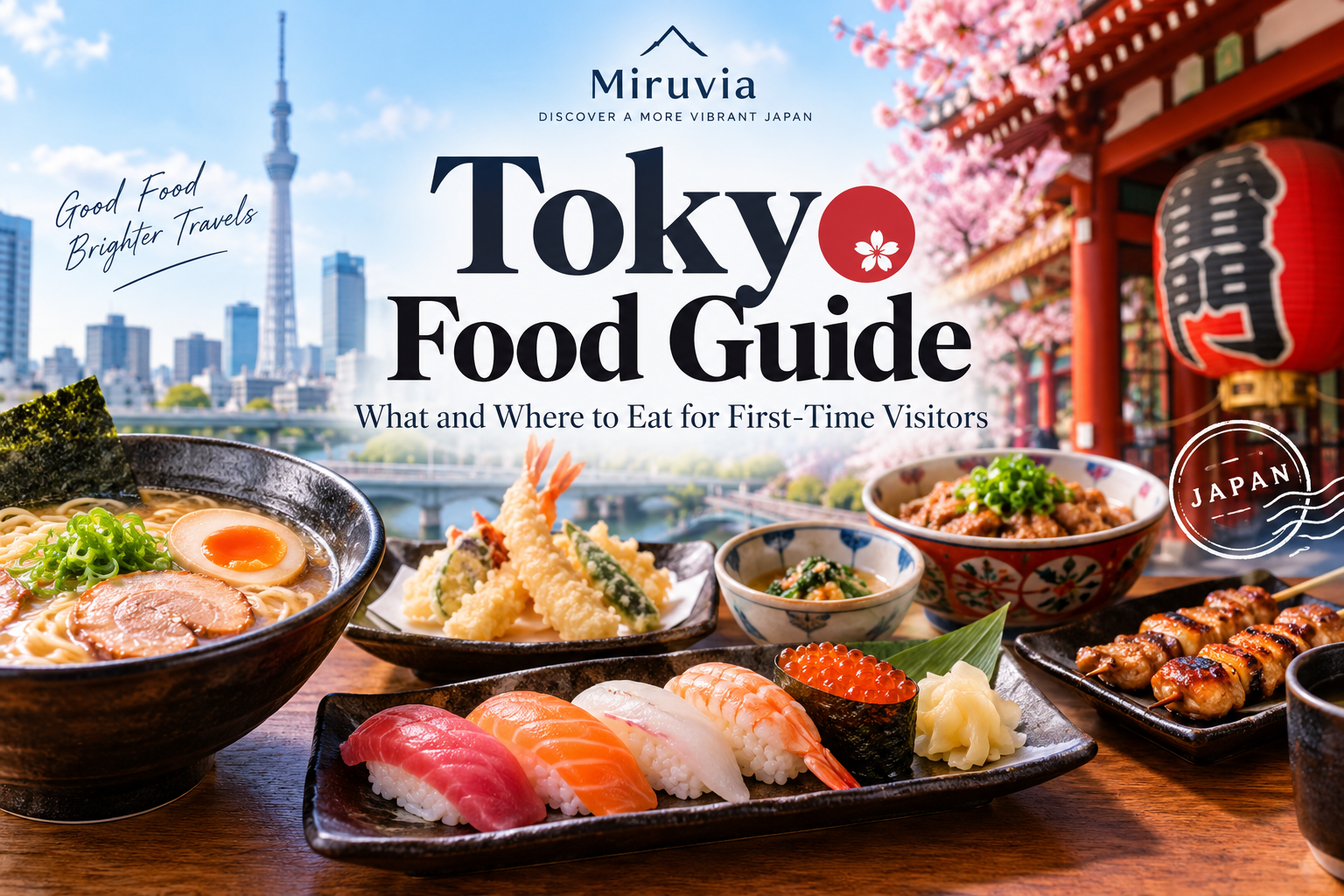
Tokyo is one of the world’s great food cities, offering everything from inexpensive bowls of ramen and casual neighborhood restaurants to sushi counters and high-end dining experiences.
For first-time visitors, however, deciding what to eat is only part of the challenge. You also need to know where to look for restaurants, how much meals may cost, whether reservations are necessary, and what to expect when ordering.
Different areas of Tokyo offer different dining experiences. Shinjuku and Shibuya have enormous restaurant selections, Ginza is known for both established restaurants and upscale dining, while areas such as Asakusa and Ueno make it easy to combine sightseeing with Japanese food.
You also do not need to spend a large amount of money to eat well in Tokyo. Convenience stores, casual restaurants, food halls, noodle shops, and other affordable options make it possible to enjoy Japanese food on a wide range of budgets.
At the same time, travelers with food allergies, dietary restrictions, or specific restaurant plans should prepare in advance, as communication and ingredient information can vary between establishments.
This Tokyo food guide explains what to eat, which areas to explore for food, dining options for different budgets, how to order, restaurant reservations, etiquette, dietary restrictions, and practical tips for first-time visitors.
Whether you are planning your entire trip around food or simply want to enjoy good meals between sightseeing stops, understanding a few basics will make eating in Tokyo much easier.
Is Tokyo a Good City for Food Lovers?
Yes. Tokyo is an excellent destination for food lovers because of the enormous variety of restaurants, cuisines, price ranges, and dining styles available throughout the city.
Japanese classics such as sushi, ramen, tempura, yakitori, tonkatsu, soba, udon, and curry are easy to find, but Tokyo’s food scene extends far beyond traditional Japanese cuisine.
One of Tokyo’s biggest advantages is that memorable food does not necessarily require a large budget. Travelers can enjoy affordable noodle shops, casual restaurants, convenience store food, department store food halls, and neighborhood establishments alongside more expensive dining experiences.
Food is also easy to combine with sightseeing. Major areas such as Shinjuku, Shibuya, Ginza, Asakusa, Ueno, and Tokyo Station have extensive dining options, allowing you to plan meals around the neighborhoods you are already visiting.
Tokyo also offers many different styles of dining, from quick meals ordered from ticket machines to small counter restaurants, casual izakaya, department store restaurants, and formal dining experiences.
The main challenge is not finding somewhere to eat — it is choosing from the enormous number of options. Popular restaurants may require reservations or involve long waits, while smaller establishments may have limited English information.
First-time visitors therefore benefit from having a few restaurants or food areas in mind while still leaving room to discover places spontaneously during the trip.
You do not need to visit famous restaurants for every meal. Some of the most enjoyable food experiences in Tokyo can come from simple restaurants discovered while exploring the city.
What to Eat in Tokyo
Tokyo offers an enormous variety of Japanese food, so first-time visitors may find it difficult to decide where to begin.
The dishes below are some of the most approachable choices for a first trip. You do not need to try everything — choose the foods that interest you and explore different restaurants throughout your stay.
Sushi
Sushi is one of Japan’s most famous foods and can be enjoyed in Tokyo at many price levels, from casual conveyor-belt restaurants to specialized sushi counters.
First-time visitors do not need to choose an expensive restaurant to enjoy sushi. Consider your budget, preferred atmosphere, and whether you want a quick meal or a more formal dining experience.
Ramen
Ramen is an excellent choice for an affordable and satisfying meal. Tokyo has countless ramen shops serving different broths, noodles, toppings, and regional styles.
Some restaurants use ticket machines for ordering, making the dining process relatively straightforward once you understand the system.
Tempura
Tempura typically consists of seafood, vegetables, and other ingredients coated in a light batter and fried.
It can be served individually, as part of a set meal, with rice, or alongside noodles. Prices range from casual options to specialist restaurants.
Yakitori
Yakitori consists of grilled chicken pieces, usually served on skewers.
Different cuts of chicken may be available, and yakitori is often associated with casual restaurants and izakaya-style dining. It can be an enjoyable option for travelers who want to order several smaller dishes.
Tonkatsu
Tonkatsu is a breaded and deep-fried pork cutlet, commonly served with shredded cabbage, rice, and other accompaniments.
It is widely available and can be a straightforward choice for travelers looking for a filling Japanese meal.
Soba and Udon
Soba and udon are two popular types of Japanese noodles. Soba noodles are traditionally made primarily with buckwheat, while udon noodles are thicker and wheat-based.
Both can be served hot or cold and are available in casual restaurants throughout Tokyo.
Japanese Curry
Japanese curry is generally thicker and milder than many curry styles found elsewhere in Asia.
It is commonly served with rice and can include toppings such as tonkatsu, vegetables, or other ingredients. Curry restaurants are a convenient option for an inexpensive and filling meal.
Wagashi and Japanese Desserts
Tokyo also offers plenty of options for travelers interested in sweets.
Traditional wagashi, mochi, matcha-flavored desserts, seasonal sweets, and modern Japanese pastries can be found in cafés, department stores, specialty shops, and other locations throughout the city.
Seasonal ingredients and designs can make dessert shopping particularly interesting at different times of the year.
Want a more detailed introduction to Japanese dishes? See our What to Eat in Tokyo: Must-Try Japanese Foods for First-Time Visitors for more foods and practical recommendations.
Best Areas for Food in Tokyo
Great food can be found throughout Tokyo, so you do not need to travel across the city just for every meal.
A practical approach is to combine dining with sightseeing. Choose restaurants in or near the neighborhoods you already plan to visit, and spend more time enjoying each area instead of making unnecessary train journeys.
The following areas are particularly convenient for first-time visitors because they combine major attractions with a wide variety of dining options.
Shinjuku
Shinjuku has one of the largest concentrations of restaurants in Tokyo, with options ranging from inexpensive ramen and casual izakaya to department store restaurants and more formal dining.
The area is especially convenient for dinner because there are many restaurants around the station and entertainment districts.
Shinjuku Station is extremely large, so check which exit your restaurant is near before heading there.
Shibuya
Shibuya combines shopping, entertainment, nightlife, and a large restaurant scene.
You can find ramen, sushi, yakiniku, cafés, izakaya, international cuisine, and many other options within walking distance of the station.
Because popular restaurants can become busy during lunch and dinner periods, having one or two backup choices can be useful.
Ginza
Ginza is well known for shopping and upscale dining, but visitors do not need a luxury budget to eat in the area.
Alongside high-end sushi and specialist restaurants, you can find department store food halls, cafés, casual restaurants, and more affordable options.
Ginza can be particularly appealing to travelers who want to combine shopping with a more polished dining experience.
Asakusa
Asakusa is a good area for combining traditional sightseeing with Japanese food.
Around Senso-ji and the surrounding streets, visitors can find Japanese sweets, casual restaurants, noodles, tempura, and other options.
Some businesses in sightseeing areas may close earlier than restaurants in major nightlife districts, so check opening hours if you plan to eat later in the evening.
Ueno
Ueno offers a broad mix of casual restaurants, market-area food, izakaya, cafés, and inexpensive dining.
It is easy to combine a meal with attractions such as Ueno Park, museums, and the streets around Ameyoko.
Ueno can be particularly useful for travelers looking for a lively atmosphere without focusing exclusively on upscale restaurants.
Tokyo Station and Marunouchi
Tokyo Station and the surrounding Marunouchi area offer an enormous variety of places to eat, including restaurants inside and around the station, department store food areas, cafés, and more formal dining.
The area is convenient when arriving by train, taking a day trip, or sightseeing around central Tokyo.
Tokyo Station itself is large, so allow extra time to navigate the station if you have a reservation.
Want to compare these neighborhoods beyond food? See our Best Areas to Visit in Tokyo for First-Time Visitors for sightseeing highlights and practical advice for each area.
Where to Eat in Tokyo on Different Budgets
Tokyo offers good food at almost every budget level. You can keep meal costs relatively low with casual restaurants and simple meals, spend more for comfortable sit-down dining, or make a special restaurant one of the highlights of your trip.
Instead of assuming that expensive food is always better, decide which meals are most important to you and mix different dining styles throughout your stay.
Budget Meals
Eating well in Tokyo does not require an expensive restaurant.
Budget-friendly options include:
- Ramen shops
- Soba and udon restaurants
- Japanese curry
- Gyudon and other rice bowls
- Casual set-meal restaurants
- Conveyor-belt sushi
- Convenience stores
- Supermarkets
- Department store food halls
Many casual restaurants specialize in one type of food, which can make ordering easier for first-time visitors.
Choosing inexpensive meals for breakfast or lunch can also leave more of your budget available for restaurants you particularly want to experience.
Mid-Range Restaurants
Mid-range restaurants are a good choice when you want a more relaxed meal without committing to a high-end dining experience.
Options can include:
- Izakaya
- Tonkatsu restaurants
- Yakiniku
- Sushi restaurants
- Tempura restaurants
- Shabu-shabu and other Japanese specialties
- Restaurant floors inside department stores and shopping complexes
Lunch can sometimes be particularly attractive because some restaurants offer set menus or different options from their evening service.
For many travelers, combining casual lunches with a few more substantial dinners provides a good balance between food experiences and overall travel costs.
Fine Dining
Tokyo also offers an enormous range of high-end dining experiences, including sushi, kaiseki, tempura, teppanyaki, and other specialist restaurants.
If there is a particular restaurant you consider an important part of your trip, research it before arriving. Popular or small restaurants may have limited seating and may require reservations.
Check the restaurant’s current menu, pricing, reservation policy, cancellation rules, dress expectations, and payment methods before booking.
Fine dining does not need to be part of every Tokyo itinerary. It is best treated as an optional experience for travelers who are particularly interested in food or have a specific restaurant they want to visit.
Planning your overall travel expenses? See our Tokyo Travel Budget: How Much Does a Trip to Tokyo Cost? for a broader look at food, accommodation, transportation, sightseeing, and other costs.
Convenience Store Food in Tokyo
Convenience stores can be extremely useful for travelers in Tokyo, especially when you need a quick breakfast, snack, drink, or simple meal.
Stores are widespread throughout the city, including around major stations, residential neighborhoods, and sightseeing areas.
Common food options include:
- Onigiri (rice balls)
- Sandwiches
- Bento meals
- Salads
- Noodles
- Bread and pastries
- Yogurt and other breakfast items
- Desserts and sweets
- Snacks
- Hot and cold drinks
Many convenience stores also sell seasonal or limited-time products, so the selection can change throughout the year.
Convenience store food is particularly useful when you have an early start, arrive at your hotel late, want something small between sightseeing stops, or simply do not want a restaurant meal.
Some foods can be heated in the store, depending on the product and location. If you are unsure, ask staff or follow the instructions provided with the item.
Convenience stores are convenient, but they should not replace every meal if food is an important part of your Tokyo trip. Use them alongside restaurants, cafés, markets, and other dining experiences.
Travelers with allergies or dietary restrictions should also check ingredients carefully. Packaging may contain Japanese labeling, and you should not assume that a familiar-looking product contains the same ingredients as a similar product in your home country.
Tip: Convenience stores are excellent backup options. Save them for mornings, late arrivals, snacks, or days when your sightseeing schedule makes a restaurant meal inconvenient.
Department Store Food Halls and Food Courts
Department stores and shopping complexes are useful places to explore food in Tokyo, particularly when travelers in the same group want different things to eat.
Japanese department stores often have extensive food halls, commonly known as depachika, on their basement floors. These areas can contain an impressive selection of prepared foods, bento boxes, sushi, side dishes, bread, sweets, desserts, and specialty products.
Depachika are especially useful for:
- Buying a high-quality bento or prepared meal
- Trying several small Japanese dishes
- Shopping for sweets and food souvenirs
- Finding seasonal foods
- Picking up food before returning to your hotel
Keep in mind that a department store food hall is primarily a retail area rather than necessarily a place to sit down and eat. Eating spaces and rules vary by location, so check whether there is a designated area before opening your food.
Department stores also commonly have restaurant floors on their upper levels. These can be convenient for first-time visitors because many different cuisines and restaurant styles are available in the same building.
Food courts and restaurant areas inside shopping complexes can also work well for groups, families, or travelers who want several choices without searching across an unfamiliar neighborhood.
Major areas such as Shinjuku, Shibuya, Ginza, Ikebukuro, and around Tokyo Station have numerous department stores and shopping complexes with dining options.
Opening hours, restaurant hours, and individual store closures can vary, so check current information if you plan to visit a specific location.
Tip: Visit a depachika before returning to your accommodation in the evening if you want to browse Japanese prepared foods, desserts, and seasonal specialties in one place.
How to Order Food in Tokyo
Ordering food in Tokyo is usually easier than many first-time visitors expect. The process varies by restaurant, but menus with photos, English-language information, touchscreens, QR codes, and ticket machines are increasingly common.
You do not need to speak fluent Japanese to eat comfortably in Tokyo, although learning a few simple phrases can make the experience easier.
Restaurant Menus
Many restaurants in popular areas provide English menus or menus with photographs.
If an English menu is not available, translation apps can be useful for understanding basic menu information. However, automated translations may not always accurately identify ingredients or allergens.
Ticket Machines
Some ramen shops, soba restaurants, curry shops, and other casual establishments use ticket machines.
The typical process is:
- Choose your meal on the machine
- Pay using one of the available payment methods
- Take the meal ticket
- Give the ticket to staff or follow the restaurant’s instructions
- Take a seat when directed
Some newer machines offer multiple languages and cashless payment, while others may have more limited options.
Ordering at the Table
At many restaurants, staff will take your order at the table. Other establishments may use tablets, touchscreens, QR-code menus, or ordering systems specific to the restaurant.
Follow the instructions provided when you are seated. If you are unsure, staff can usually indicate how ordering works.
Useful Japanese Phrases
A few simple expressions can be helpful:
- Sumimasen — Excuse me
- Kore o kudasai — This one, please
- Arigatou gozaimasu — Thank you
- Okaikei onegaishimasu — The bill, please
Pointing politely to a menu item can also work when language communication is difficult.
Paying the Bill
Payment procedures vary. Some restaurants ask you to pay at a register near the entrance, while others allow payment at the table or through a digital system.
Check what other customers are doing or ask staff if you are unsure.
Payment methods also vary by restaurant, so carrying both a card and some Japanese yen gives you additional flexibility.
Tip: Do not worry about understanding every restaurant system before your trip. Look for instructions when you arrive, observe how the restaurant works, and ask staff when necessary.
Do You Need Restaurant Reservations in Tokyo?
You do not need restaurant reservations for every meal in Tokyo. There are enormous numbers of restaurants throughout the city, and many casual establishments accept walk-in customers.
However, reservations become more important when you have a specific restaurant you definitely want to visit.
Consider making a reservation in advance for:
- Popular restaurants with limited seating
- Fine dining restaurants
- Small sushi counters
- Kaiseki and other multi-course dining experiences
- Restaurants that are an important part of your itinerary
- Meals for larger groups
- Special occasions
For casual meals such as ramen, curry, soba, udon, and many everyday restaurants, reservations may not be necessary or may not even be accepted.
Popular restaurants can also have long lines. If a restaurant does not accept reservations, consider visiting outside the busiest lunch and dinner periods or preparing a backup option nearby.
Reservation methods vary. Depending on the restaurant, you may be able to book through its official website, an online reservation service, your hotel, or by telephone.
Before booking, check the restaurant’s cancellation policy carefully. Some restaurants prepare ingredients or reserve a limited number of seats specifically for each guest, and late cancellations or no-shows may result in charges.
Also confirm the correct date, time, number of guests, restaurant location, and any course or menu you selected before completing the reservation.
Tip: Reserve the restaurants that matter most to you, but leave some meals unplanned. Having flexibility gives you opportunities to discover restaurants while exploring Tokyo.
Eating Alone in Tokyo
Eating alone in Tokyo is generally easy and common, making the city particularly convenient for solo travelers.
Many restaurants have counter seating or individual seats, and customers dining alone are a normal sight. You usually do not need to feel uncomfortable entering a restaurant by yourself.
Restaurants that can be particularly convenient for solo diners include:
- Ramen shops
- Soba and udon restaurants
- Japanese curry restaurants
- Sushi restaurants with counter seating
- Gyudon and other rice-bowl restaurants
- Tonkatsu restaurants
- Casual set-meal restaurants
- Cafés
Some restaurants use ticket machines, tablets, or QR-code ordering systems, which can make ordering straightforward even when you are dining alone.
Counter seating can also be useful during busy periods because you may be seated more easily than a larger group, although this depends on the restaurant.
At izakaya, yakiniku restaurants, and other establishments designed partly around shared dishes or group dining, eating alone is still possible in many cases. However, menu portions, seating arrangements, or minimum-order policies can vary.
Fine dining is also possible for solo travelers, but individual restaurants may have their own reservation policies. If you are planning an important meal, check whether reservations for one person are accepted before booking.
One advantage of solo travel is flexibility. Without needing to accommodate several people’s preferences, you can try a small restaurant, eat outside traditional meal times, or change your plans whenever you discover somewhere interesting.
Tip: If you are nervous about your first solo meal in Tokyo, start with a ramen, soba, curry, or other casual restaurant with counter seating. After one or two meals, dining alone will usually feel much more familiar.
Dietary Restrictions and Food Allergies
Travelers with food allergies or dietary restrictions can enjoy eating in Tokyo, but additional preparation may be necessary.
Vegetarian, vegan, halal, gluten-free, and allergy-friendly options are available in Tokyo, but they are not offered at every restaurant. Ingredients and preparation methods may also differ from what you expect based only on the name or appearance of a dish.
If you have dietary restrictions, consider:
- Researching suitable restaurants before your trip
- Checking restaurant menus and official information in advance
- Saving several restaurant options near the areas you plan to visit
- Carrying a clearly written Japanese explanation of your dietary requirements
- Asking about ingredients when necessary
- Avoiding assumptions based only on photographs or translated menu names
Japanese dishes can contain ingredients that may not be immediately obvious. For example, broths, sauces, seasonings, and garnishes may contain fish, shellfish, meat, wheat, soy, or other ingredients.
Travelers following a vegetarian or vegan diet should be aware that a dish without visible meat or fish may still contain animal-based broth or seasoning.
Similarly, travelers who need halal or gluten-free food should confirm ingredients and preparation methods rather than assuming that a dish meets their requirements.
Food Allergies
If you have a serious food allergy, take additional precautions. Language differences and cross-contact in kitchens can make relying on assumptions particularly risky.
Consider carrying an allergy card written in Japanese that clearly identifies the ingredients you must avoid. When possible, contact the restaurant in advance if your allergy requires specific preparation or protection from cross-contact.
Do not rely exclusively on translation apps for a severe allergy. If a restaurant cannot confidently confirm that it can accommodate your requirements, choosing another restaurant may be the safer option.
Emergency medication prescribed for your allergy should remain accessible, and you should check Japan’s current rules for bringing your medication into the country before departure.
Tip: If dietary restrictions are important to your trip, research restaurants by neighborhood before each sightseeing day instead of waiting until you are hungry to start looking.
Japanese Restaurant Etiquette
Restaurant etiquette in Tokyo is generally straightforward, and visitors are not expected to understand every Japanese custom perfectly.
A few basic habits, however, can help you dine more comfortably and respectfully.
Keep these points in mind:
- Wait to be seated when appropriate. At many restaurants, staff will show you where to sit rather than expecting you to choose a table yourself.
- Follow the restaurant’s ordering system. Depending on the establishment, you may order with staff, a ticket machine, tablet, QR code, or another system.
- Keep your voice at a reasonable level. The atmosphere varies by restaurant, but extremely loud conversations may be disruptive in quieter establishments.
- Do not place chopsticks upright in a bowl of rice. This is associated with Japanese funeral customs.
- Avoid passing food directly from one pair of chopsticks to another. This also has associations with funeral rituals.
- Follow instructions about shoes. Some traditional restaurants may ask guests to remove their shoes before entering certain seating areas.
- Respect reservation times. If you have booked a restaurant, arrive on time and contact the restaurant if your plans change.
- Check before bringing outside food or drinks. Policies vary by establishment.
Tipping is generally not expected at restaurants in Japan. Pay the amount shown on your bill unless the restaurant has a specific service charge or other stated fee.
Payment procedures vary. Some restaurants ask customers to pay at the register, while others handle payment at the table or through a digital system.
If you are unsure what to do, observe the restaurant’s instructions or politely ask a staff member. Small mistakes are unlikely to ruin your meal, and showing basic consideration is more important than knowing every detail of Japanese dining etiquette.
Tip: You do not need to imitate every local custom perfectly. Be polite, follow the restaurant’s instructions, and pay attention to the people and environment around you.
Common Food Mistakes to Avoid
Tokyo makes it easy to enjoy excellent food, but a few common mistakes can make dining more stressful, expensive, or time-consuming than necessary.
Try to avoid these mistakes:
- Planning every meal around famous restaurants — popular restaurants can involve reservations, long waits, and unnecessary travel across the city.
- Assuming expensive means better — Tokyo has excellent food at many price levels, including casual restaurants and inexpensive specialty shops.
- Traveling across Tokyo just for every meal — combine food with the neighborhoods you are already sightseeing in whenever possible.
- Ignoring restaurant opening hours — individual restaurants may close between lunch and dinner, have irregular holidays, or finish service earlier than expected.
- Arriving at a popular restaurant without a backup plan — queues, sold-out items, or full reservations can disrupt your schedule.
- Assuming every restaurant accepts the same payment methods — carrying both a payment card and some Japanese yen provides additional flexibility.
- Ignoring cancellation policies — restaurants that accept reservations may charge fees for late cancellations or no-shows.
- Assuming an English menu guarantees complete ingredient information — travelers with allergies or dietary restrictions should confirm important details directly.
- Ordering more food than you can comfortably finish — start with a reasonable amount and order additional dishes when the restaurant allows it.
- Trying to fit too many food experiences into one day — leave enough time to actually enjoy each meal rather than treating restaurants as items on a checklist.
One of the best approaches for a first trip is to choose a few food experiences that matter to you and remain flexible with the rest. Tokyo has so many restaurants that changing your plan does not mean missing the opportunity to eat well.
Tip: Save one or two backup restaurants in each major sightseeing area. If your first choice is closed, full, or has a long queue, you can change plans without losing much sightseeing time.
Tokyo Food Tips for First-Time Visitors
Eating in Tokyo becomes much easier when you combine a little preparation with flexibility.
You do not need to research every meal before your trip. Instead, choose a few restaurants or food experiences that are important to you and leave the rest of your schedule open for spontaneous discoveries.
Keep these practical tips in mind:
- Plan meals around your sightseeing areas. Avoid spending unnecessary time crossing the city just for every restaurant.
- Save a few restaurants before your trip. Having several options makes it easier to adapt when a restaurant is busy or closed.
- Check current opening hours. Restaurant schedules, holidays, and last-order times can change.
- Make reservations for important meals. If there is a restaurant you definitely want to visit, check its reservation policy in advance.
- Keep some Japanese yen available. Payment options vary between establishments.
- Try different price levels. Combine inexpensive casual meals with any special dining experiences that interest you.
- Use convenience stores strategically. They are useful for breakfast, snacks, late arrivals, and busy sightseeing days.
- Explore department store food halls. They are convenient places to discover prepared foods, sweets, and seasonal products.
- Prepare in advance for dietary restrictions. Research suitable restaurants and carry clear information about serious allergies when necessary.
- Do not be afraid to eat alone. Solo dining is common and many restaurants have counter seating.
- Keep backup options. Tokyo has enormous numbers of restaurants, so a full or closed restaurant does not need to disrupt your day.
Most importantly, do not turn every meal into a complicated research project. Some meals can be planned in advance, while others can simply be chosen based on what looks interesting in the neighborhood you are exploring.
Tip: A good balance for a first trip is to reserve a small number of priority restaurants and leave plenty of meals flexible. This gives you both memorable planned experiences and opportunities to discover Tokyo spontaneously.
Final Thoughts
Tokyo is an exciting city for food lovers, but enjoying its food scene does not require visiting famous or expensive restaurants for every meal.
From sushi, ramen, tempura, and yakitori to curry, noodles, Japanese sweets, and casual set meals, there are countless ways to experience Japanese food across the city.
A practical approach is to combine dining with sightseeing. Explore restaurants in the neighborhoods you are already visiting, choose a few priority food experiences, and leave enough flexibility to discover places along the way.
Tokyo also offers options for many different budgets. Casual restaurants, convenience stores, department store food halls, and affordable specialty shops can be mixed with mid-range restaurants or occasional fine dining depending on your interests and travel budget.
If you have a restaurant you definitely want to visit, research its reservation policy in advance. Travelers with food allergies or dietary restrictions should also prepare carefully and confirm important ingredient information directly when necessary.
You do not need to understand every ordering system or dining custom before arriving. Pay attention to restaurant instructions, be considerate of the people around you, and ask for help when you are unsure.
Most importantly, allow yourself to explore. Some of your favorite meals in Tokyo may come from restaurants you never planned to visit.
Ready to plan the rest of your trip? See our Tokyo Travel Guide for First-Time Visitors for an overview of sightseeing, transportation, accommodation, food, and other essential information.
