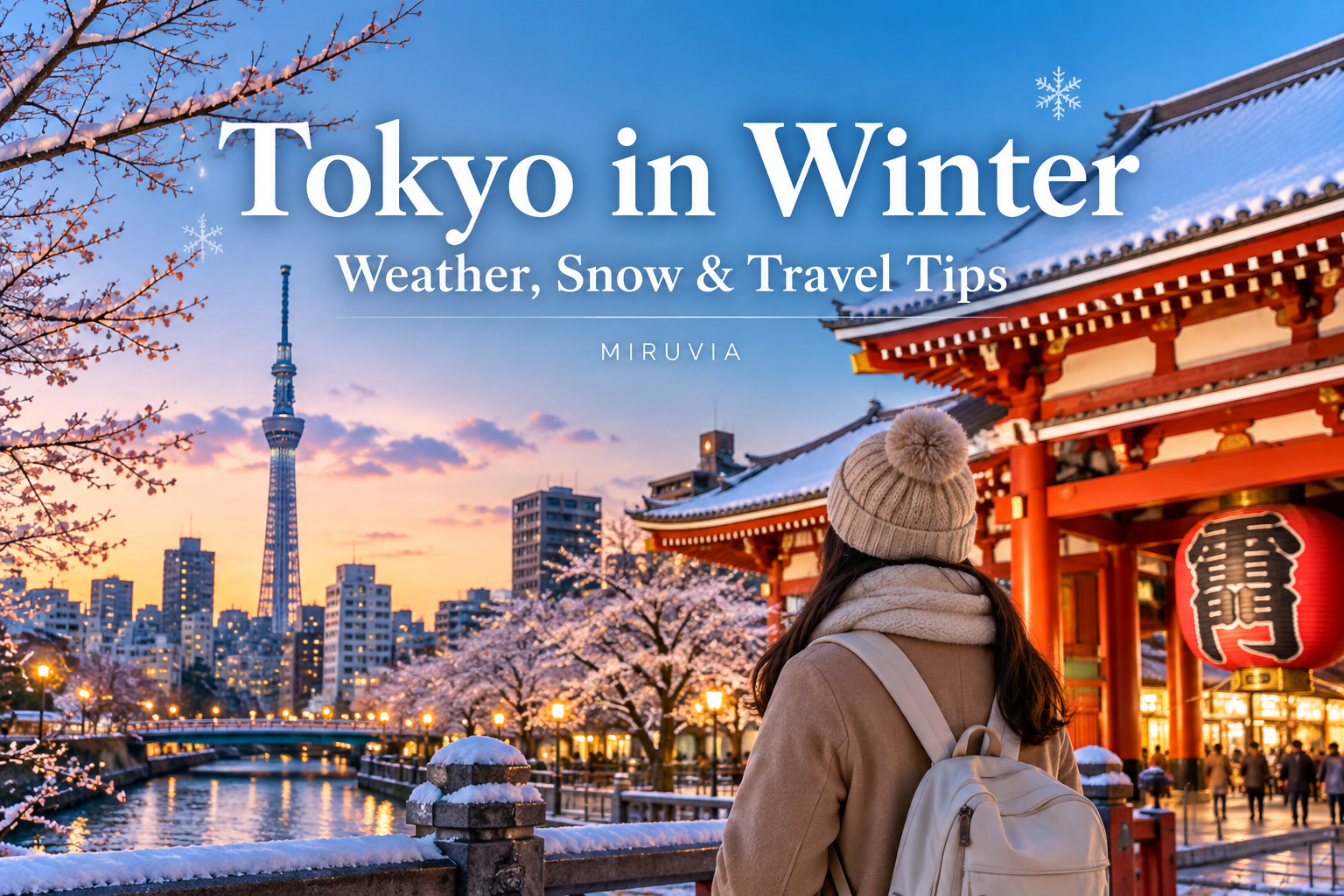
Winter is a great time to visit Tokyo for travelers who prefer cooler weather, clearer skies, seasonal food, and a different atmosphere from the busier spring and autumn seasons.
Tokyo’s winter generally runs from December through February. Temperatures are much colder than in autumn, especially in the mornings and evenings, but the city usually experiences milder winter conditions than northern parts of Japan.
Snow is possible in Tokyo, but it is important to have realistic expectations. The city is not normally covered in snow throughout winter, and many winter days are dry and sunny. However, occasional snowfall can affect trains, roads, and sightseeing plans.
Winter also brings seasonal experiences such as illuminations, New Year traditions, warm Japanese food, and clear views from observation decks. Travelers visiting around the year-end and New Year period should be aware that some attractions, restaurants, shops, and other facilities may operate on reduced schedules or close temporarily.
December, January, and February each offer a slightly different travel experience, so choosing the right month depends on your priorities and tolerance for cold weather.
This guide explains what Tokyo is like in winter, including weather, snow, what to wear, what to pack, crowds, travel costs, seasonal food, and practical tips for first-time visitors.
Is Winter a Good Time to Visit Tokyo?
Yes. Winter can be an excellent time to visit Tokyo, especially for travelers who prefer cooler weather, clear skies, seasonal food, and fewer concerns about heat and humidity.
From December through February, Tokyo is generally cold and relatively dry. With the right clothing, the weather can be comfortable for exploring neighborhoods, temples, parks, shopping districts, and other attractions.
Winter also offers experiences that are different from other seasons, including illuminations, New Year traditions, seasonal dishes, and clear city views.
However, there are some disadvantages to consider. Days are shorter, mornings and evenings can feel particularly cold, and occasional snow may affect transportation. Travelers visiting around the New Year period should also check opening hours carefully, as some businesses and attractions may close or operate on different schedules.
Advantages of Visiting Tokyo in Winter
Winter has several advantages for first-time visitors:
- Cooler and generally drier conditions than Tokyo’s summer
- Many clear days that are suitable for sightseeing
- Winter illuminations and seasonal events
- New Year traditions and cultural experiences
- Seasonal foods such as hot pot dishes and ramen
- Clearer views from observation decks on favorable days
- No need to deal with Tokyo’s intense summer heat and humidity
For travelers who enjoy walking around the city, winter can be very pleasant as long as they dress appropriately for the cold.
Disadvantages of Visiting Tokyo in Winter
Winter also has a few drawbacks:
- January and February can feel particularly cold
- Daylight hours are shorter than in warmer seasons
- Snow is uncommon, so travelers should not expect a consistently snowy Tokyo
- Occasional snowfall can disrupt trains and other transportation
- Some attractions, restaurants, and shops may change their opening hours around the New Year holidays
- Outdoor sightseeing can become uncomfortable without proper winter clothing
Overall, winter is a good season for visiting Tokyo if you prepare for the cold and understand that Tokyo is usually a cold but not consistently snowy winter destination.
Tokyo Winter Weather
Tokyo’s winter lasts from December through February and is generally cold and relatively dry. Compared with summer, humidity is much lower, and many days are suitable for sightseeing if you are properly dressed.
Temperatures vary throughout the season. December is usually the mildest winter month, January tends to be the coldest, and February remains cold but gradually begins to transition toward spring.
Mornings and evenings can feel significantly colder than the afternoon, so layering is useful when spending a full day exploring the city.
Tokyo Weather in December
December marks the beginning of winter in Tokyo. Daytime temperatures are often around 10–15°C (50–59°F), while mornings and evenings can be considerably colder.
Early December may still feel relatively mild during sunny afternoons, but temperatures generally decrease as the month progresses.
A warm jacket or coat is recommended, particularly if you plan to stay outside after sunset.
Tokyo Weather in January
January is typically one of the coldest months in Tokyo. Daytime temperatures are often around 8–12°C (46–54°F), while early mornings and nights can approach freezing.
Despite the cold, Tokyo often experiences clear winter days, making January suitable for sightseeing if you wear enough layers.
A warm coat, sweater or fleece, and accessories such as gloves and a scarf can make outdoor sightseeing much more comfortable.
Tokyo Weather in February
February remains cold, with daytime temperatures often around 9–13°C (48–55°F). Mornings and evenings can still feel particularly chilly.
Conditions gradually begin to change toward the end of the month, but travelers should still prepare for winter temperatures throughout February.
Snow is possible during this part of the season, although significant snowfall is not an everyday occurrence in central Tokyo.
Winter weather can vary from year to year, so check the latest forecast shortly before and during your trip rather than relying only on typical seasonal conditions.
Does It Snow in Tokyo?
Yes, it can snow in Tokyo during winter, but snowfall is relatively infrequent compared with many colder regions of Japan.
Most winter days in central Tokyo are not snowy, and travelers should not expect the city to remain covered in snow throughout December, January, or February.
When snow does occur, conditions can vary considerably. Some snowfall may be light and disappear quickly, while stronger winter weather can occasionally produce enough snow to affect roads, trains, and flights.
If seeing a snowy landscape is an important part of your Japan trip, it is better not to rely on central Tokyo alone.
How Often Does It Snow in Tokyo?
Snow is possible during Tokyo’s winter, particularly in the colder part of the season, but it does not occur consistently enough to plan a trip around specific dates.
The amount and timing of snowfall also vary from year to year. Some winters bring noticeable snow to central Tokyo, while others have relatively little.
For this reason, avoid choosing your travel dates based on the expectation of seeing snow in Tokyo. Check the latest weather forecast as your trip approaches instead.
What Happens When It Snows in Tokyo?
Even a relatively small amount of snow can affect transportation in Tokyo because heavy snowfall is not a normal everyday condition for the city.
Train services may experience delays or changes, roads can become slippery, and flights may be affected depending on the severity of the weather.
If snow is forecast during your visit, allow extra travel time and check official transportation information before heading to airports, train stations, or other destinations.
Travelers planning a day trip should also check conditions at both the destination and along the transportation route before leaving Tokyo.
Planning a winter escape from the city? See our Best Day Trips from Tokyo for First-Time Visitors for ideas and practical planning tips.
Best Things to Do in Tokyo in Winter
Winter offers a different way to experience Tokyo. Cooler temperatures make long walks more manageable than during the humid summer months, while clear days can provide excellent conditions for city views and outdoor sightseeing.
Some of the best things to do in Tokyo during winter include:
- See winter illuminations around major shopping and entertainment districts
- Visit temples and shrines during the New Year season
- Enjoy panoramic views of Tokyo from observation decks
- Explore neighborhoods such as Shibuya, Shinjuku, Asakusa, Ginza, and Ueno
- Warm up with ramen, hot pot dishes, and other seasonal Japanese food
- Visit museums, shopping centers, and indoor attractions on particularly cold days
- Take advantage of clear winter weather for photography and sightseeing
- Consider a day trip outside Tokyo for different winter scenery
Winter is also a good season for combining outdoor and indoor activities. You might spend the morning exploring a temple or neighborhood, visit a museum or shopping complex during the colder part of the day, and finish the evening with seasonal food or winter illuminations.
Travelers visiting around the New Year period can also experience one of Japan’s most important holiday seasons. However, opening hours and transportation schedules may differ, so check current information before visiting specific attractions.
Looking for more sightseeing ideas? See our Best Things to Do in Tokyo for First-Time Visitors for more attractions and experiences to add to your itinerary.
Winter Illuminations in Tokyo
Winter illuminations are one of the most popular seasonal experiences in Tokyo. From late autumn through winter, many shopping districts, commercial complexes, and public spaces decorate streets and trees with impressive light displays.
Popular areas for winter illuminations often include central districts such as Marunouchi, Roppongi, Shibuya, Shinjuku, and areas around major shopping complexes.
Illuminations are particularly enjoyable after sunset, making them easy to add to the end of a sightseeing day. You can explore Tokyo during daylight hours, have dinner, and then visit an illuminated street or district in the evening.
Many illumination displays are free to enjoy, although some special events or attractions may require admission.
Keep in mind that illumination locations, dates, operating hours, and themes can change every year. Some displays end around Christmas or New Year, while others continue into January or February.
Before visiting, check the latest information from the official website of the specific illumination or venue.
Tip: Tokyo can feel significantly colder after sunset. If you plan to spend time outdoors viewing illuminations, bring an extra layer and consider carrying gloves and a scarf.
What to Wear in Tokyo in Winter
Dressing appropriately for winter makes sightseeing in Tokyo much more comfortable. Although Tokyo’s winter is relatively mild compared with colder parts of Japan, mornings, evenings, and windy days can feel very cold.
Layering is useful because trains, department stores, restaurants, and other indoor spaces are often heated. Wearing several removable layers allows you to adjust easily as you move between indoor and outdoor environments.
December
December is generally the mildest of Tokyo’s three winter months, especially during the first half of the month.
Recommended clothing includes:
- A warm jacket or coat
- Sweaters, fleece, or other warm layers
- Long pants
- Comfortable closed-toe walking shoes
- A scarf or light gloves for colder evenings
If you are visiting later in December, prepare for colder mornings and nights.
January
January is typically one of the coldest periods of the year in Tokyo, so warmer clothing becomes more important.
Recommended clothing includes:
- A warm winter coat or insulated jacket
- Sweaters or fleece layers
- Thermal base layers if you are sensitive to cold
- Long pants
- Comfortable closed-toe shoes
- Gloves and a scarf
You may spend several hours outdoors when sightseeing, so dress for longer exposure rather than only checking the afternoon temperature.
February
February remains cold, particularly in the morning and evening. Clothing similar to January is generally appropriate.
Recommended clothing includes:
- A warm coat or jacket
- Sweaters or layered clothing
- Long pants
- Comfortable walking shoes
- Gloves and a scarf
Temperatures may become somewhat milder toward the end of the month, but winter clothing is still recommended.
Tip: Check the weather forecast shortly before departure. Tokyo’s winter conditions can vary, and the appropriate clothing for a sunny afternoon may be different from what you need early in the morning or after sunset.
What to Pack for Tokyo in Winter
Packing for Tokyo in winter is relatively straightforward, but a few practical items can make sightseeing much more comfortable.
Consider packing:
- A warm and comfortable winter coat
- Sweaters, fleece, or other layers
- Thermal base layers if you are sensitive to cold
- Gloves and a scarf
- Comfortable walking shoes
- Lip balm and moisturizer, as winter air can feel dry
- A compact umbrella for occasional rain or snow
- A portable charger for long sightseeing days
- A reusable water bottle
- A small day bag for carrying extra layers
Comfortable footwear is particularly important. Tokyo itineraries often involve considerable walking between stations, neighborhoods, temples, parks, and attractions.
You may also find disposable pocket warmers, known as kairo, at convenience stores, pharmacies, and other shops in Japan. They can be useful when spending extended periods outdoors on colder days.
Avoid overpacking bulky winter clothing if possible. Because indoor spaces and public transportation are often heated, removable layers are generally more practical than relying on one extremely heavy layer.
Tip: Leave some space in your luggage if you plan to shop in Tokyo. Clothing, souvenirs, snacks, and other purchases can quickly take up more room than expected.
Not sure what else to bring? See our Tokyo Packing List: What to Bring for Your First Trip to Japan for a complete checklist covering clothes, shoes, electronics, travel documents, medicine, and other essentials.
How Crowded Is Tokyo in Winter?
Tokyo’s winter crowd levels vary considerably depending on when you visit.
Some periods can be relatively comfortable for sightseeing, while the Christmas and New Year season can bring larger crowds to popular shopping districts, temples, shrines, transportation hubs, and seasonal attractions.
Understanding these differences can help you choose accommodation and plan sightseeing more efficiently.
Christmas and New Year
December becomes particularly lively as Christmas approaches, especially around shopping districts and popular winter illumination areas.
The New Year period is also unique. Temples and shrines can become extremely busy as people participate in hatsumode, the traditional first shrine or temple visit of the year.
Major transportation hubs may also be busier as people travel around Japan during the holiday period.
At the same time, some restaurants, shops, museums, and attractions may close or operate on reduced hours around New Year. Always check official opening schedules if your trip includes late December or early January.
January and February
Outside the New Year holiday period, parts of January and February can offer a calmer sightseeing experience than Tokyo’s most popular spring and autumn periods.
However, famous attractions and major neighborhoods can still be busy, particularly on weekends and public holidays.
Winter illuminations, seasonal events, and popular indoor attractions may also attract significant crowds.
If you want to avoid the busiest periods, visit major attractions on weekday mornings when possible and reserve popular restaurants or ticketed attractions in advance.
For more advice on avoiding crowds and planning your days efficiently, see our Tokyo Travel Tips for First-Time Visitors.
Tokyo Winter Travel Costs
The cost of visiting Tokyo in winter can vary significantly depending on your travel dates, accommodation preferences, and how early you book.
Some periods in January and February may offer better accommodation value than Tokyo’s busiest spring and autumn travel seasons. However, prices are not always lower, especially around Christmas, New Year, public holidays, and other high-demand dates.
Your main travel expenses will typically include:
- Accommodation
- Transportation
- Food and drinks
- Attractions and entertainment
- Shopping
- Flights or other transportation to Tokyo
Winter itself does not dramatically change everyday expenses such as local train fares or standard restaurant prices. Accommodation and flights are more likely to fluctuate depending on demand and your specific travel dates.
Booking accommodation early is particularly useful if you plan to visit during the year-end and New Year period.
Travelers on a limited budget can reduce costs by using Tokyo’s extensive public transportation network, choosing affordable restaurants, visiting free attractions, and taking advantage of free winter illuminations.
For a more detailed breakdown of accommodation, food, transportation, and sightseeing expenses, see our Tokyo Travel Budget: How Much Does a Trip to Tokyo Cost?
Winter Food and Seasonal Experiences in Tokyo
Winter is an excellent season for enjoying warm and comforting Japanese food. After spending several hours sightseeing outdoors, Tokyo’s restaurants offer plenty of dishes that are particularly satisfying during colder weather.
Popular foods and seasonal experiences to look for include:
- Nabe — Japanese hot pot dishes shared at the table
- Oden — ingredients such as daikon, eggs, and fish cakes simmered in a warm broth
- Ramen — a popular choice after sightseeing on a cold day
- Sukiyaki — thinly sliced meat and vegetables cooked together in a sweet and savory sauce
- Shabu-shabu — thin slices of meat and vegetables cooked briefly in hot broth
- Yakiimo — roasted sweet potatoes often enjoyed as a simple winter snack
- Seasonal seafood — winter brings different seafood specialties to restaurants and markets
- Strawberry desserts — strawberries and strawberry-based sweets become increasingly common during the winter season
Convenience stores and supermarkets also offer warm seasonal foods and drinks, making it easy to try something different even when you are not visiting a traditional restaurant.
Department store food halls, known as depachika, are another convenient option for discovering seasonal dishes, sweets, and beautifully prepared Japanese food.
Winter dining can also become part of your sightseeing experience. Spending the evening enjoying hot pot, ramen, or another warm Japanese dish is an excellent way to finish a cold day exploring Tokyo.
Want to discover more Japanese dishes during your trip? See our What to Eat in Tokyo: Must-Try Japanese Foods for First-Time Visitors.
Tokyo Winter Travel Tips
Winter is generally a comfortable season for exploring Tokyo if you prepare for colder temperatures and shorter daylight hours.
Keep these practical tips in mind:
- Dress in layers. Trains, restaurants, department stores, and other indoor spaces can feel much warmer than outside.
- Check the weather forecast every day. Temperatures can change, and occasional rain or snow may affect your plans.
- Start outdoor sightseeing during daylight hours. Winter days are shorter, so plan parks, gardens, temples, and viewpoints accordingly.
- Prepare for colder mornings and evenings. Temperatures can feel significantly lower before sunrise and after sunset.
- Check New Year opening hours carefully. Some attractions, restaurants, shops, and museums may close or operate on different schedules around the holiday period.
- Allow extra travel time if snow is forecast. Train, road, and flight disruptions are possible when winter weather affects Tokyo.
- Carry a portable charger. Maps, transportation apps, weather forecasts, and translation tools can be useful throughout a long sightseeing day.
- Use indoor attractions strategically. Museums, shopping centers, cafés, and restaurants provide convenient breaks on particularly cold days.
- Wear comfortable walking shoes. Tokyo sightseeing usually involves substantial walking even when you use trains frequently.
- Check illumination schedules before visiting. Locations and operating periods can change each year.
Winter weather should not prevent you from exploring Tokyo, but keeping your itinerary flexible makes it easier to adjust when conditions change.
If snow or severe weather is forecast, prioritize safety and check official transportation information before making long journeys or day trips.
For more practical advice before your trip, see our Tokyo Travel Tips for First-Time Visitors for transportation, money, etiquette, luggage, restaurants, airports, and other essentials.
Is December, January or February Best for Tokyo?
December, January, and February each offer a different winter experience in Tokyo, so the best month depends on your priorities.
December is a good choice for travelers who want relatively milder winter weather and a festive atmosphere. Winter illuminations are common, and the city becomes increasingly lively toward the end of the year. However, travelers visiting in late December should check New Year opening schedules carefully.
January is a strong choice for travelers who want to experience Japanese New Year traditions and do not mind colder weather. The first days of the year can be extremely busy at major temples and shrines, while later in January may provide a calmer sightseeing experience.
February remains cold but can be appealing to travelers who want winter conditions without the major New Year holiday period. Snow is possible, although travelers should not expect Tokyo to be consistently covered in snow.
As a simple guide:
| Month | Best For | Main Consideration |
|---|---|---|
| December | Illuminations and festive atmosphere | Year-end closures and changing schedules |
| January | New Year traditions and winter sightseeing | Cold weather and early-January crowds |
| February | Quieter winter sightseeing | Cold weather and occasional snow |
For many first-time visitors, December offers the most festive winter experience, while later January or February can be attractive for travelers who prefer a quieter atmosphere.
If experiencing Japanese New Year traditions is one of your priorities, early January can be particularly memorable, but you should plan carefully around holiday closures and large crowds at famous temples and shrines.
Whichever month you choose, check the latest weather forecast and current opening information shortly before your trip.
Final Thoughts
Winter can be an excellent time to visit Tokyo, especially for travelers who enjoy cooler weather, seasonal food, illuminations, and clear winter scenery.
December, January, and February each offer a different experience. December brings a festive atmosphere and winter illuminations, January offers New Year traditions and some of the coldest weather of the season, and February can provide a quieter winter experience.
Travelers should remember that Tokyo is not a consistently snowy winter destination. Snow is possible, but most winter trips should be planned around cold weather rather than the expectation of seeing the city covered in snow.
The year-end and New Year period also requires additional planning because opening hours, transportation demand, and crowd levels can differ from normal periods.
With warm clothing, comfortable walking shoes, and a flexible itinerary, winter can be a rewarding season for exploring Tokyo’s neighborhoods, temples, museums, observation decks, restaurants, and seasonal attractions.
Most importantly, check current weather forecasts, transportation information, and opening hours shortly before and during your trip so you can adjust your plans when necessary.
Ready to plan the rest of your trip? Start with our Tokyo Travel Guide for First-Time Visitors for an overview of where to stay, what to do, transportation, food, and other essentials.
