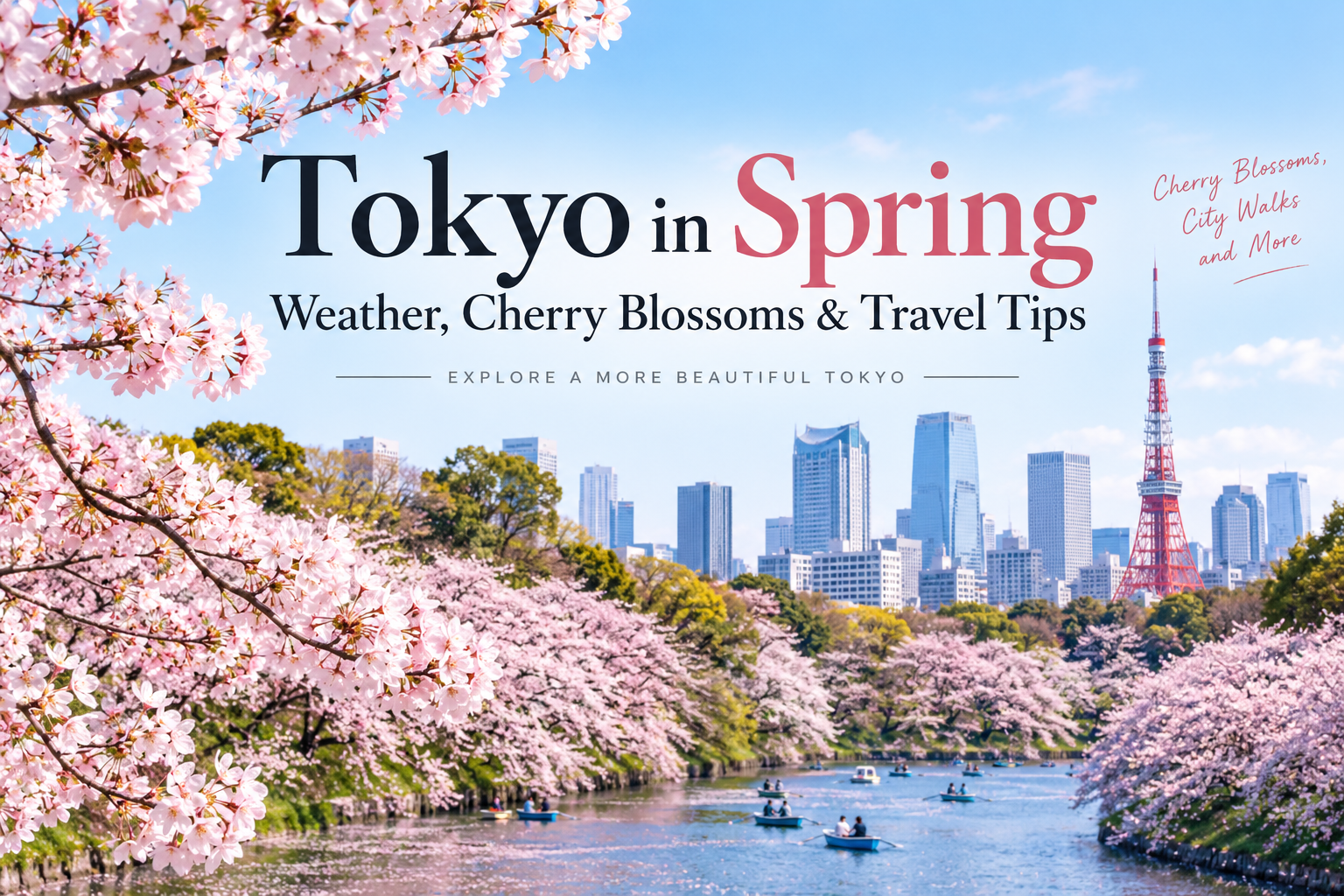
Spring is one of the most popular times to visit Tokyo. Mild weather, seasonal flowers, outdoor sightseeing, and the famous cherry blossom season make the city especially attractive from March through May.
However, spring in Tokyo is not the same throughout the entire season. March can still feel cool, April generally brings milder weather and some of the busiest cherry blossom crowds, while May is warmer and often more comfortable for long days of sightseeing.
Cherry blossoms are a major reason many travelers choose spring, but their timing changes every year. If seeing sakura is one of your main goals, it is important to understand that exact blooming dates cannot be guaranteed far in advance.
This guide explains what Tokyo is like in spring, including weather in March, April, and May, cherry blossom season, the best places to see sakura, what to wear, crowds, costs, seasonal experiences, and practical travel tips.
Whether you are visiting specifically for the cherry blossoms or simply want comfortable weather for exploring the city, understanding the differences between each spring month will help you choose the right time for your trip.
Is Spring a Good Time to Visit Tokyo?
Spring is one of the best times to visit Tokyo, especially for travelers who enjoy mild weather, seasonal scenery, and spending time outdoors.
From March through May, temperatures generally become warmer as the season progresses. This makes spring comfortable for exploring neighborhoods, visiting temples and parks, walking between attractions, and taking day trips from the city.
The biggest attraction is cherry blossom season. Parks, riversides, gardens, and streets across Tokyo turn pink for a relatively short period, creating one of the city’s most famous seasonal experiences.
However, spring also has some disadvantages. Popular cherry blossom locations can become extremely crowded, accommodation prices may rise during busy periods, and the exact timing of the blossoms is difficult to predict far in advance.
Late April and early May also overlap with Golden Week, one of Japan’s busiest domestic travel periods. Transportation, attractions, and accommodation can be more crowded during this time.
Overall, spring is an excellent season for a first trip to Tokyo, but choosing the right month can make a significant difference to your experience.
Advantages of Visiting Tokyo in Spring
- Comfortable weather for sightseeing
- Cherry blossoms and other seasonal flowers
- Longer daylight than winter
- Excellent conditions for walking and outdoor attractions
- Many seasonal foods, events, and experiences
- Good conditions for day trips from Tokyo
Disadvantages of Visiting Tokyo in Spring
- Large crowds during peak cherry blossom season
- Higher demand for accommodation during popular periods
- Cherry blossom timing cannot be guaranteed
- March can still have cold days
- Golden Week can make late April and early May especially busy
- Pollen can be an issue for travelers with seasonal allergies
Tokyo Spring Weather
Tokyo’s spring weather changes considerably between March and May. Early spring can still feel cold, while late spring is often warm and comfortable.
Weather varies from year to year, so the temperatures below should be treated as general planning guidance rather than a guarantee. Check the latest forecast shortly before your trip.
Tokyo Weather in March
March marks the transition from winter to spring in Tokyo.
Days gradually become warmer, but mornings and evenings can still feel cold. Temperatures can vary noticeably from one day to another, so layers are particularly useful.
As a general guide, daytime temperatures are often around 10–15°C (50–59°F), although warmer and colder days are possible.
A light-to-medium jacket, long pants, and clothing that can be layered are useful for most travelers. If you are visiting early in March, prepare for conditions that may still feel closer to winter.
Tokyo Weather in April
April generally brings milder and more comfortable weather to Tokyo.
Daytime temperatures are often around 15–20°C (59–68°F), making it a pleasant month for walking, parks, neighborhoods, and outdoor sightseeing.
Evenings can still feel cool, so carrying a light jacket or additional layer is useful.
April is also one of Tokyo’s most popular travel periods because cherry blossom season often overlaps with late March or early April, although the exact timing changes every year.
Tokyo Weather in May
May is generally warmer than March and April and can be one of the most comfortable months for sightseeing in Tokyo.
Daytime temperatures are often around 20–25°C (68–77°F), although warmer days are possible.
Lighter clothing becomes more practical, but carrying a thin outer layer can still be useful for cooler evenings or air-conditioned indoor spaces.
By May, Tokyo’s main cherry blossom season is normally over, but the warmer weather and green scenery make it an excellent time for exploring the city and taking day trips.
Regardless of the month, check Tokyo’s short-term weather forecast before packing, as spring temperatures and rainfall can change quickly.
When Is Cherry Blossom Season in Tokyo?
Cherry blossom season in Tokyo usually takes place between late March and early April, but the exact timing varies every year.
The blossoms do not remain at their peak for very long. After the flowers open, it generally takes several days for them to reach full bloom, and weather conditions such as rain, wind, and temperature can affect how long they remain on the trees.
This means travelers should avoid planning a trip around one specific “guaranteed” cherry blossom date. Even forecasts released before the season can change as weather conditions develop.
If seeing cherry blossoms is one of your main reasons for visiting Tokyo, traveling around the general late-March to early-April period can improve your chances, but there is still no guarantee that your visit will coincide with peak bloom.
Different varieties of cherry trees can also bloom at different times, and some parks and gardens may offer blossoms slightly earlier or later than the main season.
Cherry Blossom Dates Change Every Year
Cherry blossom timing is strongly influenced by weather conditions, particularly temperatures during the weeks leading up to spring.
In warmer years, blossoms may open earlier than expected. In cooler years, flowering can be delayed.
For this reason, check the latest cherry blossom forecasts from reliable Japanese weather and tourism sources as your trip approaches rather than relying only on historical averages.
If your travel dates are fixed, focus on enjoying spring in Tokyo as a whole rather than making your entire trip dependent on seeing peak blossoms. Parks, gardens, seasonal food, and comfortable sightseeing weather can still make spring an excellent time to visit even if you arrive before or after full bloom.
Best Places to See Cherry Blossoms in Tokyo
Tokyo has many places to enjoy cherry blossoms, from large parks and traditional gardens to riversides and historic areas.
The atmosphere can vary significantly by location. Some spots are famous for lively hanami gatherings, while others are better suited to walking, photography, or enjoying the blossoms in a more scenic setting.
During peak bloom, the most famous locations can become extremely crowded, particularly on weekends. Visiting earlier in the day can make the experience more comfortable.
Ueno Park
Ueno Park is one of Tokyo’s most famous cherry blossom locations and a popular place for hanami, the Japanese tradition of enjoying seasonal blossoms.
Rows of cherry trees create a lively spring atmosphere, and the surrounding Ueno area also offers museums, temples, shopping streets, and other attractions.
Because of its popularity, Ueno Park can become extremely busy during peak bloom. Visit earlier in the day if you prefer a less crowded experience.
Shinjuku Gyoen
Shinjuku Gyoen is an excellent choice for travelers who want to enjoy cherry blossoms in a spacious garden setting.
The garden contains different varieties of cherry trees, which can provide a somewhat broader viewing period than locations dominated by a single variety.
Unlike the lively atmosphere of some public parks, Shinjuku Gyoen is better suited to relaxed walking, garden scenery, and photography.
Entry rules, opening hours, fees, and reservation requirements can change, particularly during busy periods, so check the latest official information before visiting.
Meguro River
Meguro River is famous for cherry trees lining both sides of the water, creating one of Tokyo’s most recognizable spring scenes.
Walking along the river is the main experience, and the surrounding neighborhoods offer cafés, restaurants, and shops that can be combined with your visit.
The area becomes very crowded during peak blossom periods, especially in popular sections of the river and during evenings or weekends.
Chidorigafuchi
Chidorigafuchi, near the Imperial Palace, is one of Tokyo’s most scenic cherry blossom locations.
Cherry trees line the moat, creating beautiful views of blossoms over the water. Depending on operating conditions, visitors may also be able to rent boats and view the blossoms from the moat.
This is a particularly strong choice for photography, but expect significant crowds when the blossoms are near their peak.
Sumida Park
Sumida Park offers cherry blossom views along the Sumida River, with Tokyo Skytree providing a distinctive modern backdrop.
Its location also makes it easy to combine with sightseeing in Asakusa, including Sensoji Temple and the surrounding traditional streets.
For first-time visitors, this combination of cherry blossoms, river scenery, Tokyo Skytree, and Asakusa makes Sumida Park especially convenient.
Want to explore these neighborhoods beyond cherry blossom season? See our Best Areas to Visit in Tokyo for First-Time Visitors to compare Asakusa, Ueno, Shinjuku and other major areas.
Best Things to Do in Tokyo in Spring
Spring is an excellent season for exploring Tokyo because the milder weather makes both indoor and outdoor sightseeing comfortable.
Cherry blossoms may be the most famous attraction, but there are many other ways to enjoy the city during March, April, and May.
Some of the best spring experiences include:
- Enjoying cherry blossoms in parks, gardens, and along rivers
- Walking through neighborhoods such as Asakusa, Ueno, Shibuya, and Harajuku
- Visiting traditional gardens and temples
- Exploring outdoor observation areas and city viewpoints
- Trying seasonal Japanese food and sweets
- Spending time in parks and green spaces
- Taking a day trip outside Tokyo
- Visiting seasonal events and flower displays
Spring is particularly well suited to walking-based sightseeing. Instead of moving constantly between distant attractions, choose one or two nearby neighborhoods and spend time exploring them on foot.
On warmer days in April and May, outdoor attractions can be especially enjoyable. If rain is expected, keep museums, shopping centers, cafés, and other indoor attractions as flexible alternatives.
Seasonal events can change from year to year, so check current information shortly before your trip rather than building your itinerary around events that may not take place on the same dates every year.
Looking for more sightseeing ideas? See our Best Things to Do in Tokyo for First-Time Visitors for cultural experiences, food, shopping, city views, and other highlights to add to your itinerary.
What to Wear in Tokyo in Spring
What you should wear in Tokyo during spring depends heavily on the month you visit.
March can still feel cool, especially in the morning and evening, while April is generally milder. By May, warmer days become more common and lighter clothing is usually more comfortable.
The most practical strategy throughout spring is layering. Temperatures can change during the day, and trains, shops, restaurants, and other indoor spaces may feel different from the weather outside.
What to Wear in March
In March, bring clothing suitable for cool spring weather.
Useful items include:
- A light-to-medium jacket or coat
- Sweaters or long-sleeved tops
- Long pants
- Comfortable walking shoes
- Layers that can be removed during warmer afternoons
Early March may still feel relatively cold, so check the forecast shortly before traveling.
What to Wear in April
April generally allows for lighter clothing, although mornings and evenings can still be cool.
Consider bringing:
- A light jacket or cardigan
- Long-sleeved shirts and lighter tops
- Long pants or other comfortable walking clothes
- Comfortable walking shoes
- A compact umbrella
What to Wear in May
May is usually warmer, so lighter clothing becomes more practical.
Consider:
- T-shirts and lightweight tops
- Light pants, skirts, or other comfortable clothing
- A thin outer layer for cooler evenings
- Comfortable walking shoes
- Sun protection for longer periods outdoors
Regardless of the month, prioritize comfortable footwear. Tokyo sightseeing often involves considerably more walking than first-time visitors expect.
What to Pack for Tokyo in Spring
Packing for Tokyo in spring is relatively straightforward, but changing temperatures and occasional rain make a few items particularly useful.
You do not need to prepare for every possible situation. Focus on comfortable clothing, practical layers, and items that make long days of sightseeing easier.
Consider packing:
- Comfortable walking shoes
- Clothing that can be layered
- A light jacket or cardigan
- A compact umbrella
- A small day bag
- A reusable water bottle
- Sunglasses
- Sunscreen, especially for warmer days
- A portable phone charger
- Any personal allergy medication you normally use
A compact umbrella can be particularly useful because spring weather is not always dry. It can also be purchased easily in Tokyo if you prefer not to bring one from home.
Travelers who are sensitive to pollen should also prepare accordingly. Spring is a major pollen season in Japan, and some visitors may experience seasonal allergy symptoms.
Avoid overpacking whenever possible. Tokyo has many convenience stores, pharmacies, clothing stores, and other shops where basic travel items can be purchased if needed.
Not sure what else to bring? See our Tokyo Packing List: What to Bring for Your First Trip to Japan for a complete checklist covering clothes, shoes, electronics, travel documents, medicine, and other essentials.
How Crowded Is Tokyo in Spring?
Spring is one of Tokyo’s busiest travel seasons, but crowd levels vary depending on when you visit.
The two periods that require the most attention are cherry blossom season and Golden Week. During these times, popular attractions, parks, transportation, and accommodation can become significantly busier.
This does not mean you should avoid Tokyo in spring. With some planning, it is still possible to enjoy the city comfortably.
Cherry Blossom Season
Cherry blossom season attracts both international visitors and people traveling within Japan.
Famous viewing locations such as Ueno Park, Meguro River, Shinjuku Gyoen, and Chidorigafuchi can become especially crowded when the blossoms are near full bloom.
Weekends and afternoons are generally busier, so visiting popular cherry blossom spots earlier in the day can provide a more comfortable experience.
If your schedule is flexible, consider visiting less-famous parks and neighborhood streets as well. Tokyo has cherry trees throughout the city, so you do not need to rely entirely on the most famous viewing locations.
Golden Week
Golden Week is a period from late April to early May when several Japanese national holidays occur close together.
Many people in Japan travel during this period, which can increase demand for hotels, trains, flights, attractions, and popular destinations outside Tokyo.
If your Tokyo trip overlaps with Golden Week, book accommodation and long-distance transportation earlier than you normally would. Day trips may also require more planning because trains and popular destinations can be busier.
Tokyo itself remains fully visitable, but travelers should expect larger crowds and allow more flexibility in their itinerary.
Planning to leave the city during your stay? See our Best Day Trips from Tokyo for First-Time Visitors to compare Hakone, Kamakura, Nikko, Yokohama, Kawagoe, Mt. Takao, and Lake Kawaguchi.
Tokyo Spring Travel Costs
Traveling to Tokyo in spring does not automatically mean your entire trip will be expensive, but certain periods can have higher demand than others.
Accommodation is one of the areas where travelers are most likely to notice price differences. Hotels in convenient locations may become more expensive or sell out earlier during popular cherry blossom periods and Golden Week.
Flights can also become more expensive depending on your departure country, travel dates, and how early you book.
Everyday expenses such as local transportation, casual meals, convenience stores, and many regular attractions do not necessarily become more expensive simply because it is spring.
If you are traveling on a limited budget, consider:
- Booking accommodation well in advance
- Comparing several neighborhoods instead of staying only in the most popular areas
- Avoiding Golden Week when your travel dates are flexible
- Using trains and subways instead of taxis
- Mixing paid attractions with parks, temples, neighborhoods, and other free activities
- Keeping some flexibility around cherry blossom locations rather than paying more to stay near one famous spot
Travelers visiting specifically for cherry blossoms should also remember that paying more for peak-season dates does not guarantee peak bloom. Cherry blossom timing varies every year.
For a more detailed breakdown of accommodation, food, transportation, and sightseeing expenses, see our Tokyo Travel Budget: How Much Does a Trip to Tokyo Cost?
Spring Food and Seasonal Experiences in Tokyo
Spring in Tokyo is not only about cherry blossoms. The season also brings limited-time foods, sweets, drinks, and other experiences inspired by sakura and seasonal ingredients.
Convenience stores, cafés, department stores, restaurants, and traditional Japanese sweet shops often introduce spring-themed products during this period.
Seasonal foods and experiences to look for include:
- Sakura-themed sweets and desserts
- Traditional Japanese wagashi inspired by spring
- Seasonal drinks and café menus
- Strawberry desserts and sweets
- Spring vegetables and seasonal restaurant dishes
- Hanami picnics in parks
- Spring flower displays in gardens and public spaces
Sakura-flavored products are especially common around cherry blossom season. However, availability varies by store, location, and year, so treat them as something to discover during your trip rather than a guaranteed item.
A simple way to enjoy spring like a local is to buy food or sweets and spend time in a park during hanami season. Remember that individual parks may have their own rules regarding eating, drinking, seating, and opening hours, so check local signs and current information.
Even if your trip does not coincide with peak cherry blossoms, seasonal menus and spring ingredients can still provide a memorable way to experience the season in Tokyo.
Want to explore Japanese food beyond seasonal specialties? See our What to Eat in Tokyo: Must-Try Japanese Foods for First-Time Visitors for sushi, ramen, tempura, yakitori, curry, sweets, and more.
Tokyo Spring Travel Tips
A little preparation can make a spring trip to Tokyo much more comfortable, especially during cherry blossom season and other busy travel periods.
Keep these practical tips in mind:
- Book accommodation early during popular periods. Hotels can become more expensive or have limited availability around cherry blossom season and Golden Week.
- Check cherry blossom forecasts close to your trip. Blooming dates change every year, so avoid relying entirely on historical dates.
- Visit famous cherry blossom spots early. Popular locations can become crowded later in the day, particularly during peak bloom.
- Prepare for changing temperatures. Layered clothing makes it easier to adjust between cool mornings, warmer afternoons, and evenings.
- Carry a compact umbrella. Rain is possible throughout spring, and weather conditions can change during your stay.
- Wear comfortable shoes. Spring is ideal for walking, and exploring parks, gardens, and neighborhoods can add significant distance to your day.
- Keep your itinerary flexible. If a famous cherry blossom location is extremely crowded, consider visiting another park, garden, or neighborhood instead.
- Plan Golden Week carefully. If your trip overlaps with late April or early May, reserve accommodation and important transportation as early as possible.
- Check current information before visiting seasonal attractions. Opening hours, admission rules, events, and reservation requirements can change.
Most importantly, do not make cherry blossoms the only measure of a successful spring trip. Tokyo offers excellent food, neighborhoods, gardens, cultural attractions, and day trips throughout March, April, and May.
For more practical advice before your trip, see our Tokyo Travel Tips for First-Time Visitors for transportation, money, etiquette, luggage, restaurants, airports, and other essentials.
Is March, April or May Best for Tokyo?
March, April, and May can all be good months to visit Tokyo, but the best choice depends on what you want from your trip.
March is a good option for travelers who do not mind cooler weather and want the possibility of experiencing the beginning of cherry blossom season. Early March is generally quieter than the main blossom period, while conditions later in the month can change significantly depending on the year.
April is an excellent choice for travelers who want mild spring weather and hope to experience Tokyo’s famous spring atmosphere. Cherry blossoms may still be visible around the beginning of the month in some years, but their timing varies. Popular sightseeing areas can also be particularly crowded during this period.
May is a strong choice for travelers who prioritize warmer weather and comfortable outdoor sightseeing rather than cherry blossoms. The main sakura season is normally over, but parks and gardens are green, temperatures are warmer, and the weather is well suited to exploring the city on foot. Keep in mind that Golden Week can make late April and early May especially busy.
As a simple guide:
| Month | Best For | Main Consideration |
|---|---|---|
| March | Cooler sightseeing and a possible start to sakura season | Weather can still feel cold |
| April | Classic spring atmosphere and mild weather | Cherry blossom crowds and higher demand |
| May | Warmer weather and outdoor sightseeing | Golden Week can be very busy |
For many first-time visitors, April offers the most recognizable Tokyo spring experience, while May can be a better choice if comfortable weather is more important than cherry blossoms.
If seeing cherry blossoms is your main priority, however, do not choose your dates based only on the month. Blooming conditions change every year, so check current forecasts as your trip approaches.
Final Thoughts
Spring is one of the most rewarding seasons to visit Tokyo, offering mild weather, beautiful seasonal scenery, and plenty of opportunities to explore the city on foot.
Cherry blossoms are the highlight for many travelers, but they are only one part of the experience. March, April, and May each offer different advantages, from the cooler days of early spring to the warmer and greener conditions of May.
If seeing cherry blossoms is important to you, remember that blooming dates change every year. Keep your itinerary flexible, check current forecasts as your trip approaches, and avoid planning your entire visit around one predicted date.
Travelers who prefer comfortable sightseeing conditions may find April or May especially appealing, while March can be a good choice for those who do not mind cooler weather.
Whatever month you choose, spring is an excellent time to discover Tokyo’s neighborhoods, parks, gardens, food, culture, and nearby destinations.
Ready to plan the rest of your trip? Start with our Tokyo Travel Guide for First-Time Visitors for an overview of where to stay, what to do, transportation, food, and other essentials.
