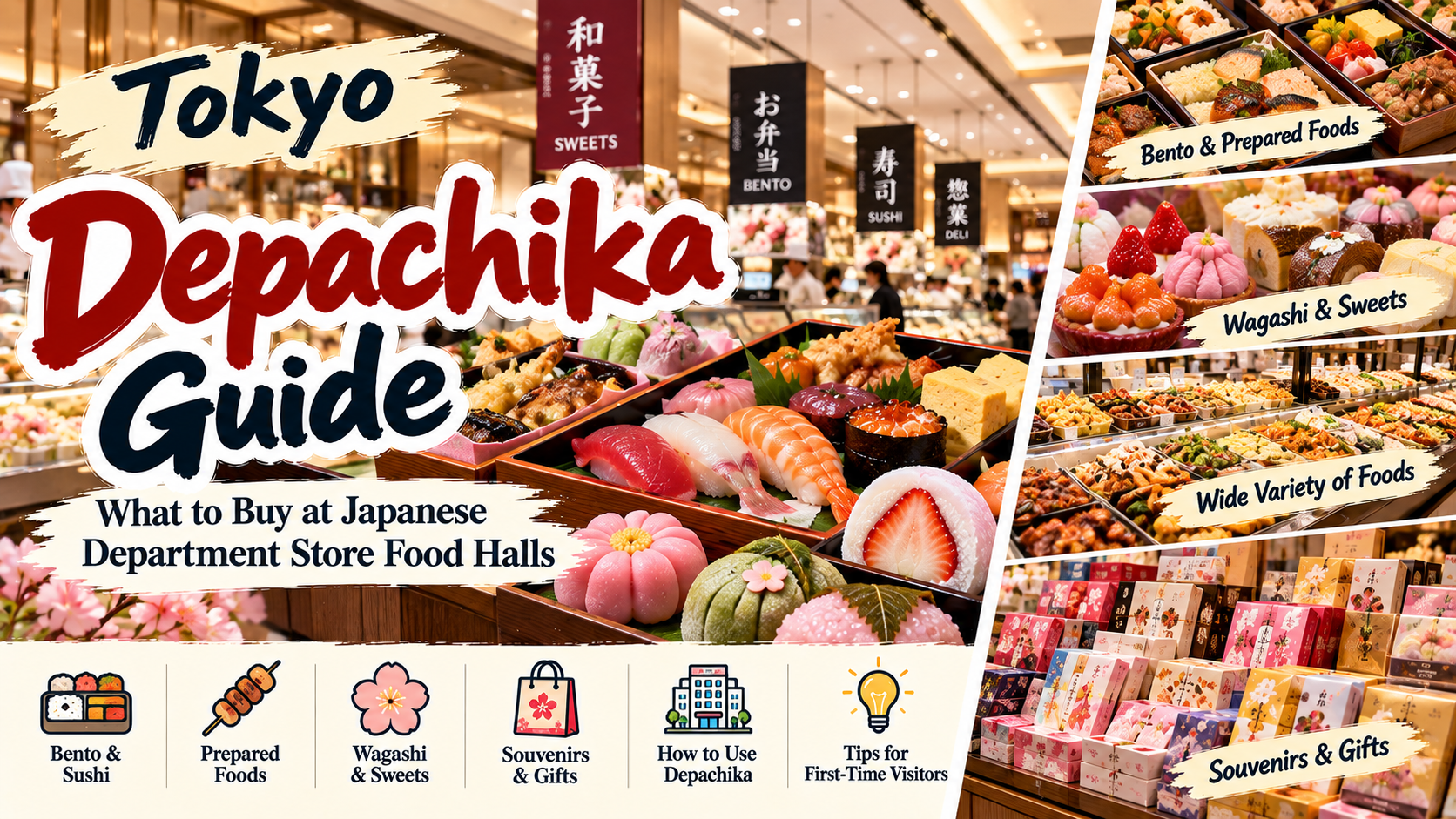
Tokyo’s department stores are famous for fashion, cosmetics and luxury brands, but some of their most interesting areas are hidden underground.
These basement food halls are known in Japan as depachika.
For travelers, a depachika can be part gourmet market, part souvenir shop and part convenient place to assemble an excellent meal. You may find beautifully prepared bento boxes, sushi, yakitori, salads, wagashi, cakes, bread, fruit and countless packaged gifts within a single floor.
However, visiting one for the first time can also be overwhelming.
What should you buy? Can you eat the food there? Are depachika expensive? And how are they different from supermarkets or convenience stores?
This guide explains how Tokyo’s depachika work, what travelers should look for and how to use department store food halls efficiently during a trip.
What Is a Depachika?
The word depachika combines two Japanese words:
- Depāto — department store
- Chika — basement or underground
In practice, depachika refers to the food floors commonly located in the basement levels of Japanese department stores.
They bring together many different food businesses in one place.
Depending on the department store, you may encounter counters selling prepared meals, bento, sushi, grilled food, Japanese sweets, Western-style desserts, bread, premium fruit, tea, alcohol and packaged gifts.
The atmosphere is different from a supermarket.
Products are often carefully displayed, packaging tends to be attractive and many counters specialize in a particular type of food.
Miruvia’s Take
Think of depachika as a food destination rather than simply a place to buy groceries.
You can use one to solve a practical problem — such as finding dinner — while also experiencing an interesting part of Japanese food and shopping culture.
Why Should Travelers Visit a Depachika?
A depachika is especially useful because it combines variety with convenience.
Instead of visiting several restaurants or specialty shops, you can compare many foods within one building.
This makes depachika particularly useful when:
- Your group wants different foods
- You want an easy dinner after sightseeing
- You are shopping for food souvenirs
- You want to sample several Japanese dishes
- The weather makes outdoor exploration uncomfortable
- You have limited time near a major station
- You want high-quality takeaway food
For food-focused travelers, browsing can be enjoyable even before you decide what to buy.
What Can You Buy at a Tokyo Depachika?
The exact selection varies between department stores, but several categories appear frequently.
Understanding them before you visit makes the experience much easier.
Bento
Bento boxes are one of the most practical depachika purchases.
A bento typically combines several components into a single takeaway meal.
Depending on the counter, you may find:
- Grilled fish bento
- Meat bento
- Sushi bento
- Rice-based meals
- Seasonal bento
- Vegetable-focused bento
- Regional specialties
Presentation can range from simple to elaborate.
For travelers returning to a hotel after a long day, a depachika bento can be an excellent alternative to another restaurant meal.
Miruvia’s Take
Use depachika for dinner on one of your busiest sightseeing days.
You can choose your meal quickly, return to your accommodation and still eat something more interesting than an emergency snack.
Sushi
Many department store food halls have counters selling prepared sushi.
You may find individual pieces, assorted sets, rolls or seafood-focused bento.
Depachika sushi is particularly useful if you want sushi without committing to a full restaurant experience.
It can also work well when different members of your group want different foods.
One person can choose sushi while another buys grilled meat, salad or another prepared dish.
If you want to understand sushi restaurant styles, ordering and etiquette in greater depth, our dedicated Tokyo Sushi Guide covers the full experience.
Prepared Foods and Side Dishes
One of the strengths of depachika is the enormous selection of prepared dishes.
These may include:
- Fried foods
- Grilled fish
- Yakitori
- Salads
- Vegetable dishes
- Dumplings
- Croquettes
- Meat dishes
- Japanese-style side dishes
- International foods
Instead of buying a complete bento, you can create your own meal by selecting several smaller dishes.
This is particularly useful for travelers who enjoy sampling different foods.
Yakitori and Grilled Foods
Skewered chicken and other grilled foods are common takeaway options.
They can be purchased individually, making them easy to combine with rice, salads or other dishes.
For travelers interested in izakaya food but not ready for a Japanese pub environment, depachika can provide an easy introduction to some similar flavors.
For the full dining experience, including ordering, drinks and etiquette, see our Tokyo Izakaya Guide.
Fried Foods
Japanese food halls frequently have counters selling freshly prepared fried items.
Common examples can include:
- Tonkatsu
- Karaage
- Croquettes
- Tempura
- Fried seafood
These foods are convenient for building a casual takeaway dinner.
Remember that fried foods are usually best enjoyed relatively soon after purchase.
Salads and Vegetable Dishes
Depachika are not limited to meat, seafood and sweets.
Many counters sell salads, cooked vegetables and lighter side dishes.
This can be particularly useful after several days of restaurant meals when you want more control over what you eat.
However, travelers with strict dietary requirements should still check ingredients carefully rather than assuming a vegetable-looking dish is vegetarian or vegan.
Wagashi
Traditional Japanese sweets are an important part of many department store food halls.
You may find established confectionery brands selling:
- Daifuku
- Manju
- Yokan
- Monaka
- Seasonal wagashi
- Packaged Japanese sweets
Depachika are particularly useful for comparing multiple brands without traveling between specialist shops.
If you want to understand the different types of Japanese sweets before shopping, see our Tokyo Wagashi Guide.
Western-Style Sweets
Japanese department stores also have extensive selections of Western-influenced desserts.
Expect products such as:
- Cakes
- Cookies
- Chocolates
- Puddings
- Cream-based desserts
- Pastries
- Gift boxes
Many combine Western pastry techniques with Japanese flavors or presentation.
For travelers who are not particularly interested in traditional wagashi, this section of the food hall can still be worth exploring.
Bakeries and Bread
Bread culture is another interesting part of everyday food in Japan.
Depending on the department store, you may encounter bakeries selling:
- Shokupan
- Sandwiches
- Sweet bread
- Savory bread
- Pastries
- Seasonal products
Bread can be particularly useful for breakfast the following morning or as food for a train journey.
Premium Fruit
Japanese department stores are known for carefully presented premium fruit.
You may see beautifully packaged:
- Melons
- Strawberries
- Grapes
- Peaches
- Citrus fruits
Some products can be surprisingly expensive because premium fruit is sometimes treated as a luxury gift in Japan.
You do not need to buy an expensive gift-grade melon to enjoy visiting this section.
It can simply be interesting to see how differently fruit can be presented and valued.
Miruvia’s Take
Premium fruit is one of the best examples of why depachika are interesting even when you are not planning to buy everything you see.
Part of the experience is observing Japanese gift culture and presentation.
Packaged Food and Souvenirs
Depachika are excellent places to shop for edible souvenirs.
Common options include:
- Cookies
- Rice crackers
- Wagashi
- Yokan
- Chocolates
- Tea
- Regional specialties
- Seasonal gift boxes
Packaging is often designed with gift-giving in mind.
This can make department stores easier for souvenir shopping than supermarkets, especially when presentation matters.
Can You Eat Inside a Depachika?
This is one of the most important points for first-time visitors.
Do not assume that you can buy food and immediately sit down nearby to eat it.
Many depachika primarily sell food for takeaway, and seating may be limited or unavailable on the food floor itself.
Some department stores may provide designated eating spaces elsewhere, while others may have restaurants on separate floors.
The exact arrangement varies by location.
Before opening your food inside the store, check whether there is a clearly designated eating area.
Miruvia’s Take
Treat depachika food as takeaway unless you confirm that eating space is available.
If your goal is dinner, decide where you will eat before buying a large meal.
Your hotel room can be the simplest option.
How to Use Depachika for an Easy Tokyo Dinner
A department store food hall can solve one of the most common travel problems: finding dinner when everyone is tired.
Use this simple approach.
Step 1: Walk through the entire food floor first.
Do not buy the first attractive item you see.
The selection can be large, and something more interesting may appear around the next corner.
Step 2: Choose one main item.
This might be a bento, sushi set, grilled fish or meat dish.
Step 3: Add one or two smaller dishes.
Choose vegetables, salad, yakitori, croquettes or another side.
Step 4: Add dessert if you want one.
This is an easy opportunity to try wagashi, cake or another Japanese sweet.
Step 5: Take everything back to your accommodation.
You now have a flexible Japanese dinner without waiting for a restaurant table.
This strategy is especially useful for families or groups with different food preferences.
Depachika vs Supermarket
Both sell food, but the experience and purpose are different.
| Depachika | Supermarket |
|---|---|
| Specialty counters | Everyday grocery shopping |
| Strong gift selection | Strong everyday food selection |
| Attractive presentation | More practical packaging |
| Premium products common | Wider range of budget options |
| Convenient brand comparison | Better for regular groceries |
| Food destination experience | Daily-life shopping experience |
Choose a depachika when you want variety, specialty food, gifts or a more polished shopping experience.
Choose a supermarket when price, everyday groceries or practical supplies matter more.
Depachika vs Convenience Store
Convenience stores are faster and easier to find.
Depachika offer far more depth.
| Depachika | Convenience Store |
|---|---|
| Large food selection | Compact selection |
| Many specialist counters | Standardized convenience food |
| Premium and gift products | Budget-friendly everyday options |
| Good for browsing | Best for speed |
| Better for food exploration | Better for immediate needs |
A convenience store is ideal when you need breakfast, a drink or a quick snack.
A depachika is better when choosing the food itself is part of the experience.
Depachika vs Restaurant
A restaurant provides service, seating and a complete dining environment.
Depachika prioritize choice and takeaway convenience.
Choose a restaurant when you want:
- A full dining experience
- Freshly served dishes
- Table service
- Atmosphere
- A relaxed meal
Choose depachika when you want:
- Many choices in one place
- Takeaway food
- Flexible portions
- Different foods for different people
- An efficient meal after sightseeing
Neither option replaces the other.
They work best for different moments in your itinerary.
Are Depachika Expensive?
Prices vary widely.
Because department stores frequently feature specialty brands and premium products, some items can cost more than comparable supermarket food.
However, you do not need a luxury budget to enjoy a depachika.
You can buy one snack, a small sweet or a prepared side dish without purchasing an elaborate meal.
The key is to treat depachika as a place with multiple price levels rather than assuming everything is expensive.
Miruvia’s Take
Do not visit a depachika expecting supermarket prices.
Visit because you value selection, presentation and convenience.
If saving money is the priority, supermarkets and convenience stores are usually more appropriate.
When Is the Best Time to Visit?
The best time depends on your goal.
Earlier in the Day
Visit earlier if:
- You want the widest selection
- You are shopping for specific gifts
- You want to browse without focusing on dinner
- A particular product matters to you
Late Afternoon or Early Evening
This is a natural time to shop for dinner.
Prepared food sections can become busier as local shoppers also buy meals.
Some products may sell out.
Later in the Evening
Some prepared foods may occasionally be discounted as closing time approaches.
However, this should be treated as a possible bonus rather than a guaranteed strategy.
Waiting until late can also mean a smaller selection.
Should You Visit a Depachika Before Closing?
Visiting near closing time has advantages and disadvantages.
You may encounter discounts on certain prepared foods.
On the other hand, popular items may already be gone.
For a first visit, selection is usually more valuable than chasing discounts.
Visit at a comfortable time and focus on exploring.
How Long Should You Spend in a Depachika?
For most travelers, around 30–60 minutes is enough.
A quick visit can take less time if you know exactly what you want.
Food enthusiasts or travelers shopping for multiple souvenirs may easily spend longer comparing counters.
Depachika works particularly well as an activity between sightseeing and returning to your hotel.
Where Should You Look for Depachika in Tokyo?
Department stores are commonly found around Tokyo’s major commercial districts and railway stations.
Areas such as Shinjuku, Shibuya, Ginza, Tokyo Station and Ikebukuro have extensive shopping infrastructure.
Rather than crossing the city solely to visit a random department store, look for a convenient depachika near places already included in your itinerary.
Miruvia’s Take
For most first-time visitors, the best depachika is the one located near where you already are.
The concept is more important than chasing a single supposedly “best” food hall across Tokyo.
Depachika for First-Time Visitors vs Repeat Visitors
First-time visitors should use depachika primarily for convenience and variety.
A simple visit for dinner or souvenirs is enough.
Repeat visitors can explore more deeply.
They may compare different department stores, search for seasonal products or focus on particular confectionery brands and regional specialties.
This makes depachika surprisingly repeatable.
The products and seasonal displays can change even when the basic concept remains the same.
Depachika for Families
Department store food halls can be particularly useful for families.
Everyone can choose something different without requiring the group to agree on one restaurant.
One person may want sushi, another fried chicken and another a sandwich or salad.
Parents should remember that seating is not always available, so decide where the family will eat before purchasing a large amount of food.
Depachika for Solo Travelers
Solo travelers can use depachika very efficiently.
You can buy exactly the amount you want without worrying about entering a restaurant alone.
This makes food halls useful on evenings when you want a quieter meal after a busy sightseeing day.
The main challenge is resisting the temptation to buy too many different foods at once.
Vegetarian and Vegan Travelers
Depachika may offer vegetable dishes, salads and other apparently plant-based foods.
However, visual appearance does not guarantee that a dish is vegetarian or vegan.
Japanese cooking may use ingredients such as fish-based stock or other animal-derived seasonings.
Travelers with strict dietary requirements should confirm ingredients whenever possible.
For more detailed advice, see our Tokyo Vegetarian & Vegan Guide.
Halal Travelers
Travelers following halal dietary requirements should not assume that meat or prepared dishes are halal simply because the ingredients appear familiar.
Seasonings, cooking methods and shared preparation environments can matter.
Look for clearly communicated information and ask when necessary.
Our Tokyo Halal Food Guide provides broader guidance for Muslim travelers eating in Tokyo.
What Should You Buy on Your First Depachika Visit?
If you are overwhelmed by the selection, use this simple formula.
Choose:
One main dish
- Bento
- Sushi
- Grilled food
One side dish
- Salad
- Vegetables
- Yakitori
- Croquette
One Japanese sweet
- Wagashi
- Dorayaki
- Yokan
- Another seasonal sweet
One optional discovery
- Something you do not immediately recognize
This gives you variety without buying more food than you can realistically eat.
What Makes a Good Depachika Souvenir?
The most visually impressive product is not always the best souvenir.
Prioritize practical characteristics.
Look for products that are:
- Individually wrapped
- Clearly packaged
- Easy to transport
- Reasonably durable
- Suitable for room-temperature storage when possible
- Within the shelf life needed for your trip
Fresh cakes and delicate wagashi may be excellent to eat in Tokyo but poor choices for a long journey home.
Miruvia’s Take
Separate “food I want to eat tonight” from “food I want to take home.”
Making that distinction before shopping prevents many poor souvenir choices.
A Simple First-Time Depachika Strategy
If you have never visited a Japanese department store food hall, follow this approach.
Step 1: Visit a department store already near your sightseeing route.
Step 2: Find the basement food floors.
Step 3: Walk through once without buying anything.
Step 4: Compare bento, prepared dishes and sushi.
Step 5: Choose a meal or snack.
Step 6: Browse wagashi and packaged sweets.
Step 7: Check shelf life before buying souvenirs.
Step 8: Confirm where you will eat takeaway food.
This approach keeps the experience enjoyable rather than overwhelming.
Practical Tips for Visiting Tokyo Depachika
Keep these points in mind:
- Food floors can become crowded around meal times.
- Walk around before making your first purchase.
- Do not assume seating is available.
- Check storage instructions for fresh products.
- Check expiration dates before buying souvenirs.
- Carry delicate products carefully.
- Popular items may sell out.
- Product selection can change seasonally.
- Dietary restrictions may require additional ingredient checking.
- Premium presentation does not mean you need to buy expensive products.
Most importantly, do not rush.
Browsing is part of the depachika experience.
How Depachika Fits Into a Tokyo Food Trip
Depachika works best alongside other Tokyo food experiences rather than replacing them.
A traveler might eat ramen at lunch, explore cafés or shops in the afternoon, buy dinner from a depachika and visit an izakaya on another evening.
For a broader introduction to eating in the city, see our Tokyo Food Guide for First-Time Visitors.
If you want to explore individual Japanese foods more deeply, our Tokyo Ramen Guide, Tokyo Sushi Guide, Tokyo Izakaya Guide and Tokyo Wagashi Guide cover several of the most useful experiences for first-time visitors.
Frequently Asked Questions
What does depachika mean?
Depachika refers to the basement food floors of Japanese department stores. The word combines depāto, meaning department store, with chika, meaning basement.
What can I buy at a depachika?
Common products include bento, sushi, prepared dishes, salads, fried foods, wagashi, cakes, bread, premium fruit, tea and packaged souvenirs.
Can I eat food inside a depachika?
Not necessarily. Many food halls primarily sell takeaway food, and seating may be limited or unavailable. Check for designated eating areas before eating inside the store.
Is depachika food expensive?
Prices vary. Premium products can be expensive, but smaller snacks, prepared dishes and sweets can be accessible at different budgets.
Are depachika good for dinner?
Yes. Buying a bento or combining several prepared dishes can be an efficient dinner after a long sightseeing day, especially if you can eat at your accommodation.
Are depachika good for souvenirs?
Yes. Department store food halls are particularly useful for packaged sweets and food gifts because many products are designed with gift presentation in mind.
Is a depachika better than a supermarket?
They serve different purposes. Depachika emphasize specialty foods, gifts and presentation, while supermarkets are generally better for everyday groceries and budget-conscious shopping.
When should I visit a depachika?
Visit earlier for a wider selection or around late afternoon and early evening when shopping for dinner. Near closing time, some prepared foods may occasionally be discounted, but selection may be reduced.
Final Thoughts
Tokyo’s depachika are useful because they sit somewhere between shopping, sightseeing and eating.
You can browse beautifully presented Japanese food, compare specialty brands, assemble an easy dinner and shop for souvenirs without leaving one building.
For your first visit, keep the strategy simple.
Walk through the entire food floor before buying anything, choose one main dish, add a side or sweet, and check storage requirements before purchasing gifts.
You do not need to find Tokyo’s single “best” depachika.
Visit one that fits naturally into your itinerary and use it as an opportunity to discover foods you might otherwise walk past.
For many travelers, that combination of convenience and discovery is exactly what makes Japanese department store food halls worth visiting.
