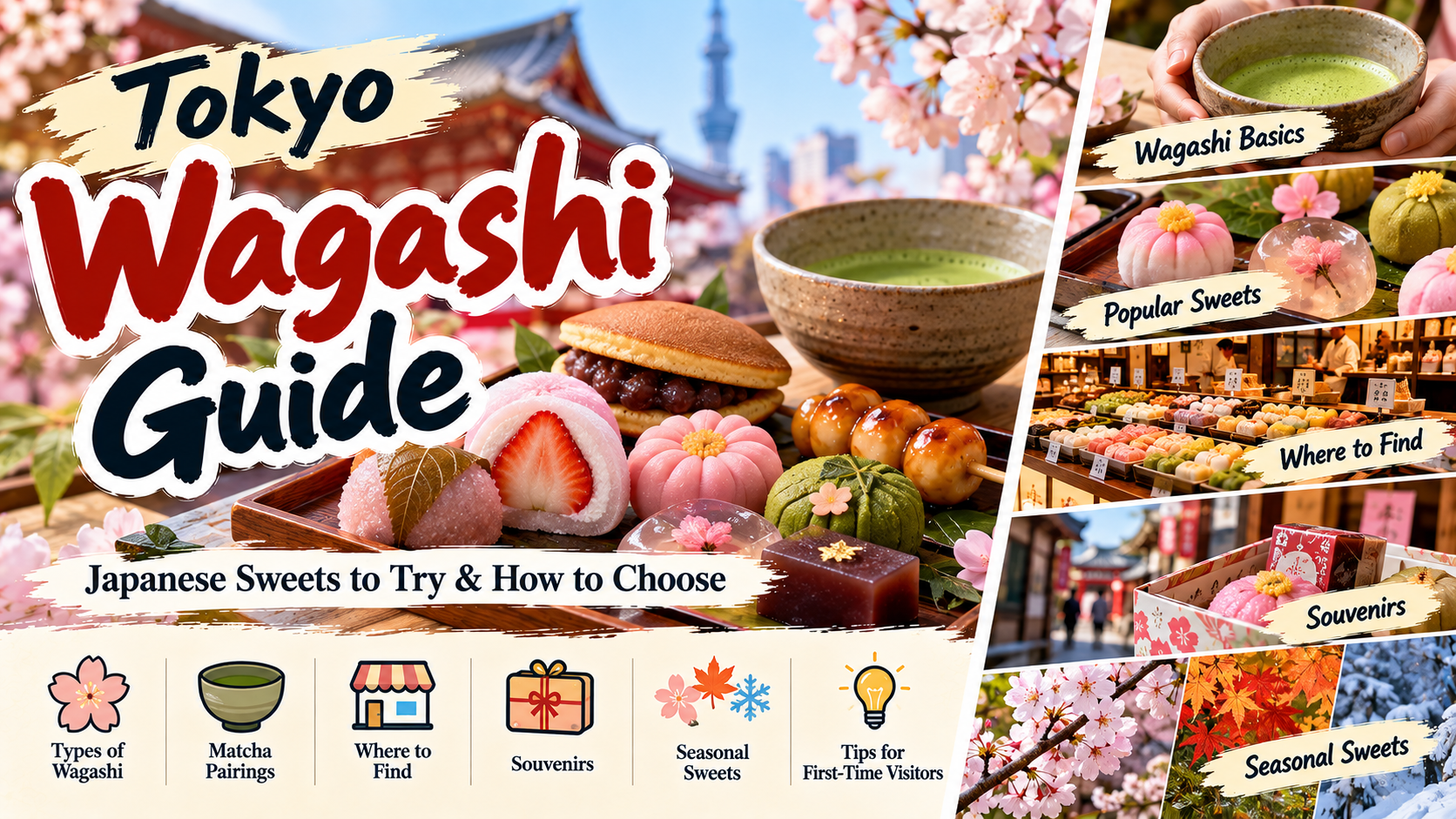
Tokyo is famous for sushi, ramen and countless other savory dishes, but Japanese sweets offer a very different way to experience the country’s food culture.
Traditional Japanese sweets, known as wagashi, can be simple or highly decorative. Some are filled with sweet red bean paste, some are made from mochi, and others are shaped to reflect flowers, leaves and the changing seasons.
For first-time visitors, however, choosing wagashi can be confusing. What exactly is wagashi? Which sweets should you try first? Are they all made with red bean paste? And which ones are suitable for taking home as souvenirs?
This guide explains the main types of wagashi you can find in Tokyo, how they differ in taste and texture, how seasonality affects them, and how to choose Japanese sweets that match your preferences.
What Is Wagashi?
Wagashi are traditional Japanese sweets that developed alongside Japanese tea culture and seasonal customs.
Rather than relying heavily on butter, cream or chocolate, traditional wagashi commonly use ingredients such as rice flour, mochi, sweetened beans, agar and sugar.
One of the most important ingredients is anko, a sweet paste usually made from azuki red beans.
Wagashi can range from everyday snacks such as dorayaki to delicate sweets served with matcha during a tea ceremony.
Their appearance is also important.
Many traditional confectioners create sweets inspired by seasonal flowers, plants, festivals and landscapes, making wagashi as much a visual experience as a culinary one.
Miruvia’s Take
Do not think of wagashi simply as the Japanese equivalent of Western desserts.
They are better understood as a separate style of sweets built around Japanese ingredients, tea culture and seasonality.
That difference is part of what makes trying wagashi worthwhile during a trip to Tokyo.
Are Japanese Sweets Very Sweet?
It depends on the type.
Many wagashi contain sweetened bean paste and can certainly taste sweet, but the overall experience is often different from cakes, cookies or chocolate-based desserts.
The sweetness is frequently balanced by ingredients such as mochi, rice flour or slightly bitter matcha.
This is one reason wagashi and green tea are traditionally paired together.
Travelers who normally avoid very rich desserts may still enjoy Japanese sweets because many varieties do not contain heavy cream or large amounts of fat.
However, preferences vary considerably, so trying several different types is usually better than judging wagashi from a single sweet.
What Is Anko?
Anko is sweet red bean paste and one of the most important ingredients in Japanese confectionery.
It is usually made from azuki beans cooked with sugar.
There are two common textures travelers may encounter.
Tsubuan
Tsubuan retains some of the bean skins and texture.
It has a more rustic consistency and you can usually recognize individual pieces of azuki bean.
Koshian
Koshian is strained into a much smoother paste.
For travelers who are unsure about the texture of beans inside a dessert, koshian can be an easier introduction.
Miruvia’s Take
If you have never eaten sweet red bean paste before, do not assume you will dislike it because you associate beans with savory food.
Try a small wagashi with smooth koshian first.
Its texture and sweetness can feel very different from the beans used in savory dishes.
Best Japanese Sweets to Try in Tokyo
There are many regional and seasonal Japanese sweets, but several varieties are particularly accessible for first-time visitors.
The following are good starting points for understanding wagashi.
Mochi
Mochi is one of Japan’s best-known traditional foods.
It is made from glutinous rice and has a distinctive soft, elastic and chewy texture.
Mochi itself is not necessarily sweet. Instead, it is often combined with sweet ingredients or used as the outer layer of Japanese confectionery.
Travelers should expect a texture very different from cakes or cookies.
For some visitors, that chewy texture becomes one of the highlights of Japanese sweets.
Daifuku
Daifuku is one of the easiest wagashi to recommend to first-time visitors.
It usually consists of soft mochi wrapped around a sweet filling, commonly anko.
The contrast between the chewy outer layer and smooth or textured filling makes it approachable even if you know very little about traditional Japanese confectionery.
Many variations exist.
You may encounter fillings or flavors involving fruit, matcha, sesame and other ingredients.
Ichigo Daifuku
Ichigo daifuku combines mochi, sweet bean paste and a whole strawberry.
The fresh acidity of the strawberry helps balance the sweetness of the filling.
If you want one visually memorable Japanese sweet that is also easy to understand, ichigo daifuku is an excellent place to start when available.
Dorayaki
Dorayaki consists of sweet bean paste sandwiched between two soft, pancake-like cakes.
Compared with some traditional wagashi, the texture may feel more familiar to international visitors.
That makes dorayaki one of the safest first choices if you are curious about anko but unsure about mochi.
It is also convenient to eat while traveling and is commonly sold individually.
Miruvia’s Take
If you are hesitant about traditional Japanese sweets, start with dorayaki.
The familiar cake-like exterior makes the transition into Japanese flavors easier.
Then move on to daifuku or more traditional seasonal wagashi.
Taiyaki
Taiyaki is a fish-shaped Japanese sweet typically filled with anko.
Despite its fish appearance, traditional taiyaki does not taste like fish.
The shape comes from the mold used to cook the batter.
Fresh taiyaki offers a combination of a warm exterior and sweet filling, making it particularly enjoyable as a street snack.
Modern shops may also offer alternative fillings such as custard or chocolate.
For travelers who want a casual Japanese sweet rather than a formal confectionery experience, taiyaki is an easy choice.
Dango
Dango are small rice-flour dumplings commonly served on skewers.
Unlike mochi, the texture is usually firmer and more compact.
There are several varieties.
One of the most recognizable is mitarashi dango, which is coated in a sweet and savory soy-based glaze.
Other versions may use anko or different seasonal flavors.
Mitarashi dango is especially useful for travelers who do not want an overwhelmingly sweet dessert because its sauce combines sweetness with savory notes.
Yokan
Yokan is a firm traditional confection usually made from red bean paste, sugar and agar.
Its dense texture makes it very different from mochi-based sweets.
Yokan is commonly cut into small slices and eaten with tea.
Because it keeps its shape well and some packaged varieties have a relatively practical shelf life, it can also be convenient as a souvenir.
The flavor can be quite concentrated, so a small portion is usually enough.
Monaka
Monaka consists of crisp wafers filled with sweet bean paste.
The wafers are light and delicate, creating a contrast with the dense filling.
Shapes vary widely, and some confectioners produce elaborate designs.
Monaka can be a good choice for travelers who want anko without the chewy texture of mochi.
However, the delicate wafers can break easily, so consider the packaging carefully if you plan to carry monaka in your luggage.
Manju
Manju generally consists of a soft outer dough surrounding a sweet filling, often anko.
There are many regional and shop-specific variations throughout Japan.
Compared with highly artistic wagashi, manju can feel simple, but it is an important and approachable part of Japanese confectionery.
Individually wrapped versions are also commonly suitable for sharing or taking home.
Nerikiri
Nerikiri represents the more artistic side of wagashi.
These delicate sweets are often shaped and colored to represent seasonal flowers, leaves or other elements of nature.
They are closely associated with traditional tea culture and are typically enjoyed with matcha.
For travelers interested in Japanese aesthetics, craftsmanship or tea ceremony culture, nerikiri can be one of the most memorable wagashi experiences.
Miruvia’s Take
Choose nerikiri for the cultural experience rather than simply because you want something sweet.
Its appeal comes from the combination of craftsmanship, seasonality, presentation and tea.
Matcha Sweets
Not every matcha dessert is technically traditional wagashi.
Tokyo cafés and confectionery shops offer everything from traditional matcha sweets to modern cakes, parfaits, ice cream and cookies.
The slight bitterness of matcha pairs particularly well with sweet ingredients such as anko.
If you already enjoy green tea, combining matcha with traditional Japanese sweets is one of the easiest ways to explore Japanese dessert culture.
Wagashi and the Four Seasons
Seasonality is one of the most distinctive characteristics of traditional Japanese confectionery.
Some wagashi change in appearance, flavor or availability throughout the year.
Spring sweets may reference cherry blossoms.
Summer confectionery may use translucent ingredients or lighter designs intended to create a refreshing impression.
Autumn sweets may feature chestnuts, maple leaves or other seasonal imagery.
Winter brings its own motifs and ingredients.
This means that the wagashi you encounter on one trip may be different from what you would find several months later.
Why This Matters for Travelers
You do not need to memorize a calendar of Japanese sweets before visiting Tokyo.
Instead, when entering a traditional confectionery shop, look for seasonal products.
If something is presented as a limited seasonal sweet, it can be more interesting than automatically choosing the most famous item.
Seasonality gives you an opportunity to eat something connected specifically to the time of your visit.
Wagashi and Matcha
Wagashi and matcha are traditionally complementary.
Many wagashi are deliberately sweet, while matcha has a distinctive bitterness.
Eating a small amount of wagashi followed by tea creates a balance between the two flavors.
You do not need to attend a formal tea ceremony to enjoy this combination.
Traditional cafés, tea houses and some confectionery shops offer Japanese sweets together with tea.
For first-time visitors, a wagashi-and-matcha set can provide more context than buying a sweet alone from a shop.
Where Can You Find Wagashi in Tokyo?
You can encounter Japanese sweets throughout Tokyo.
The best place depends on the experience you want.
Traditional Wagashi Shops
Specialist confectioners offer the most focused experience.
These shops may have long histories and often emphasize seasonal products and traditional techniques.
Choose them if the sweets themselves are an important part of your sightseeing.
Department Store Food Halls
Japanese department store basement food halls, commonly known as depachika, bring many confectionery brands together in one place.
They are extremely useful for travelers because you can compare different sweets, packaging styles and price ranges without visiting multiple neighborhoods.
They are also particularly convenient when shopping for gifts.
We will explore Tokyo’s depachika culture in greater detail in a dedicated Miruvia guide.
Supermarkets
Supermarkets offer inexpensive everyday Japanese sweets.
They may not provide the craftsmanship or presentation of specialist shops, but they are useful for experimenting without spending much money.
Convenience Stores
Japanese convenience stores regularly sell mochi-based sweets, dorayaki and modern Japanese desserts.
The selection changes frequently.
Convenience stores are not a replacement for traditional wagashi shops, but they provide a low-risk way to try unfamiliar flavors.
For more information about using convenience stores during your trip, see our Tokyo Convenience Store Guide.
Which Wagashi Should First-Time Visitors Try?
If you only have time for a few Japanese sweets, use this progression.
First: Dorayaki
Start with dorayaki if you want the most familiar texture.
The pancake-like exterior makes anko easier to approach.
Second: Daifuku
Try daifuku to experience the chewy texture of mochi.
Choose a fruit version such as strawberry daifuku when available if you want a familiar flavor combined with traditional ingredients.
Third: Dango
Dango introduces another rice-based texture.
Mitarashi dango is particularly useful if you prefer sweet-and-savory flavors.
Fourth: Seasonal Nerikiri
Finish with a more traditional seasonal sweet, ideally paired with matcha.
This progression moves from familiar textures toward a more distinctly Japanese confectionery experience.
How to Choose Wagashi by Texture
Texture can be more important than flavor when choosing Japanese sweets.
If you like soft and chewy foods, try:
- Daifuku
- Mochi
- Dango
If you prefer cake-like textures, try:
- Dorayaki
- Manju
If you prefer something firm and smooth, try:
- Yokan
If you prefer crisp textures, try:
- Monaka
If presentation and craftsmanship matter most, try:
- Nerikiri
Miruvia’s Take
For first-time visitors, choosing by texture is often more reliable than choosing by appearance.
Two beautiful wagashi can have completely different textures, and texture strongly affects whether you enjoy them.
How to Choose Wagashi by Sweetness
If you enjoy clearly sweet desserts, anko-filled daifuku, dorayaki and yokan are good places to explore.
If you prefer more balanced flavors, consider mitarashi dango or wagashi served with unsweetened tea.
Fresh fruit can also make some sweets feel lighter.
Remember that individual recipes vary, so sweetness can differ between shops even within the same category.
Best Wagashi for Travelers Who Do Not Like Red Bean Paste
Anko is important, but Japanese sweets are not limited to red bean paste.
Look for products containing ingredients such as:
- Matcha
- Sesame
- Chestnut
- Sweet potato
- Fruit
- Kinako
- Custard in modern variations
You can also explore modern Japanese desserts that combine traditional flavors with Western-style confectionery.
Do not force yourself to repeatedly order anko if you discover that you simply do not enjoy it.
Japanese dessert culture is broad enough to explore in other ways.
Wagashi for Souvenirs
Japanese sweets can make excellent souvenirs, but not every wagashi travels well.
Before buying, consider three factors:
- Shelf life
- Refrigeration requirements
- Fragility
Fresh daifuku and some delicate seasonal sweets are better eaten in Japan.
Packaged yokan, manju and certain individually wrapped confectionery products are often easier to transport.
Always check the storage instructions and expiration information on the specific product.
Miruvia’s Take
Separate your wagashi shopping into two categories:
Eat in Tokyo: fresh, delicate and seasonal sweets.
Take home: packaged products designed for storage and transportation.
This prevents you from choosing a beautiful sweet only to discover that it should be eaten the same day.
Department Stores vs Traditional Shops
Both can be excellent, but they serve different purposes.
| Traditional Wagashi Shop | Department Store Food Hall |
|---|---|
| More focused experience | Many brands in one location |
| Strong sense of craftsmanship | Easy comparison |
| Good for seasonal discovery | Excellent for souvenir shopping |
| May require a special trip | Convenient near major stations |
| Best for cultural exploration | Best for efficient shopping |
For a first trip to Tokyo, you do not necessarily need to choose one.
Try a traditional shop during sightseeing, then use a department store food hall when buying souvenirs.
Wagashi vs Western-Style Japanese Desserts
Tokyo also has a large modern dessert culture.
You will find Japanese interpretations of cakes, pastries, parfaits, pancakes and ice cream alongside traditional wagashi.
Choose wagashi when you want:
- Traditional ingredients
- Japanese tea culture
- Seasonal aesthetics
- A distinctly Japanese confectionery experience
Choose modern desserts when you want:
- Creamier textures
- Western-style cakes or pastries
- Elaborate café desserts
- Familiar formats with Japanese flavors
Neither category is inherently better.
They provide different experiences.
How Much Time Should You Spend Exploring Wagashi?
You do not need to dedicate an entire day to Japanese sweets.
For most travelers, wagashi works best as part of a neighborhood itinerary.
Allow around 30–60 minutes for a tea-and-wagashi break, or simply stop at a confectionery shop while exploring another area.
Travelers with a strong interest in Japanese food or tea culture may want to visit multiple shops and compare different styles.
When Is the Best Time to Try Wagashi?
There is no single best time.
A mid-morning or afternoon break works naturally for most itineraries.
Traditional sweets can also be a useful alternative to another café stop.
If you want seasonal or popular products from a specific shop, visiting earlier in the day can sometimes give you a wider selection.
Who Will Enjoy Exploring Wagashi?
A dedicated wagashi experience is particularly worthwhile if you enjoy:
- Japanese food culture
- Matcha and tea
- Traditional crafts
- Seasonal aesthetics
- Photography
- Trying unfamiliar textures
- Food-related souvenirs
If your priority is nightlife, major attractions or savory food, you do not need to spend significant time searching for specialist wagashi.
Simply trying one or two varieties during your trip can still be enough.
How Wagashi Fits Into a Tokyo Food Trip
Wagashi works particularly well as a contrast to Tokyo’s savory foods.
You might eat ramen for lunch, explore a neighborhood in the afternoon, stop for wagashi and tea, and then visit an izakaya in the evening.
For a broader overview of what to eat during your trip, see our Tokyo Food Guide for First-Time Visitors.
If you want to explore individual Japanese food experiences in greater depth, our Tokyo Ramen Guide, Tokyo Sushi Guide and Tokyo Izakaya Guide explain how to approach three of the city’s most popular dining experiences.
A Simple First-Time Wagashi Strategy
If this is your first trip to Japan, you do not need to research dozens of individual confectionery shops.
Use this simple strategy.
Step 1: Try dorayaki or another accessible sweet.
Step 2: Try a mochi-based sweet such as daifuku.
Step 3: Look for one seasonal wagashi.
Step 4: Pair a traditional sweet with matcha or Japanese tea.
Step 5: Before leaving Tokyo, browse a department store food hall for packaged sweets and souvenirs.
This gives you several different sides of Japanese confectionery without turning your trip into a checklist.
Practical Tips for Trying Wagashi in Tokyo
Keep these points in mind:
- Fresh wagashi may have a short shelf life.
- Check whether products require refrigeration.
- Seasonal products may only be available for a limited period.
- Some sweets contain ingredients that may not be obvious from appearance alone.
- Ask about allergens if you have dietary restrictions.
- Pack fragile souvenir sweets carefully.
- Do not assume every Japanese dessert is traditional wagashi.
- Try several textures before deciding whether you like Japanese sweets.
Most importantly, use wagashi as an opportunity to experiment.
A small sweet is a relatively easy way to try a flavor or texture you have never encountered before.
Frequently Asked Questions
What is wagashi?
Wagashi is a broad term for traditional Japanese confectionery. Common ingredients include sweetened beans, rice flour, mochi, agar and sugar.
Does all wagashi contain red bean paste?
No. Anko is extremely common, but Japanese sweets can also feature ingredients such as sesame, chestnut, sweet potato, matcha, fruit and other fillings or flavors.
What wagashi should I try first?
Dorayaki and daifuku are good starting points. Dorayaki has a familiar cake-like exterior, while daifuku introduces the distinctive chewy texture of mochi.
What is the difference between mochi and daifuku?
Mochi refers broadly to rice cake made from glutinous rice. Daifuku is a type of wagashi that typically uses mochi as an outer layer around a sweet filling.
Can I buy wagashi at convenience stores?
Yes. Convenience stores often sell mochi-based sweets, dorayaki and other Japanese desserts, although the experience is different from visiting a traditional confectionery shop.
Is wagashi good as a souvenir?
Some varieties are excellent souvenirs, while fresh or delicate wagashi may need to be eaten quickly. Check shelf life, storage requirements and packaging before buying.
Should I eat wagashi with matcha?
You do not have to, but traditional Japanese sweets and matcha complement each other well because the sweetness of wagashi balances the bitterness of the tea.
Where should first-time visitors buy wagashi in Tokyo?
Traditional confectionery shops are best for a focused cultural experience, while department store food halls are particularly convenient for comparing brands and buying souvenirs.
Final Thoughts
Wagashi offers a different perspective on Tokyo’s food culture.
It is not simply about finding the sweetest or most elaborate dessert. Traditional Japanese confectionery brings together ingredients, texture, craftsmanship, tea and the changing seasons.
For your first experience, keep it simple.
Try something accessible such as dorayaki, experience the texture of daifuku, look for one seasonal sweet, and enjoy traditional wagashi with Japanese tea if you have the opportunity.
You do not need to understand every type of Japanese confectionery before you begin.
Part of the experience is discovering which textures, flavors and styles you personally enjoy.
