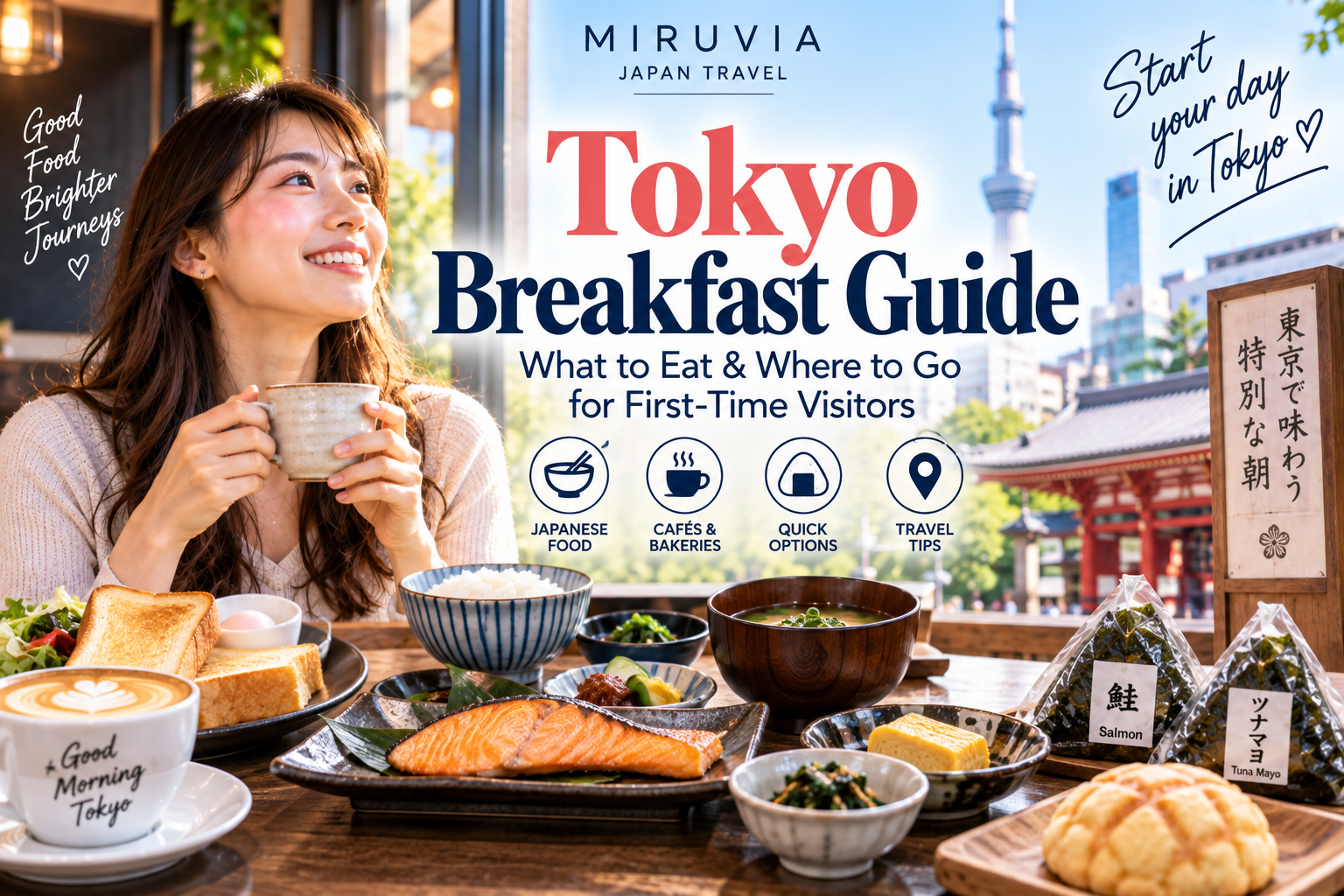
Breakfast in Tokyo can be one of the most enjoyable parts of your trip — if you know what to look for.
Unlike cities where breakfast cafés dominate the morning, Tokyo offers several very different ways to start the day. You might eat a traditional Japanese breakfast with grilled fish and miso soup, visit a neighborhood bakery, experience a classic kissaten, grab an onigiri before an early sightseeing trip, or explore a food market in the morning.
For first-time visitors, however, breakfast can also be surprisingly confusing.
Some restaurants open later than expected, hotel breakfasts can be expensive, and many places that look like cafés may not serve the type of breakfast you have in mind.
This Tokyo breakfast guide explains what to eat, where to look for breakfast, and how to plan your mornings efficiently while exploring the city.
Tokyo Breakfast at a Glance
| Breakfast Style | What to Expect | Best For |
|---|---|---|
| Japanese breakfast | Rice, fish, miso soup & side dishes | Traditional experience |
| Kissaten | Toast, coffee & simple breakfast sets | Retro atmosphere |
| Bakery | Bread, pastries & coffee | Quick morning |
| Sushi / seafood | Fresh seafood and rice | Food-focused travelers |
| Onigiri | Rice balls with various fillings | Early sightseeing |
| Convenience store | Sandwiches, yogurt, coffee & more | Speed and flexibility |
| Hotel breakfast | Japanese and Western choices | Easy mornings |
| Café | Coffee, toast, eggs & light meals | Relaxed start |
What Do People Eat for Breakfast in Japan?
There is no single Japanese breakfast.
At home, a traditional breakfast might include rice, miso soup, grilled fish, pickles, egg, natto, or other small dishes.
Modern breakfast habits are much more varied.
Some people eat bread and coffee. Others buy an onigiri or sandwich from a convenience store. Some skip breakfast entirely.
As a visitor, this variety works in your favor.
You can try a traditional Japanese breakfast one morning and have coffee and pastries the next.
For a broader introduction to local dishes and dining experiences, see our Tokyo Food Guide for First-Time Visitors.
1. Try a Traditional Japanese Breakfast
A traditional Japanese breakfast is worth experiencing at least once during your trip.
A typical set may include:
- Steamed rice
- Miso soup
- Grilled fish
- Pickles
- Egg
- Tofu
- Small vegetable dishes
The exact combination depends on the restaurant.
Compared with a sweet or bread-heavy breakfast, a Japanese breakfast can feel closer to a complete meal.
That makes it particularly useful before a long day of sightseeing.
Best for:
- First-time visitors
- Japanese food experiences
- Long sightseeing days
- Travelers who prefer savory breakfasts
Tip: Search for restaurants offering a Japanese-style breakfast near your hotel before the morning you plan to visit. Opening hours vary considerably.
2. Experience a Japanese Kissaten
A kissaten is a traditional Japanese coffee shop.
While Tokyo has thousands of modern cafés, older kissaten offer a different atmosphere with classic interiors, carefully prepared coffee, toast, and simple meals.
Some offer morning sets that combine coffee with toast, eggs, or other small breakfast items.
A quiet kissaten can be an excellent way to experience a slower side of Tokyo before the city becomes busy.
Best for:
- Coffee lovers
- Retro atmosphere
- Slow mornings
- Solo travelers
Do not expect every kissaten to have an English menu or identical breakfast service.
Part of the experience is discovering a neighborhood café that feels completely different from international coffee chains.
3. Visit a Tokyo Bakery
Japanese bakeries are an easy breakfast option for travelers.
You can find bakeries around major stations, department stores, shopping areas, and residential neighborhoods.
Selections may include:
- Croissants
- Toast
- Sandwiches
- Curry bread
- Melon pan
- Anpan
- Savory bread
- Seasonal pastries
Some bakeries have seating, while others primarily sell takeaway items.
Buying bread the night before can also be useful when you have an extremely early start.
Best for:
- Fast breakfasts
- Families
- Early sightseeing
- Travelers who prefer familiar foods
4. Eat Onigiri for Breakfast
Onigiri are one of the simplest Japanese breakfasts for travelers.
These rice balls come with many fillings, such as salmon, tuna, pickled plum, and other Japanese flavors.
They are portable, inexpensive compared with a full restaurant meal, and easy to eat before beginning your sightseeing day.
You can find them at convenience stores, supermarkets, train stations, and specialized shops.
Pair an onigiri with yogurt, fruit, soup, or tea for a simple breakfast.
Best for:
- Early mornings
- Budget-conscious travelers
- Train journeys
- Busy itineraries
5. Try a Japanese Egg Sandwich
Japanese egg sandwiches have become a popular food for many international visitors.
Usually made with soft bread and a creamy egg filling, they are easy to find at convenience stores and some cafés or sandwich shops.
They work particularly well when you want a quick breakfast without sitting down at a restaurant.
Add coffee or tea and you have a simple meal that can fit easily into a busy sightseeing schedule.
6. Have Sushi or Seafood for Breakfast
For travelers who love seafood, Tokyo can offer a very different breakfast experience.
Areas associated with food markets and seafood restaurants may have sushi, sashimi, seafood bowls, and other dishes available in the morning.
This can feel unusual if you normally associate sushi with lunch or dinner, but it can become one of the most memorable meals of your trip.
Best for:
- Sushi lovers
- Seafood lovers
- Food-focused trips
- Early risers
The key is checking current restaurant opening times rather than assuming every seafood restaurant serves breakfast.
Breakfast Around Tsukiji
Tsukiji remains a popular area for visitors interested in Japanese food.
The outer market contains numerous food businesses, restaurants, shops, and stalls, making the area particularly interesting in the morning.
Possible foods include seafood bowls, sushi, tamagoyaki, grilled seafood, and other Japanese specialties.
Arriving earlier can help you combine breakfast with exploring the surrounding area before continuing your sightseeing day.
However, individual businesses have their own opening days and hours.
Check the specific places you want to visit before traveling across Tokyo early in the morning.
7. Use Convenience Stores for an Easy Breakfast
Convenience stores are one of the most practical breakfast solutions in Tokyo.
You can find:
- Onigiri
- Sandwiches
- Bread
- Yogurt
- Fruit
- Eggs
- Coffee
- Tea
- Juice
- Desserts
This is especially useful when you want to begin sightseeing before many restaurants open.
Another strategy is buying breakfast the evening before.
If your hotel room has a refrigerator, you can store suitable items overnight and leave immediately the next morning.
Always follow the storage instructions on the packaging.
For more information about konbini food, payment, ATMs, services, and etiquette, read our Tokyo Convenience Store Guide.
8. Have Breakfast at Your Hotel
Hotel breakfast is often the easiest option.
Depending on the property, breakfast may be Japanese, Western, buffet-style, set-menu, or a combination.
The main advantage is convenience.
You can eat immediately after getting ready and start sightseeing without searching for a restaurant.
The disadvantage is that hotel breakfast may cost more than buying breakfast elsewhere, and eating at the hotel every morning reduces opportunities to explore Tokyo’s food culture.
A balanced approach works well.
You might use the hotel breakfast on a busy day and explore local cafés or Japanese breakfast restaurants on other mornings.
9. Visit a Modern Tokyo Café
Tokyo also has a large modern café scene.
Depending on the neighborhood, you may find specialty coffee, toast, pancakes, eggs, sandwiches, granola, pastries, and other breakfast or brunch dishes.
Areas such as Shibuya, Shinjuku, Ginza, Omotesando, and other central neighborhoods have many cafés, although opening times vary.
Modern cafés are particularly useful when you want a slower morning after several intense sightseeing days.
Where to Find Breakfast in Tokyo
The best breakfast area often depends on what you plan to do immediately afterward.
Instead of traveling across Tokyo solely for breakfast every morning, combine breakfast with your first sightseeing destination.
Asakusa
A useful choice if you want to explore Senso-ji early.
Start with breakfast nearby, then visit the temple before the area becomes busier.
Tsukiji
Best for travelers interested in seafood and Japanese food culture.
Breakfast can become the main attraction rather than simply a meal before sightseeing.
Shinjuku
Convenient if you are staying in western Tokyo.
The large number of hotels, cafés, restaurants, convenience stores, and bakeries provides several breakfast options.
Shibuya
Useful for travelers staying around Shibuya or beginning their day with Harajuku and surrounding areas.
Cafés, bakeries, convenience stores, and restaurant options are widely available.
Tokyo Station
Particularly convenient before taking the Shinkansen or beginning a day trip.
The wider station area contains many food options, although opening hours differ by business.
Ueno
A practical starting point before visiting Ueno Park, museums, Ameyoko, or other attractions in eastern Tokyo.
Best Breakfast Before Early Sightseeing
Some of Tokyo’s best sightseeing experiences happen early in the morning.
Temples, shrines, parks, and famous neighborhoods can feel completely different before the largest crowds arrive.
If sightseeing is your priority, do not spend too much time searching for a complicated breakfast.
Use a simple strategy.
Before Asakusa
Grab an onigiri, sandwich, or bakery item, then visit Senso-ji early.
Have a larger meal later in the morning if necessary.
Before Meiji Jingu
Eat near your hotel or pick up breakfast before traveling to Harajuku.
Visit the shrine while the area is relatively calm.
Before a Day Trip
Buy breakfast the night before or use a convenience store near the station.
This gives you more flexibility when catching an early train.
Before Tsukiji
Consider making the market itself your breakfast destination.
Arrive hungry and explore the available food options.
What Time Is Breakfast in Tokyo?
There is no universal breakfast schedule.
Hotels may begin breakfast relatively early, while cafés and restaurants can open considerably later.
Convenience stores provide the greatest flexibility because many operate for extended hours.
This means your breakfast strategy should depend on your itinerary.
If you want to start sightseeing very early, convenience stores, bakeries that open early, or hotel breakfast may be easier than searching for a café.
If you prefer slower mornings, you will have more options.
How Much Time Should You Allow for Breakfast?
For a quick convenience store or bakery breakfast, around 15–30 minutes may be enough.
A café or Japanese breakfast restaurant can take longer.
For a food-focused morning around Tsukiji, breakfast may become a sightseeing activity itself and take considerably more time.
Think about breakfast as part of your itinerary rather than automatically treating it as a separate event.
Breakfast for Solo Travelers
Tokyo is well suited to eating breakfast alone.
Counter seating, cafés, convenience stores, and casual restaurants make solo dining common.
You do not need to search specifically for a “solo traveler restaurant.”
Instead, look for places that match your preferred food and schedule.
A quiet breakfast alone can also be a useful opportunity to review your route before beginning the day.
Breakfast for Families
Families may prefer places with simple ordering, more seating, and several food choices.
Hotel breakfasts can be convenient because everyone can eat without traveling first.
Bakeries and cafés can also work well when family members want different foods.
Convenience stores provide another useful backup, particularly on early mornings.
Breakfast on a Budget
You do not need an expensive breakfast every morning.
Convenience stores, bakeries, onigiri, and simple restaurant meals can help keep daily food costs manageable.
One practical strategy is to alternate.
For example:
Day 1: Convenience store breakfast
Day 2: Traditional Japanese breakfast
Day 3: Bakery and coffee
Day 4: Seafood breakfast
Day 5: Hotel or café breakfast
This gives you variety without making every morning a major dining expense.
For a broader look at accommodation, transportation, food, and sightseeing costs, see our Tokyo Travel Budget Guide.
Common Breakfast Mistakes to Avoid
First-time visitors sometimes assume breakfast in Tokyo works exactly like it does at home.
Avoid these common mistakes:
- Assuming every café opens early
- Traveling across the city just for an ordinary breakfast
- Not checking restaurant opening days
- Planning breakfast too close to an early train departure
- Eating only convenience store food throughout your trip
- Paying for hotel breakfast every day without comparing alternatives
- Scheduling a large breakfast immediately before another major food experience
- Forgetting to check whether takeaway food needs refrigeration
A little planning can make your mornings much easier.
How to Plan Your Tokyo Breakfast
A simple method is to decide what matters most each morning.
Sightseeing First
Choose convenience store food, a bakery, or hotel breakfast.
Food Experience First
Choose a Japanese breakfast, kissaten, or seafood-focused morning.
Relaxation First
Find a café and allow yourself a slower start.
Early Train First
Buy breakfast the night before or use a store near the station.
You do not need the same breakfast strategy every day.
Matching breakfast to your itinerary is usually the most efficient approach.
Practical Breakfast Tips for First-Time Visitors
Keep these points in mind:
- Check opening hours before making a special trip.
- Save several breakfast options near your hotel.
- Buy breakfast the night before when leaving early.
- Try a traditional Japanese breakfast at least once.
- Use convenience stores strategically rather than for every meal.
- Combine breakfast with your first sightseeing area.
- Keep an easy backup option in case your preferred restaurant is closed.
- Allow extra time when visiting popular food areas.
- Remember that opening hours can change.
- Do not over-plan every breakfast — spontaneous discoveries can be part of the experience.
Final Thoughts
Breakfast in Tokyo does not have to follow one formula.
One morning might begin with grilled fish, rice, and miso soup.
Another might start with coffee and toast in a quiet kissaten.
The next day could be an onigiri eaten before an early temple visit, followed by a seafood breakfast later in the trip.
For first-time visitors, the best strategy is to combine food experiences with practical planning.
Use quick breakfasts when your itinerary is busy, slow down when you want to experience Tokyo’s café culture, and make time for at least one breakfast that feels distinctly Japanese.
A good morning can set the pace for the rest of your day — and in Tokyo, there are plenty of ways to start it.
Continue planning your first visit with our complete Tokyo Travel Guide for First-Time Visitors.
