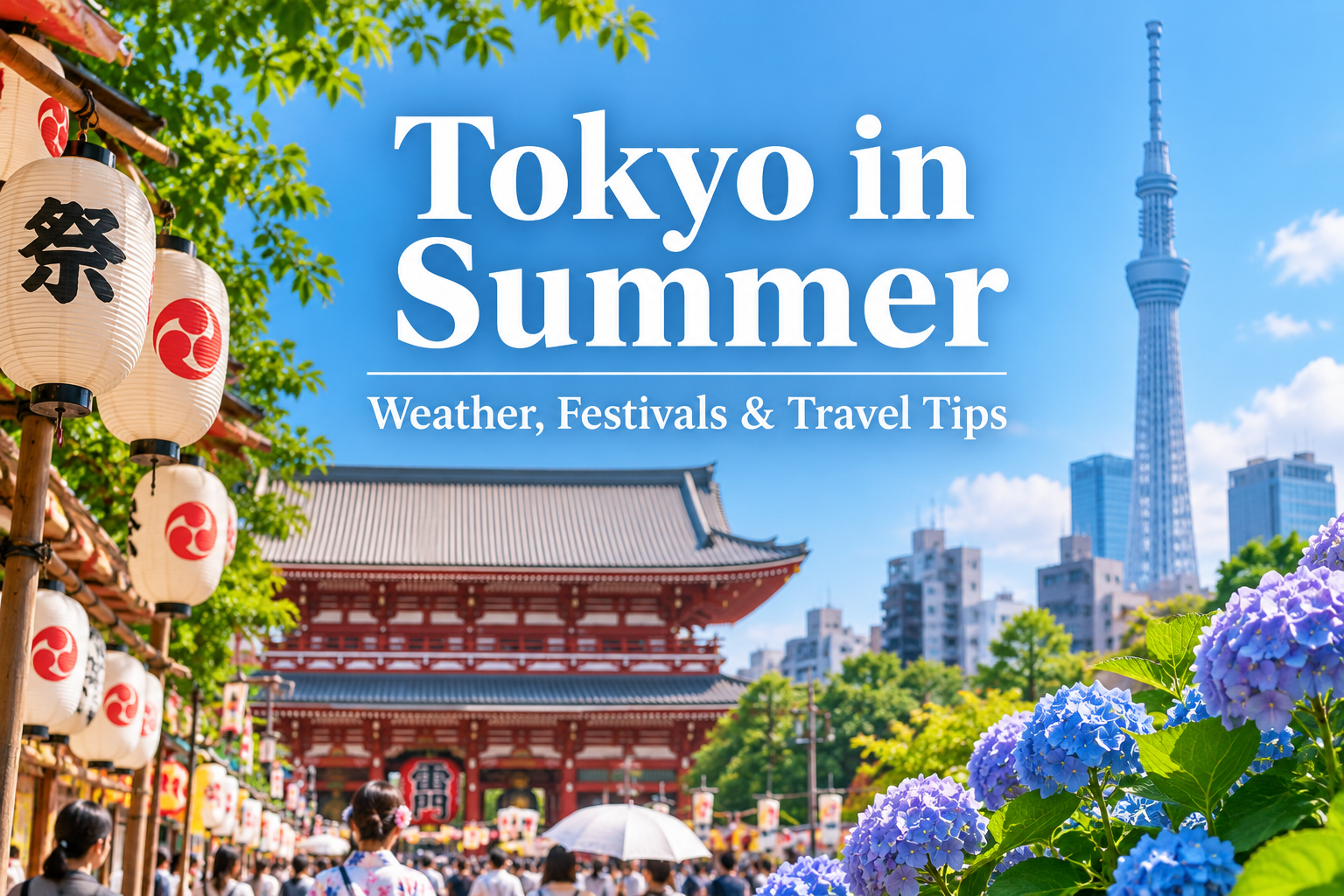
Summer in Tokyo is a season of strong contrasts. The city comes alive with festivals, fireworks, seasonal food, and long days for sightseeing, but travelers also need to prepare for high temperatures, humidity, and periods of rain.
Tokyo’s summer generally runs from June through August, but conditions change significantly throughout the season. June often overlaps with Japan’s rainy season, while July and August typically bring hotter and more humid weather.
Despite the heat, summer can be an exciting time to experience Tokyo. Traditional festivals, fireworks displays, summer foods, and seasonal events offer experiences that are very different from visiting during spring, autumn, or winter.
However, travelers who are not accustomed to hot and humid weather should plan their days carefully. Choosing indoor attractions during the hottest hours, staying hydrated, and allowing more breaks can make sightseeing much more comfortable.
This guide explains what Tokyo is like in summer, including weather in June, July, and August, the rainy season, heat and humidity, festivals, what to wear, crowds, costs, seasonal experiences, and practical travel tips.
Whether summer is the best time for your first trip to Tokyo depends on your priorities and your tolerance for the heat. Understanding the differences between each summer month will help you choose the right time and prepare properly.
Is Summer a Good Time to Visit Tokyo?
Summer can be a rewarding time to visit Tokyo, but it is not the easiest season for every traveler.
From June through August, the city offers summer festivals, fireworks, seasonal food, and a lively atmosphere that you cannot experience in quite the same way during other seasons.
The biggest challenge is the weather. Tokyo can become very hot and humid in July and August, while June often brings more frequent rain because of the rainy season.
Travelers who plan their days carefully can still enjoy Tokyo comfortably. Indoor attractions, shopping areas, museums, cafés, and restaurants provide plenty of opportunities to escape the heat, while mornings and evenings can be better for longer periods of outdoor sightseeing.
Summer can be particularly appealing if seasonal festivals and fireworks are important to you. On the other hand, travelers who strongly prefer cool weather and long days of outdoor walking may find spring or autumn more comfortable.
Overall, summer is a good time to visit Tokyo if you understand the weather conditions and prepare for them before your trip.
Advantages of Visiting Tokyo in Summer
- Summer festivals and seasonal events
- Fireworks displays
- Unique summer foods and drinks
- Long daylight hours for sightseeing
- Plenty of indoor attractions for hot or rainy periods
- A lively seasonal atmosphere
- Good opportunities to combine Tokyo with other summer destinations in Japan
Disadvantages of Visiting Tokyo in Summer
- High temperatures and humidity, especially in July and August
- Rainy weather can affect travel plans in June
- Heat can make long periods of outdoor sightseeing tiring
- Popular festivals and fireworks events can become extremely crowded
- Strong sunlight and high UV exposure
- A risk of heat-related illness without proper hydration and breaks
- Typhoons can occasionally affect travel plans during the broader summer period
Tokyo Summer Weather
Tokyo’s summer weather changes noticeably between June and August. June is generally associated with the rainy season, while July and August tend to be hotter and more humid.
Rain, heat, and humidity can affect how much sightseeing you can comfortably do in one day, so understanding the differences between each month is important when planning your trip.
Weather varies from year to year, and short periods of unusually hot, cool, or rainy conditions are always possible. Check the latest forecast shortly before traveling.
Tokyo Weather in June
June marks the beginning of summer in Tokyo and often overlaps with the rainy season.
Temperatures are generally warmer than in spring, but June is usually not as consistently hot as July or August. Humidity increases, and cloudy or rainy days become more common.
Daytime temperatures are often around 20–25°C (68–77°F), although warmer days are possible.
Lightweight clothing is useful, but travelers should also carry rain protection such as a compact umbrella. Flexible sightseeing plans are particularly helpful during this month.
Tokyo Weather in July
July becomes noticeably hotter and more humid, particularly after the rainy season begins to end.
Daytime temperatures are often around 25–30°C (77–86°F) or higher, and the humidity can make the weather feel hotter than the temperature alone suggests.
Lightweight and breathable clothing, regular hydration, and breaks in air-conditioned spaces become increasingly important.
If possible, schedule longer outdoor activities for the morning or later in the day and use the hottest part of the afternoon for indoor attractions.
Tokyo Weather in August
August is typically one of the hottest months of the year in Tokyo.
Daytime temperatures frequently reach around 30°C (86°F) or higher, and high humidity can make extended outdoor sightseeing physically demanding.
Strong sunshine is another consideration, so sunscreen, a hat, water, and regular breaks are useful for travelers spending significant time outdoors.
Summer weather can also be affected by severe rain or tropical weather systems at times, so check current forecasts and transportation information during your trip.
Regardless of the month, summer weather in Tokyo can place more physical strain on travelers than expected. Adjust your itinerary when necessary rather than trying to maintain the same sightseeing pace you might use in cooler seasons.
When Is the Rainy Season in Tokyo?
Tokyo’s rainy season, known as tsuyu in Japanese, generally occurs from around early June to mid-July, although the exact timing varies from year to year.
The rainy season does not mean that it rains continuously every day. Travelers may experience a mixture of cloudy weather, periods of rain, humid conditions, and occasional sunny days.
Rain can range from light showers to heavier periods, so it is useful to keep some flexibility in your sightseeing schedule. A compact umbrella and shoes that can handle wet conditions can make exploring the city more comfortable.
Tokyo is still very easy to enjoy during rainy weather. Museums, department stores, shopping complexes, cafés, restaurants, observation decks, and other indoor attractions provide plenty of alternatives when outdoor sightseeing is less appealing.
Train and subway networks also make it possible to move around much of the city without spending long periods outdoors, although severe weather can occasionally affect transportation.
If you visit during June or early July, check the daily weather forecast and adjust your plans accordingly rather than assuming that rain will affect your entire trip.
Travelers who prefer fewer weather-related disruptions may find later summer more predictable in terms of the rainy season, but July and August bring a different challenge: significantly higher heat and humidity.
How Hot and Humid Is Tokyo in Summer?
Tokyo can feel extremely hot and humid during summer, particularly in July and August.
High humidity reduces how efficiently sweat evaporates from the body, which can make the weather feel more uncomfortable than the temperature alone suggests. Travelers who are accustomed to hot but dry climates may find Tokyo’s summer surprisingly demanding.
Long periods of walking outdoors can become tiring, especially during the afternoon. This is important for first-time visitors because sightseeing in Tokyo often involves more walking than expected, even when trains and subways are used frequently.
To make summer sightseeing more comfortable:
- Drink water regularly throughout the day
- Take frequent breaks in air-conditioned spaces
- Avoid scheduling too many outdoor attractions consecutively
- Use sunscreen and consider wearing a hat
- Choose lightweight and breathable clothing
- Carry water when walking for longer periods
- Pay attention to weather forecasts and heat-related warnings
Convenience stores, vending machines, cafés, shopping centers, and train stations make it relatively easy to find drinks or take short breaks throughout the city.
However, do not wait until you feel exhausted before resting. On particularly hot days, consider visiting outdoor attractions in the morning and moving to museums, shopping areas, restaurants, or other indoor locations during the hottest part of the afternoon.
Travelers should also take official heat warnings seriously and adjust their plans when conditions are unusually severe.
Summer does not make sightseeing in Tokyo impossible, but it may require a slower travel pace than spring or autumn. Building flexibility into your itinerary can make the experience significantly more comfortable.
Best Things to Do in Tokyo in Summer
Summer in Tokyo is easier to enjoy when you combine outdoor sightseeing with indoor activities. Instead of spending the entire day outside, plan your itinerary around the weather and take advantage of Tokyo’s many air-conditioned attractions.
Some of the best things to do in Tokyo during summer include:
- Visit museums, galleries, and indoor attractions
- Explore department stores and large shopping complexes
- Experience traditional summer festivals
- Watch a fireworks display
- Visit observation decks for views of the city
- Explore temples and neighborhoods in the morning or evening
- Relax in cafés and try seasonal desserts and drinks
- Visit aquariums and other family-friendly indoor attractions
- Enjoy Tokyo’s nightlife after temperatures begin to fall
- Take a day trip when weather conditions are suitable
Areas such as Shibuya, Shinjuku, Ginza, and Tokyo Station are particularly convenient on very hot or rainy days because they offer large concentrations of shops, restaurants, and indoor attractions.
Traditional areas such as Asakusa can still be enjoyable in summer, but visiting earlier in the morning can help you avoid some of the strongest afternoon heat.
Summer evenings can also be a good time to explore the city. Illuminated streets, observation decks, restaurants, and entertainment districts offer plenty to experience after sunset.
The key is flexibility. If the forecast shows extreme heat or heavy rain, move outdoor activities to another part of your itinerary and choose indoor alternatives instead.
Looking for more sightseeing ideas? See our Best Things to Do in Tokyo for First-Time Visitors for cultural experiences, food, shopping, city views, and other highlights.
Summer Festivals and Fireworks in Tokyo
Summer festivals and fireworks are some of the most memorable seasonal experiences in Tokyo.
During summer, traditional festivals known as matsuri take place across the city. Depending on the event, visitors may see traditional clothing, festival music, dancing, food stalls, portable shrines, and other local traditions.
Fireworks festivals are another major part of summer in Japan. Large displays can attract huge crowds, creating an atmosphere that is very different from ordinary sightseeing in Tokyo.
Well-known summer experiences in Tokyo have traditionally included events such as the Sumida River Fireworks Festival and various neighborhood festivals. However, event dates, locations, admission systems, and schedules can change from year to year.
For this reason, check official event information before building your itinerary around a specific festival or fireworks display. Do not rely solely on dates from previous years.
If you plan to attend a major summer event:
- Check the official schedule shortly before your trip
- Arrive earlier than you normally would for sightseeing
- Expect crowded trains and stations before and after the event
- Carry water and prepare for hot, humid conditions
- Follow local rules regarding seating, food, and waste
- Allow extra time to return to your accommodation
Wearing a yukata, a lightweight traditional summer garment, can also be a memorable part of the experience. Yukata rental services may be available in tourist areas, although availability and reservation requirements vary.
Travelers who prefer smaller crowds can also look for neighborhood festivals rather than focusing only on Tokyo’s largest events. Smaller local celebrations can provide an enjoyable introduction to Japanese summer culture.
Festivals and fireworks can be highlights of a summer trip to Tokyo, but treat them as seasonal opportunities rather than guaranteed attractions. Always confirm the latest schedule and weather conditions before attending.
What to Wear in Tokyo in Summer
What you should wear in Tokyo during summer depends partly on the month, but lightweight and breathable clothing is generally the most practical choice.
June can be rainy and humid, while July and August are typically hotter. Clothing that dries relatively quickly and remains comfortable during long periods of walking can make sightseeing easier.
Indoor spaces such as trains, department stores, restaurants, and museums are usually air-conditioned, so some travelers may also find a very light outer layer useful.
What to Wear in June
June is warm and humid, with a higher chance of rainy weather.
Consider wearing:
- Lightweight shirts or tops
- Breathable pants, skirts, or other comfortable clothing
- Comfortable walking shoes that can handle wet conditions
- A light outer layer if you are sensitive to air conditioning
- Clothing that dries relatively quickly
A compact umbrella is also useful during the rainy season.
What to Wear in July and August
July and August require clothing suitable for hot and humid conditions.
Consider:
- Lightweight and breathable shirts
- Shorts, skirts, or light pants
- Comfortable walking shoes
- A hat for sun protection
- Sunglasses
- A very light layer for strongly air-conditioned indoor spaces
Avoid choosing clothing based only on appearance. Tokyo sightseeing can involve many hours of walking, so comfort and breathability are particularly important during summer.
Regardless of the month, choose footwear that you can comfortably walk in for long periods. Even when using Tokyo’s extensive train network, travelers often cover significant distances on foot.
What to Pack for Tokyo in Summer
Packing for Tokyo in summer should focus on staying comfortable in hot, humid, and sometimes rainy conditions.
You do not need to bring everything from home, as convenience stores, pharmacies, department stores, and other shops throughout Tokyo sell many basic travel items. However, having a few essentials ready from the beginning can make sightseeing much easier.
Consider packing:
- Comfortable walking shoes
- Lightweight and breathable clothing
- A compact umbrella
- A hat
- Sunglasses
- Sunscreen
- A reusable water bottle
- A small towel or handkerchief
- A portable phone charger
- A lightweight day bag
- A very light outer layer for air-conditioned spaces
- Any personal medications you normally use
A small towel or handkerchief can be particularly useful during hot and humid days. You may also find cooling products such as wipes, portable fans, and cooling towels in stores throughout Japan.
Rain protection is especially useful if you visit during June or early July. A compact umbrella is easy to carry and can also be purchased after you arrive in Tokyo.
Avoid overpacking heavy clothing. During July and August, lightweight items that can be washed and dried easily are generally more practical than bringing a large number of outfits.
Most importantly, make sure you have easy access to water, sun protection, and anything else you need to stay comfortable during long sightseeing days.
Not sure what else to bring? See our Tokyo Packing List: What to Bring for Your First Trip to Japan for a complete checklist covering clothes, shoes, electronics, travel documents, medicine, and other essentials.
How Crowded Is Tokyo in Summer?
Tokyo can be busy throughout summer, but crowd levels vary depending on the month, location, and events taking place during your visit.
June can sometimes feel less crowded than the peak spring travel period, although rainy weather may cause more visitors to concentrate in popular indoor attractions and shopping areas.
July and August bring school holidays, summer festivals, fireworks, and other seasonal events. Popular attractions and event areas can become particularly crowded during weekends and holidays.
Major train stations such as Shinjuku, Shibuya, Tokyo, and Ikebukuro are busy throughout the year, so first-time visitors should not expect Tokyo to feel quiet simply because they are traveling outside cherry blossom season.
Summer Festivals and Fireworks
Major festivals and fireworks displays can attract very large crowds.
Stations near event locations may become especially congested before and after an event, and trains can be significantly busier than usual.
If you attend a popular event, arrive early, carry water, and allow extra time to return to your accommodation. Avoid planning another time-sensitive activity immediately afterward.
Obon and Summer Holidays
Another period to be aware of is Obon, which is commonly observed around the middle of August, although dates and practices can vary.
During this period, many people travel within Japan to visit family or take vacations. Long-distance trains, domestic flights, highways, and popular destinations outside Tokyo may experience increased demand.
If your trip overlaps with this period and you plan to travel beyond Tokyo, consider reserving important transportation and accommodation earlier than usual.
Within Tokyo itself, crowd patterns can vary considerably by area, so Obon does not necessarily mean that every attraction will be more crowded.
Overall, summer crowds are manageable for most travelers if you allow extra time around major events and avoid building an itinerary that depends on moving quickly through crowded areas.
Planning to travel outside the city during summer? See our Best Day Trips from Tokyo for First-Time Visitors for popular destinations and practical planning tips.
Tokyo Summer Travel Costs
The cost of visiting Tokyo in summer depends on your travel dates, accommodation choices, and activities rather than the season alone.
Hotel prices can vary considerably throughout June, July, and August. Major festivals, holidays, and periods of high travel demand may make accommodation more expensive or reduce availability, particularly in convenient areas.
International and domestic flight prices can also change significantly depending on your route, booking timing, and travel dates.
Everyday expenses such as local transportation, casual meals, convenience stores, and regular attractions do not necessarily become more expensive simply because it is summer.
If you want to manage your summer travel budget, consider:
- Booking accommodation early when your dates overlap with major events or holidays
- Comparing several neighborhoods before choosing where to stay
- Using trains and subways instead of taxis
- Combining paid attractions with free neighborhoods, parks, temples, and viewpoints
- Taking advantage of affordable meals from casual restaurants and convenience stores
- Checking transportation and accommodation prices before committing to day trips
Summer heat can also create small additional expenses. Travelers may spend more on drinks, cafés, indoor attractions, or transportation to reduce the amount of time spent walking outdoors.
These costs are usually manageable, but including some flexibility in your daily budget can make hot-weather sightseeing more comfortable.
For a detailed breakdown of accommodation, food, transportation, and sightseeing expenses, see our Tokyo Travel Budget: How Much Does a Trip to Tokyo Cost?
Summer Food and Seasonal Experiences in Tokyo
Summer in Tokyo brings seasonal foods, cold desserts, refreshing drinks, and traditional experiences that can make hot and humid days more enjoyable.
Convenience stores, cafés, restaurants, department stores, and traditional Japanese sweet shops often introduce limited-time summer products. Availability changes by store and year, so part of the experience is discovering what is available during your visit.
Seasonal foods and experiences to look for include:
- Kakigori — Japanese shaved ice topped with flavored syrup or other ingredients
- Cold noodles such as hiyashi chuka and chilled soba
- Unagi — grilled eel, traditionally associated with summer in Japan
- Summer fruits and fruit desserts
- Cold matcha drinks and seasonal café menus
- Japanese ice cream and frozen desserts
- Festival food stalls at summer events
- Beer gardens and outdoor evening dining
Kakigori is one of the most recognizable Japanese summer treats and can range from simple festival-style shaved ice to elaborate desserts served at specialty cafés.
Summer festivals also provide opportunities to try casual Japanese street food. Depending on the event, food stalls may sell items such as yakisoba, takoyaki, grilled foods, and sweets.
Because Tokyo summers can be extremely hot, cold noodles, desserts, and drinks can also provide a welcome break during a long day of sightseeing.
Seasonal menus change frequently, so avoid planning your trip around one specific product or restaurant unless you have confirmed that it will be available during your visit.
Want to explore more Japanese food during your trip? See our What to Eat in Tokyo: Must-Try Japanese Foods for First-Time Visitors for sushi, ramen, tempura, yakitori, curry, sweets, and more.
Tokyo Summer Travel Tips
Summer sightseeing in Tokyo requires a different pace from traveling during cooler seasons. Heat, humidity, rain, and crowded seasonal events can all affect your plans, so flexibility is especially important.
Keep these practical tips in mind:
- Start outdoor sightseeing earlier in the day. Mornings can be more comfortable than the hottest part of the afternoon.
- Drink water regularly. Do not wait until you feel very thirsty before taking a break.
- Use indoor attractions strategically. Museums, shopping centers, cafés, and restaurants can provide useful breaks from the heat.
- Avoid overloading your itinerary. Allow more time between attractions and expect to take additional breaks.
- Check the weather forecast every day. Summer conditions can include extreme heat, heavy rain, and occasionally severe weather.
- Pay attention to official heat and weather warnings. Adjust your plans when conditions may make extended outdoor activity unsafe.
- Carry sun and rain protection. Sunscreen, a hat, and a compact umbrella can all be useful.
- Plan major festivals carefully. Check current schedules and expect crowded trains and stations around popular events.
- Keep your phone charged. Maps, weather forecasts, transportation information, and translation tools are especially useful when plans change.
- Do not underestimate Tokyo’s walking distances. Even when using trains, a sightseeing day can involve substantial time outdoors.
On extremely hot days, consider dividing your day into shorter periods of outdoor sightseeing and longer indoor breaks. There is no advantage in forcing yourself to follow an itinerary that has become uncomfortable because of the weather.
Summer can still be an excellent time to experience Tokyo, but adapting your schedule to the conditions will usually make the trip more enjoyable.
For more practical advice before your trip, see our Tokyo Travel Tips for First-Time Visitors for transportation, money, etiquette, luggage, restaurants, airports, and other essentials.
Is June, July or August Best for Tokyo?
June, July, and August offer very different summer experiences in Tokyo, so the best month depends on your priorities and tolerance for heat and rain.
June can be a good choice for travelers who want to avoid the most intense summer heat. However, the month often overlaps with the rainy season, so cloudy skies, rain, and high humidity can affect outdoor sightseeing.
July brings hotter weather and a stronger summer atmosphere. As the rainy season ends, summer festivals and fireworks become more prominent, but heat and humidity can make long sightseeing days more demanding.
August is a good choice for travelers who want the full Japanese summer experience, including seasonal events and summer food. However, it is typically one of Tokyo’s hottest periods, and Obon can affect domestic travel demand around the middle of the month.
As a simple guide:
| Month | Best For | Main Consideration |
|---|---|---|
| June | Avoiding the strongest summer heat | Rainy season and humidity |
| July | Festivals and classic summer atmosphere | Increasing heat and humidity |
| August | Full summer experience and seasonal events | Intense heat and Obon travel |
For many first-time visitors, June may be easier physically if you can accept the possibility of rain, while July can provide a good balance for travelers who specifically want to experience Tokyo’s summer atmosphere.
August can also be rewarding, but travelers who are sensitive to heat should carefully consider whether they will be comfortable sightseeing in hot and humid conditions.
Whichever month you choose, check current weather forecasts and seasonal event schedules shortly before your trip. Summer conditions and event dates can vary from year to year.
Final Thoughts
Summer in Tokyo can be challenging because of the heat and humidity, but it also offers seasonal experiences that travelers cannot enjoy at other times of the year.
June, July, and August each have different characteristics. June often brings rainy-season weather, July introduces hotter conditions and a stronger summer atmosphere, and August is typically one of the hottest periods of the year.
Festivals, fireworks, seasonal food, and lively summer evenings can make this an exciting time to visit. At the same time, travelers should avoid planning overly ambitious sightseeing days and allow plenty of time for hydration, rest, and indoor breaks.
If you are sensitive to heat, summer may not be the easiest season for your first visit to Tokyo. However, travelers who prepare properly and adjust their itinerary to the weather can still have an excellent experience.
Most importantly, check current weather forecasts, heat warnings, and event information during your trip rather than relying entirely on historical conditions or schedules.
With the right preparation, Tokyo in summer offers a distinctive combination of modern city life, traditional seasonal culture, food, festivals, and experiences that make the season worth considering.
Ready to plan the rest of your trip? Start with our Tokyo Travel Guide for First-Time Visitors for an overview of where to stay, what to do, transportation, food, and other essentials.
