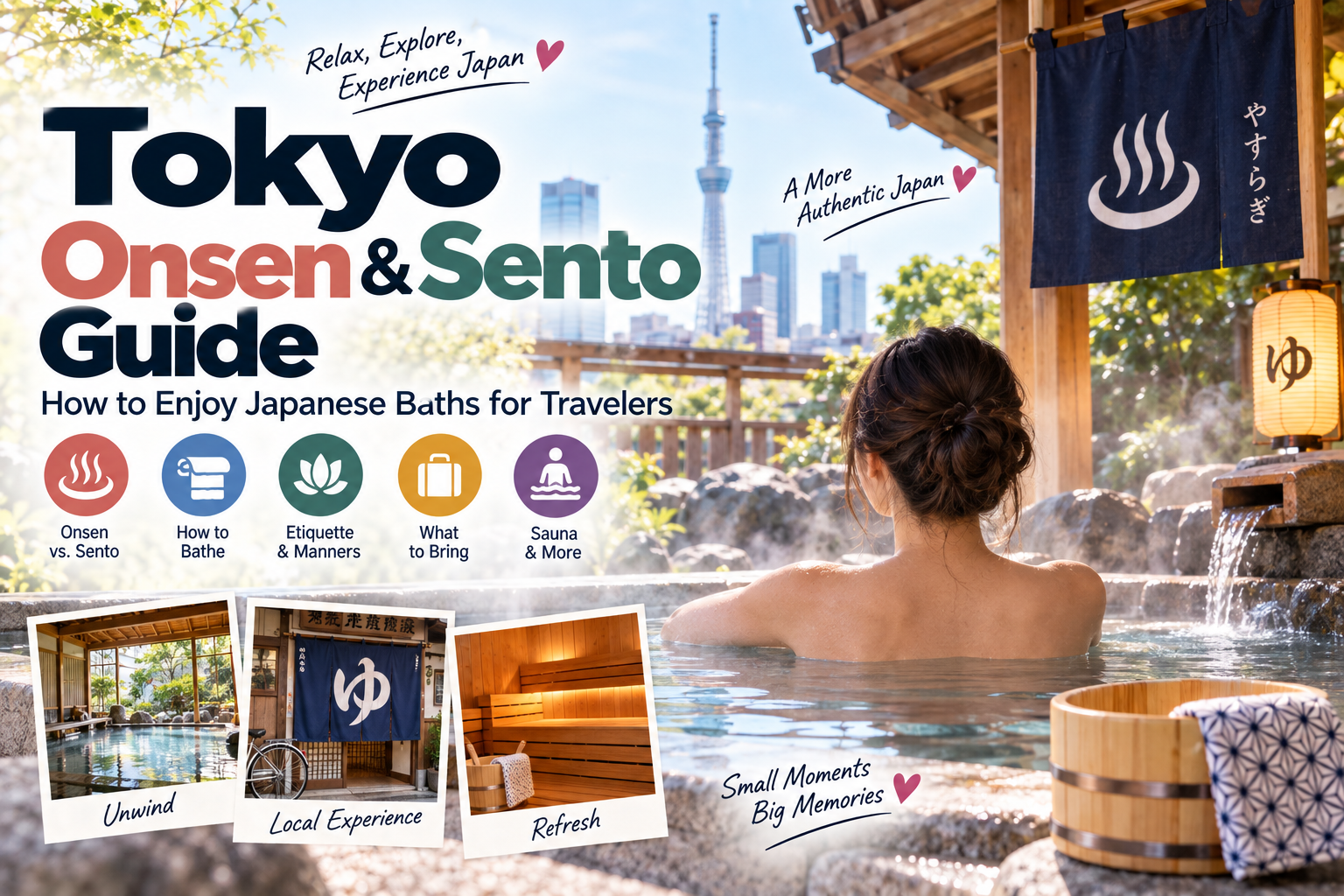
Visiting an onsen or sento can be one of the most memorable cultural experiences during a trip to Japan.
For first-time visitors, however, Japanese public baths can also feel confusing.
Do you need to be completely naked? Where should you put your towel? What is the difference between an onsen and a sento? Can travelers with tattoos enter? Do you need to bring soap and shampoo?
The rules are not difficult once you understand the basic routine.
This guide explains how onsen and sento work in Tokyo, what to bring, how to bathe, and the etiquette travelers should know before visiting.
Tokyo Onsen & Sento at a Glance
The basic experience usually follows a simple pattern:
- Remove your shoes if required.
- Pay the entrance fee or check in.
- Enter the appropriate changing area.
- Remove your clothes.
- Store your belongings.
- Enter the bathing area.
- Wash your body before entering the bath.
- Relax in the baths.
- Dry yourself before returning to the changing area.
- Get dressed and relax afterward.
Individual facilities may have additional rules, so always follow the instructions provided at the bathhouse.
What Is an Onsen?
An onsen is a Japanese hot spring.
In everyday travel conversations, the word is also commonly associated with bathing facilities that use hot spring water.
Japan has thousands of hot springs because of its volcanic geography, and bathing in them has been part of Japanese culture for centuries.
Many travelers associate onsen with mountain resorts and traditional ryokan, but hot spring bathing experiences can also be found in and around Tokyo.
What Is a Sento?
A sento is a public bathhouse.
Traditionally, sento served local neighborhoods where people came to bathe.
Today, many people have baths at home, but sento remain part of Japanese urban culture.
Some retain a traditional atmosphere, while others have been renovated with modern interiors, saunas, outdoor baths, or cafés.
For travelers staying in Tokyo, visiting a neighborhood sento can offer a different experience from visiting a major tourist attraction.
Onsen vs. Sento: What Is the Difference?
The main difference is generally related to the water and classification of the facility.
An onsen uses water that meets Japan’s legal requirements for hot spring water.
A traditional sento is a public bathhouse and does not necessarily use natural hot spring water.
From a visitor’s perspective, however, the bathing procedure can feel very similar.
At both types of facilities, you will usually wash before entering the communal bath and follow similar public-bathing etiquette.
What About Super Sento?
You may also encounter the term “super sento.”
These are generally larger bathing complexes offering more facilities than a traditional neighborhood bathhouse.
Depending on the facility, you may find:
- Multiple indoor baths
- Outdoor baths
- Saunas
- Restaurants
- Relaxation spaces
- Massage services
- Lounges
- Additional spa facilities
They can be convenient for travelers who want to spend several hours relaxing rather than simply taking a bath.
Do You Have to Be Naked?
In most gender-separated communal bathing areas, guests bathe without swimsuits.
For travelers unfamiliar with public bathing, this can initially feel uncomfortable.
However, nudity in this context is normal and non-sexual.
Other guests are generally focused on bathing and relaxing rather than paying attention to the people around them.
Once you understand the routine, the experience often feels much less intimidating.
Are Swimsuits Allowed?
Do not assume that swimsuits are allowed in a standard communal bath.
Traditional onsen and sento generally expect guests to bathe without them in gender-separated bathing areas.
However, some spa-style facilities, mixed-gender areas, or special zones may have different rules.
Always follow the rules of the specific facility.
Gender-Separated Bathing Areas
Most traditional public baths have separate bathing areas.
Look carefully at signs, curtains, symbols, or English labels before entering.
The design and colors used to distinguish the areas can vary, so do not rely only on color.
If you are unsure which entrance to use, ask a staff member.
What Should You Bring?
The exact items you need depend on the facility.
Useful items can include:
- Small towel
- Larger bath towel
- Change of clothes
- Hair ties for long hair
- Basic toiletries
- Cash or another accepted payment method
- Drinking water for afterward
Many facilities provide or rent towels, and some provide shampoo and body soap.
Others may charge separately.
Check before visiting if you want to minimize what you carry.
Small Towel vs. Bath Towel
Japanese bathhouses commonly use two types of towels.
A small towel can be used while washing and for modesty while moving around the bathing area.
A larger towel is used for drying your body after bathing.
The large bath towel normally stays in the changing area rather than being taken into the bath itself.
Do Not Put Your Towel in the Bath
One of the most recognizable rules of Japanese bathing is that towels should not be placed in the bathwater.
Your small towel can usually be left beside the bath or placed on your head while you soak.
The important point is to keep it out of the communal water.
Before Entering the Bath
The most important rule is simple:
Wash your body before entering the communal bath.
The bath is primarily for soaking and relaxing rather than washing yourself.
In the washing area, you will commonly find low stools, handheld showers, faucets, and washing stations.
Sit or position yourself at an available washing space and clean yourself thoroughly.
How to Use the Washing Area
Take care not to splash other guests.
Use the shower at your washing station rather than standing in a way that sprays water across the room.
When you finish, it is considerate to leave the washing area reasonably tidy.
Return shared items to their proper position if necessary.
Enter the Bath Slowly
Japanese baths can be hotter than some travelers expect.
Enter gradually rather than jumping directly into the water.
If you feel uncomfortable, dizzy, or overheated, leave the bath and rest.
There is no requirement to stay in the water for a particular length of time.
Do Not Swim
A public bath is not a swimming pool.
Avoid:
- Swimming
- Splashing
- Diving
- Playing loudly in the water
The atmosphere is generally calm and relaxing.
Keep Long Hair Out of the Water
If you have long hair, tie it up before entering the bath.
Hair should generally not float in the communal water.
A hair tie is therefore a useful item to bring.
Keep Your Voice Moderate
Conversation is usually fine, but public baths are generally quiet environments.
Avoid shouting or having loud group conversations.
Follow the atmosphere of the facility and the behavior of other guests.
Tattoos and Japanese Baths
Tattoo policies are one of the most important things international travelers should check before visiting.
Historically, many Japanese bathing facilities restricted tattoos because of their association with organized crime in Japan.
Policies have gradually become more varied.
Some facilities may:
- Allow tattoos
- Allow small tattoos
- Require tattoos to be covered
- Sell or provide covering stickers
- Restrict certain tattoos
- Prohibit tattoos entirely
There is no single rule that applies to every bathhouse.
Check the Tattoo Policy Before You Go
If you have a tattoo, check the facility’s current official policy before traveling there.
Do not rely only on an old blog post or review because rules can change.
If the policy is unclear, contact the facility directly.
This is particularly important if visiting the bath is a major part of your itinerary.
Tattoo Covers
Some facilities may permit small tattoos if they are completely covered with approved patches or stickers.
However, this does not mean tattoo covers are accepted everywhere.
The permitted size, number, and type of cover may differ.
Follow the facility’s own rules.
Private Baths
Travelers who prefer more privacy can investigate private bathing options.
Depending on the accommodation or facility, these may be described as private baths, family baths, or reservable baths.
Private bathing can be useful for:
- Travelers uncomfortable with communal nudity
- Couples or families where permitted
- Some travelers with tattoos
- Travelers who need additional privacy
Availability and rules vary significantly, so reservations may be necessary.
Onsen at a Ryokan
Staying at a traditional Japanese inn can provide another opportunity to experience bathing culture.
Some ryokan offer:
- Large communal baths
- Outdoor baths
- Private reservable baths
- Guest rooms with private baths
If bathing is an important part of your stay, check exactly what your room and accommodation include before booking.
Outdoor Baths
An outdoor bath is commonly called a rotenburo.
Bathing outdoors can be especially enjoyable in cooler weather.
Depending on the facility, the bath may overlook a garden, natural scenery, or an enclosed outdoor area.
Outdoor baths still follow the same basic etiquette as indoor communal baths.
Sauna Culture in Tokyo
Many sento, super sento, and spa facilities have saunas.
Sauna rules can differ between facilities.
You may encounter separate sauna fees, special wristbands, sauna mats, or specific usage instructions.
Do not assume that sauna access is automatically included in the basic bath admission.
Check the facility’s system before entering.
Shower Before and After Sauna Use
Facilities may provide instructions about washing, showering, cooling down, and using cold baths.
Follow the posted rules.
If you are unfamiliar with sauna use or have health concerns, avoid pushing yourself to stay longer than is comfortable.
Cold Baths
Some bathhouses and sauna facilities provide cold-water baths.
These can be significantly colder than first-time users expect.
They are optional.
You do not need to use every bath or facility simply because it is available.
Choose what feels comfortable for you.
Dry Yourself Before Returning to the Changing Room
Before walking back into the changing area, use your small towel to remove excess water from your body.
This helps prevent the changing-room floor from becoming unnecessarily wet.
Once inside, use your larger bath towel to dry yourself completely.
Lockers and Valuables
Many bathhouses provide lockers or another storage system.
Do not leave valuables unattended in the changing room.
Use secure storage when available.
Some lockers may require a coin, key, wristband, or electronic system.
If you are carrying a large suitcase, check whether the facility can accommodate it before arriving.
Shoes
Many Japanese bathing facilities require guests to remove their shoes near the entrance.
There may be dedicated shoe lockers.
Pay attention to where the shoe-free area begins.
Avoid walking into clean interior areas while still wearing outdoor shoes.
Payment
Payment systems vary.
Traditional neighborhood sento may have relatively simple reception areas, while larger spa complexes may use wristbands or automated machines.
Some locations may accept cashless payments, while others may still be easier to use with cash.
Check the facility’s current payment information if necessary.
Prices Vary by Facility
Bathing costs depend on the type of facility and included services.
A neighborhood sento and a large spa complex can have very different prices.
Additional charges may apply for:
- Sauna access
- Towels
- Rental clothing
- Private baths
- Massage services
- Food and drinks
Check what is included before comparing prices.
Food and Drinks
Larger bathing facilities may have restaurants, cafés, vending machines, or relaxation areas.
A drink after bathing is a popular part of the experience.
Stay hydrated, particularly if you use hot baths or saunas.
Avoid entering very hot baths if you are already dehydrated.
Alcohol and Hot Baths
Be cautious about combining alcohol with hot bathing.
Alcohol and heat can both affect your body and may increase the risk of dizziness or feeling unwell.
If you have been drinking, follow the facility’s rules and prioritize your safety rather than treating the bath as something you must complete.
Medical Considerations
Hot baths and saunas are not suitable for everyone in every situation.
Travelers with medical conditions, pregnancy-related concerns, injuries, or other health considerations should follow appropriate medical advice.
If you begin to feel dizzy, weak, nauseous, or uncomfortable while bathing, leave the water and rest.
Do not force yourself to remain in a hot bath.
Children at Onsen and Sento
Rules concerning children can vary by facility.
Age limits, gender-separated bathing requirements, diaper policies, and sauna access may differ.
Families should check the specific facility’s rules before visiting.
Parents should also supervise children carefully around hot water and slippery surfaces.
If you are visiting with children, our Tokyo Family Travel Guide covers transportation, accommodation, dining, and other practical family travel advice.
Travelers with Mobility Needs
Accessibility varies significantly between bathhouses.
Potential challenges can include:
- Steps
- Slippery floors
- Low stools
- Deep baths
- Narrow changing areas
- Limited handrails
Modern facilities may offer more accessibility features, but this should not be assumed.
If you require specific accessibility features, contact the facility before visiting.
Bathing with Glasses or Contact Lenses
Bathing areas can become steamy, making glasses difficult to use.
Be careful not to damage or lose them.
Contact lens users should also consider appropriate hygiene and avoid exposing lenses unnecessarily to bathwater.
Prepare according to your own vision needs.
Photography Is Usually Restricted
Changing rooms and bathing areas require privacy.
Photography and video recording are generally prohibited in these spaces.
Do not take photos simply because the room appears empty.
Follow all signs and facility rules.
Smartphones in the Bathing Area
Do not assume you can carry your smartphone into the bathing area.
Because cameras are built into phones, their use may be restricted even if you only want to check the time or read something.
Leave your phone in a locker unless the facility clearly permits otherwise.
Traditional Sento Atmosphere
A neighborhood sento can feel very different from a large commercial spa.
You may find:
- Simple changing rooms
- Traditional wall art
- Local regular customers
- Compact bathing areas
- A quieter neighborhood atmosphere
For travelers interested in everyday Japanese culture, this can be one of the most interesting aspects of visiting a sento.
Modern Bathing Complexes
Large modern facilities may be easier for first-time international visitors.
They can offer:
- Clear signage
- Multiple baths
- Restaurants
- Lounges
- Rental towels
- Beauty services
- Larger changing areas
However, larger facilities can also have more complicated pricing systems and additional rules.
Read the instructions carefully when checking in.
Best Time to Visit
Crowding varies by facility.
Evenings, weekends, and holidays can be busier because local residents are also using the baths.
If you prefer a quieter first experience, weekday daytime hours may be worth considering where available.
Always check operating hours because some neighborhood bathhouses open later in the day.
Check Closing Days
Traditional sento may have regular weekly closing days.
Operating schedules can also change during holidays or maintenance periods.
Check the latest information before making a special journey.
Onsen and Sento During Summer
A hot bath may sound less appealing during Tokyo’s humid summer, but bathhouses remain popular year-round.
Air-conditioned relaxation spaces and cooler bathing options may make the experience more comfortable at larger facilities.
Stay hydrated and avoid overheating.
Onsen and Sento During Winter
Cold weather can make hot bathing particularly enjoyable.
However, your body may feel very warm when leaving the bathhouse.
Dry yourself thoroughly and dress appropriately before returning outdoors.
Rainy-Day Activity
A bathhouse can be a useful option when rain changes your sightseeing plans.
Larger indoor spa facilities can provide several hours of bathing, dining, and relaxation without requiring extensive outdoor sightseeing.
Just remember that rainy evenings may also attract other visitors looking for indoor activities.
Basic Onsen & Sento Etiquette
For first-time visitors, remember these core rules:
Wash before entering the bath.
Do not wear a swimsuit unless the facility specifically requires or permits one.
Keep towels out of the bathwater.
Keep long hair out of the water.
Do not swim or splash.
Keep your voice moderate.
Follow tattoo rules.
Respect photography restrictions.
Dry yourself before returning to the changing room.
If you follow these basics, you will already understand most of the etiquette that matters.
For more essential customs and practical advice before your trip, see our Tokyo Travel Tips for First-Time Visitors.
Common Mistakes First-Time Visitors Make
Entering the Bath Without Washing
Always wash first.
Putting a Towel in the Water
Keep towels outside the communal bath.
Assuming Every Facility Has the Same Tattoo Policy
Check individually.
Bringing a Swimsuit Without Checking
Traditional communal baths usually do not use swimsuits.
Taking Photos
Bathing and changing areas require strict privacy.
Staying in Hot Water Too Long
Leave the bath whenever you feel uncomfortable.
Arriving Without Checking Hours
Opening times and closing days vary.
A Simple First-Time Bathing Routine
If you feel nervous, remember this simple sequence.
Step 1: Check in and pay.
Step 2: Remove your shoes where required.
Step 3: Enter the correct changing area.
Step 4: Put your clothes and valuables away securely.
Step 5: Enter the bathing area with your small towel.
Step 6: Wash your body thoroughly.
Step 7: Enter the bath slowly.
Step 8: Relax quietly.
Step 9: Leave whenever you feel warm enough.
Step 10: Dry excess water before returning to the changing room.
That is enough for your first visit.
Choosing Between an Onsen and Sento
Choose a sento if you want a simple local bathing experience within the city.
Choose a larger spa or super sento if you want multiple baths, restaurants, saunas, and relaxation areas.
Choose an onsen or ryokan experience if hot spring water and traditional Japanese accommodation are important parts of your trip.
There is no single “best” option.
The right choice depends on the experience you want.
Do You Need to Visit an Onsen Outside Tokyo?
Not necessarily.
Travelers can experience Japanese bathing culture without leaving the Tokyo area.
However, famous hot spring destinations outside central Tokyo can provide a very different atmosphere, particularly if you want mountain scenery, traditional inns, or an overnight onsen experience.
If your itinerary has enough time, a hot spring destination can also be combined with a day trip or overnight excursion.
If you want to combine your bath experience with an escape from the city, see our Best Day Trips from Tokyo guide for more ideas.
Useful Japanese Bathing Words
You may encounter these terms:
Onsen — Hot spring
Sento — Public bathhouse
Rotenburo — Outdoor bath
Sauna — Sauna
Mizuburo — Cold-water bath
Kashikiri — Private or reserved use, depending on context
Yu — Hot water or bath; commonly seen in bath-related names and signs
English signage is increasingly common at facilities popular with international visitors, but recognizing a few words can still be useful.
Before Visiting: Quick Checklist
Before leaving your hotel, check:
- Opening hours
- Closing day
- Tattoo policy
- Towel availability
- Soap and shampoo availability
- Sauna charges
- Payment methods
- Luggage storage
- Accessibility if required
- Rules for children if traveling as a family
- Whether reservations are needed for private baths
A few minutes of preparation can make your first experience much easier.
Final Thoughts
Visiting an onsen or sento is about more than getting clean.
It is an opportunity to slow down, relax, and experience a long-standing part of Japanese daily life and travel culture.
The etiquette may seem unfamiliar at first, but the essential rules are simple: wash before entering, keep your towel out of the bath, respect other guests’ privacy, and follow the individual facility’s policies.
Travelers with tattoos, accessibility requirements, children, or specific privacy needs should check the facility’s current rules before visiting because policies differ.
Once you understand the basic routine, there is very little to worry about.
For many visitors, that first slightly unfamiliar bathhouse experience becomes one of the most relaxing and distinctly Japanese memories of the entire trip.
For more help planning your first visit to the city, continue with our Tokyo Travel Guide.
