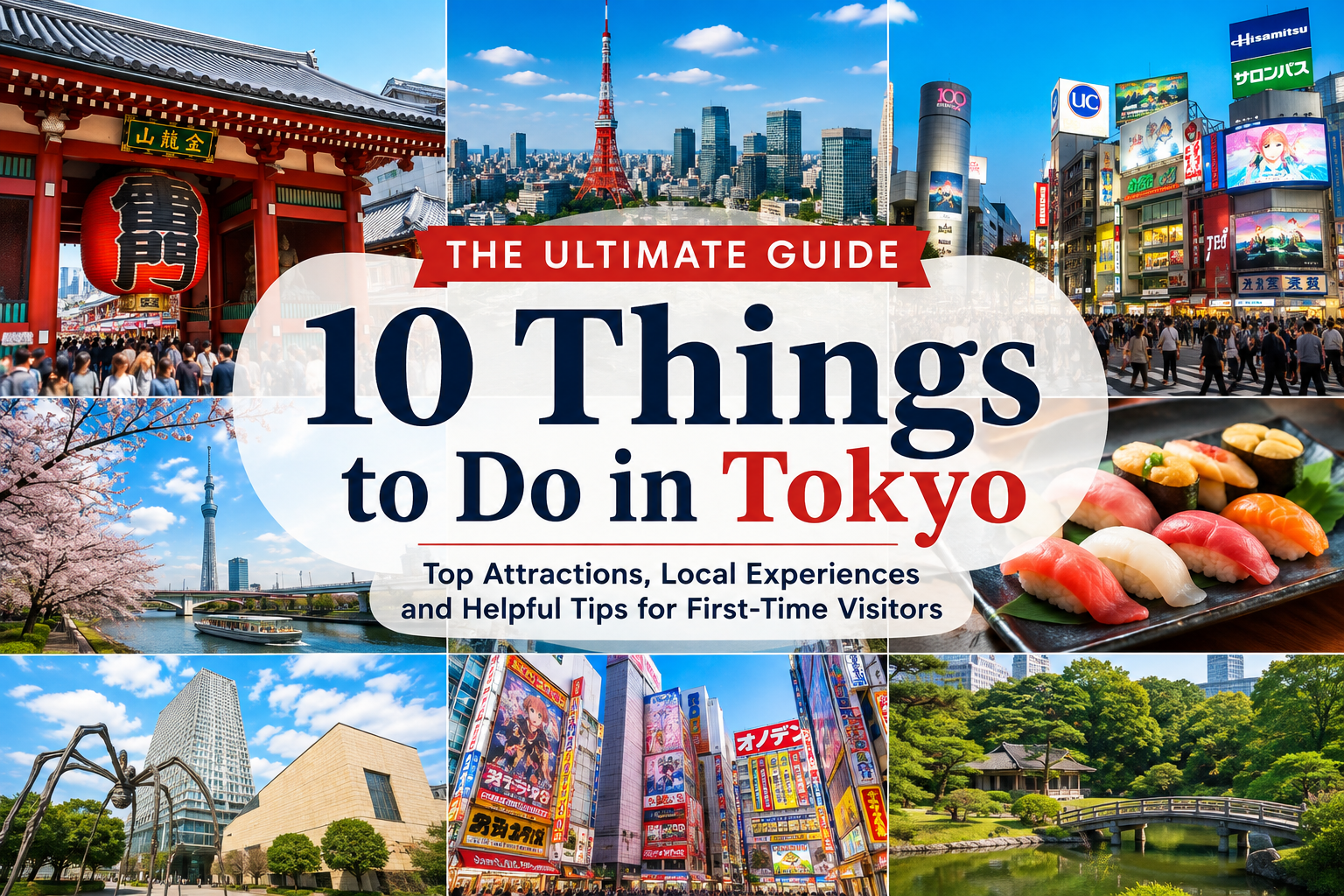
Tokyo offers an incredible variety of experiences, from historic temples and traditional neighborhoods to futuristic city views, world-class food, shopping, and pop culture.
For first-time visitors, however, having so many choices can make it difficult to decide what to prioritize. You may only have a few days in the city, and trying to see everything can leave you spending more time traveling between attractions than actually enjoying them.
This guide introduces some of the best things to do in Tokyo for first-time visitors, including iconic landmarks, cultural experiences, food, shopping, nightlife, and free attractions. Rather than trying to check every place off a list, use these ideas to choose the experiences that best match your interests and travel style.
Tokyo is a large city, so planning activities by area can also help you make better use of your time. With a little preparation, you can experience several different sides of Tokyo without making your itinerary feel rushed.
If you are still planning the basics of your trip, start with our Tokyo Travel Guide for First-Time Visitors for an overview of transportation, accommodation, sightseeing, food, and practical travel tips.
1. Experience Shibuya Crossing
Shibuya Crossing is one of Tokyo’s most recognizable sights and a memorable place to experience the energy of the city for the first time.
When the traffic lights turn red, pedestrians begin crossing from multiple directions at once, creating the famous scene that has become a symbol of modern Tokyo. Walking through the crossing yourself only takes a few minutes, but exploring the surrounding Shibuya area can easily fill several hours.
After crossing, take some time to explore the nearby streets, shopping centers, restaurants, cafés, and entertainment spots. The area becomes especially lively in the evening, when illuminated signs and busy streets create a completely different atmosphere from daytime Tokyo.
Shibuya is also a convenient place to combine several experiences in one area. You can visit the Hachiko statue, explore the neighborhood, shop, have dinner, and finish your visit with a panoramic view of Tokyo.
Best Time to Visit Shibuya Crossing
Shibuya Crossing is busy throughout the day, but late afternoon and evening are particularly atmospheric as the city lights begin to appear.
If you prefer a less crowded experience, visiting earlier in the morning can make it easier to explore the surrounding streets at a more relaxed pace.
2. Explore Senso-ji Temple and Asakusa
Asakusa offers a very different side of Tokyo from the bright lights and modern streets of Shibuya. At the center of the neighborhood is Senso-ji, one of Tokyo’s most famous temples and a popular destination for first-time visitors.
Your visit will often begin at Kaminarimon Gate, recognizable by its large red lantern. From there, Nakamise Street leads toward the temple and is lined with shops selling traditional snacks, souvenirs, and small Japanese goods.
Once you reach Senso-ji, take time to explore the temple grounds rather than simply taking a photo and leaving. The surrounding area also contains smaller streets, restaurants, shops, and traditional scenery that make Asakusa worth exploring on foot.
Visiting Asakusa is a good way to experience Tokyo’s historic atmosphere while still remaining within easy reach of the city’s major transportation network.
How Much Time Should You Spend in Asakusa?
Allow around two to three hours for Senso-ji and the surrounding streets if you want to explore at a comfortable pace.
You can spend longer in the area if you plan to eat, shop, walk toward the Sumida River, or combine your visit with Tokyo Skytree.
3. See Tokyo from Above
One of the best ways to understand the scale of Tokyo is to see the city from above. Observation decks offer panoramic views of the seemingly endless cityscape and can be especially memorable around sunset or after dark.
Tokyo has several excellent observation decks, and you do not need to visit all of them. For most first-time visitors, choosing one based on your itinerary, budget, and preferred view is enough.
Tokyo Skytree
Tokyo Skytree is one of the most recognizable landmarks in the city and offers expansive views from its observation decks.
Its location makes it particularly convenient to combine with Asakusa. If you visit Senso-ji earlier in the day, you can continue toward the Skytree area for a different perspective of Tokyo.
This is a good choice if you want the experience of visiting a major Tokyo landmark as well as enjoying the city view.
Shibuya Sky
Shibuya Sky is a popular choice for visitors who want panoramic views while exploring Shibuya.
Its location above Shibuya makes it easy to combine with Shibuya Crossing, shopping, restaurants, and other attractions in the neighborhood.
Popular time slots, particularly around sunset, may sell out, so checking current ticket availability and reservation requirements before your visit is recommended.
Tokyo Metropolitan Government Building
The Tokyo Metropolitan Government Building in Shinjuku is a useful option for travelers who want to enjoy a city view without adding another major attraction to their budget.
Its observation facilities provide views across Tokyo and can easily be combined with sightseeing in Shinjuku.
Opening hours, closures, and access conditions can change, so check the latest official information before visiting.
Which Tokyo Observation Deck Should You Choose?
For a first trip, choose the observation deck that fits most naturally into your itinerary. Tokyo Skytree works particularly well with an Asakusa day, Shibuya Sky with a Shibuya visit, and the Tokyo Metropolitan Government Building with time in Shinjuku.
Unless observation decks are a major interest for you, visiting one is usually enough to experience Tokyo from above without making your itinerary unnecessarily busy.
4. Visit Meiji Shrine and Harajuku
Meiji Shrine and Harajuku offer one of the most interesting contrasts in Tokyo. Within a relatively small area, you can experience a peaceful forested shrine and some of the city’s most energetic fashion, shopping, and youth culture.
Meiji Shrine is surrounded by a large wooded area near Harajuku Station. Walking along the wide approach toward the shrine creates a noticeably calmer atmosphere than the busy streets nearby.
Take your time as you walk through the grounds and remember that Meiji Shrine is an active place of worship. Respectful behavior is important, particularly around the main shrine buildings and during ceremonies.
After visiting the shrine, continue into Harajuku. Takeshita Street is known for colorful shops, sweets, fashion, and youth culture, while the Omotesando area offers a more sophisticated mix of architecture, cafés, and shopping.
Combining these areas allows you to experience both traditional and contemporary Tokyo without spending much time traveling between attractions.
How Much Time Should You Spend Here?
Allow around one to two hours for Meiji Shrine, depending on how much of the grounds you explore.
Add another one to three hours for Harajuku and Omotesando if you plan to shop, eat, or explore the surrounding streets.
Because Harajuku is close to Shibuya, these areas can also be combined into the same sightseeing day.
5. Experience Shinjuku at Night
Shinjuku is one of the best places to experience Tokyo after dark. As evening arrives, the area transforms into a dense landscape of illuminated signs, restaurants, entertainment venues, and busy streets.
Around Shinjuku Station, you will find several areas with very different atmospheres. The streets of Kabukicho are known for bright lights and nightlife, while Omoide Yokocho offers narrow alleyways filled with small restaurants and izakaya. Nearby, Golden Gai is famous for its compact network of tiny bars.
You do not need to spend the entire night in Shinjuku to enjoy the atmosphere. Simply walking through the illuminated streets, having dinner, and exploring a few different areas can be a memorable experience on a first trip to Tokyo.
Shinjuku is also convenient because many train and subway lines connect the area with other parts of the city, making it relatively easy to return to your accommodation after sightseeing.
Tips for Visiting Shinjuku at Night
Shinjuku is generally easy to explore, but the area around the station is large and can be confusing for first-time visitors. Check which station exit you need before leaving the platform, especially when meeting someone or heading to a specific restaurant.
In nightlife districts, check prices and any cover or seating charges before entering unfamiliar bars or entertainment venues. As in any major city, avoid following aggressive street touts or unsolicited invitations into establishments.
If nightlife is not your priority, you can still enjoy Shinjuku in the early evening and experience the illuminated city without staying out late.
6. Discover Japanese Food in Tokyo
Food is one of the highlights of visiting Tokyo, and you do not need to eat at expensive restaurants to have memorable experiences.
The city offers everything from sushi, ramen, tempura, yakitori, and tonkatsu to casual set meals, izakaya dishes, street snacks, sweets, and convenience-store food. Exploring different types of restaurants can be just as enjoyable as visiting Tokyo’s major attractions.
For first-time visitors, try mixing a few well-known Japanese dishes with spontaneous discoveries. A small neighborhood restaurant or local specialty you did not plan in advance may become one of the most memorable meals of your trip.
Tokyo also accommodates a wide range of budgets. Affordable meals are easy to find, while travelers interested in food can also choose premium sushi, kaiseki, wagyu, or other special dining experiences.
Where Should First-Time Visitors Eat in Tokyo?
You do not need to travel across the city simply to find good food. Major areas such as Shinjuku, Shibuya, Asakusa, Ueno, Ginza, and Tokyo Station all offer a wide range of restaurants.
A practical approach is to choose restaurants near the neighborhoods you are already visiting. This reduces unnecessary travel and gives you more time to enjoy both sightseeing and meals.
If there is a particular restaurant you consider essential to your trip, check its reservation policy, opening hours, and latest information in advance.
Want to explore Tokyo’s food scene in more detail? See our What to Eat in Tokyo: Must-Try Japanese Foods for First-Time Visitors for must-try dishes, local specialties, restaurant tips, food costs, and more.
7. Explore Tokyo’s Traditional Neighborhoods
Tokyo is often associated with skyscrapers, technology, and busy entertainment districts, but some of the city’s most memorable experiences can be found in quieter traditional neighborhoods.
Areas such as Yanaka, Kagurazaka, and parts of Ueno offer narrow streets, small temples and shrines, local shops, cafés, and residential scenery that feel very different from central Shibuya or Shinjuku.
Exploring these neighborhoods gives you an opportunity to slow down and experience everyday Tokyo rather than moving from one major attraction to another.
You do not necessarily need a detailed sightseeing plan. Walking through the streets, stopping at a local café, visiting a small shrine, or browsing neighborhood shops can be part of the experience.
Yanaka
Yanaka is a particularly good choice for first-time visitors who want to experience a quieter and more traditional side of Tokyo.
The area is known for its old-fashioned streets, temples, small shops, and Yanaka Ginza shopping street. It can also be combined with nearby Ueno, making it relatively easy to include in a Tokyo itinerary.
Kagurazaka
Kagurazaka combines traditional atmosphere with restaurants, cafés, and narrow side streets. The neighborhood has a different character from Tokyo’s major tourist districts and is enjoyable to explore on foot.
It is a good option if you have already visited Tokyo’s major landmarks and want to experience a less hectic part of the city.
8. Experience Anime, Manga and Pop Culture
Tokyo is one of the best places in the world to experience Japanese anime, manga, games, and pop culture. Even if these are not the main purpose of your trip, exploring one of Tokyo’s pop culture districts can offer a very different side of the city.
Akihabara is the most famous destination for anime, manga, games, electronics, and collectible goods. The area is filled with specialty stores, arcades, themed shops, and large retailers, making it an easy starting point for first-time visitors.
However, Tokyo’s pop culture scene extends well beyond Akihabara. Ikebukuro has numerous anime and character-related stores, while areas such as Nakano are known for shops selling manga, figures, collectibles, and older or harder-to-find items.
If you are a serious fan, it is worth deciding what you want to look for before choosing an area. Different neighborhoods and stores specialize in different types of merchandise and entertainment.
Which Area Should You Visit?
For most first-time visitors, Akihabara is the easiest place to experience Tokyo’s anime and gaming culture while also exploring one of the city’s most distinctive neighborhoods.
Consider Ikebukuro or Nakano if anime, manga, or collectibles are an important part of your trip and you want to explore beyond the most famous area.
You do not need to visit all of them. Choose the area that best matches your interests and leave enough time to browse without rushing.
9. Go Shopping in Tokyo
Shopping in Tokyo can be an experience in itself. From department stores and fashion districts to electronics, character goods, traditional crafts, and small specialty shops, the city offers something for almost every interest and budget.
Shibuya and Harajuku are good choices for fashion and youth culture, while Ginza is known for department stores, luxury brands, and polished shopping streets. Shinjuku combines large department stores, electronics retailers, and a wide variety of shops around its major station.
For electronics, anime merchandise, games, and collectibles, Akihabara is one of the most recognizable shopping areas. Travelers looking for souvenirs and traditional-style goods can also find plenty of options in Asakusa and other historic neighborhoods.
Rather than traveling across Tokyo only for shopping, try combining it with the areas already included in your sightseeing plan. This makes it easier to browse without sacrificing too much time for transportation.
What Should You Buy in Tokyo?
Popular purchases include Japanese snacks, stationery, cosmetics, character goods, clothing, electronics, kitchenware, traditional crafts, and regional souvenirs.
What is worth buying depends on your interests, so avoid feeling that you need to purchase every famous souvenir you see. Leaving some space in your luggage also gives you flexibility if you discover something unexpected later in your trip.
10. Visit a Museum or Cultural Attraction
Tokyo’s museums and cultural attractions offer another way to experience the city beyond its streets, shopping districts, and famous landmarks.
Depending on your interests, you can explore Japanese art, history, science, architecture, contemporary art, or immersive digital experiences. Museums can also be a useful addition to your itinerary on rainy days or when you want a slower-paced break from walking around the city.
Ueno is one of the most convenient areas for museum lovers, with several major cultural institutions located around Ueno Park. Other museums and galleries can be found throughout neighborhoods such as Roppongi, Marunouchi, and Odaiba.
You do not need to visit a museum simply because it is famous. Choose one that genuinely matches your interests, especially if you only have a few days in Tokyo.
Plan Ahead for Popular Attractions
Some museums, exhibitions, and immersive attractions may use timed-entry tickets or advance reservations, particularly during busy periods.
If there is a specific attraction you do not want to miss, check its official website before your visit for current opening hours, ticket availability, temporary closures, and reservation requirements.
Otherwise, keeping a museum or indoor attraction as a flexible option can be useful when weather or other plans change.
Free Things to Do in Tokyo
Tokyo can be an expensive city, but many memorable experiences are completely free. Mixing free attractions with paid experiences is an effective way to keep your travel budget under control without making your trip feel limited.
Walking through neighborhoods such as Shibuya, Harajuku, Asakusa, Ginza, and Shinjuku costs nothing and can be one of the best ways to experience the atmosphere of the city.
Many temples and shrines can also be explored without an admission fee, including major sites such as Senso-ji and Meiji Shrine. Parks, riverside walks, public spaces, and some observation facilities provide additional opportunities to enjoy Tokyo without paying for an attraction.
Free activities are also useful when building a flexible itinerary. You can explore a neighborhood at your own pace without worrying about timed tickets or feeling that you need to stay somewhere simply because you paid for admission.
Combine Free and Paid Experiences
You do not need to choose between traveling cheaply and enjoying special experiences. A practical approach is to keep some parts of your day free and spend more on the attractions, meals, or activities that matter most to you.
For a complete breakdown of accommodation, food, transportation, sightseeing, and daily expenses, see our Tokyo Travel Budget: How Much Does a Trip to Tokyo Cost?
How Many Things Can You Do in Tokyo Per Day?
Tokyo has an enormous number of attractions, but trying to visit too many places in one day can make your trip unnecessarily tiring.
For most first-time visitors, planning around two or three main areas or major experiences per day is a reasonable starting point. You can then add smaller stops, meals, shopping, or spontaneous discoveries depending on how much time and energy you have.
The key is to group attractions that are close to each other. For example, Meiji Shrine, Harajuku, and Shibuya work well together, while Senso-ji, Asakusa, and Tokyo Skytree can be combined into another sightseeing day.
Travel time can be longer than expected when you include walking through large stations, finding the correct exits, waiting for trains, and navigating unfamiliar neighborhoods. Leaving some flexibility in your schedule makes the experience much more enjoyable.
Avoid Planning Tokyo by Attraction Count
Instead of asking how many attractions you can fit into one day, think about which areas you want to experience and what matters most to you.
One major attraction, a neighborhood walk, a memorable meal, and some unplanned time can often create a better day than rushing through a long checklist of famous places.
If you need help organizing your sightseeing days, see our Tokyo Itinerary for First-Time Visitors: 3, 5 & 7 Days for practical itinerary ideas.
How to Choose What to Do in Tokyo
With so many attractions and neighborhoods to choose from, deciding what to do in Tokyo can feel overwhelming. The easiest approach is to start with your own interests rather than trying to visit every famous place.
If you enjoy traditional culture, prioritize areas such as Asakusa, Meiji Shrine, and Tokyo’s older neighborhoods. If modern city life interests you more, spend time in Shibuya and Shinjuku. Anime and manga fans may want to prioritize Akihabara, Ikebukuro, or Nakano, while travelers interested in shopping can focus on areas such as Shibuya, Ginza, Shinjuku, and Harajuku.
First-time visitors may also want to choose a few iconic Tokyo experiences and then leave room for personal interests. This gives you a sense of the city without turning your trip into a checklist.
Choose Experiences Based on Your Travel Style
Before finalizing your itinerary, ask yourself what you would be most disappointed to miss.
Choose those experiences first, group them by location, and build the rest of your schedule around them. Activities that are simply “nice to have” can remain flexible.
This approach is particularly useful in Tokyo because unexpected discoveries are often part of the experience. Leaving some open time gives you the freedom to explore a street, shop, café, or neighborhood that catches your attention.
Choosing the right neighborhoods can make sightseeing much easier. See our Best Areas to Visit in Tokyo for First-Time Visitors to compare the city’s major areas and find the ones that best match your interests.
Tokyo Sightseeing Tips for First-Time Visitors
Tokyo is relatively easy to explore once you understand the basic transportation system, but a few simple planning habits can make your sightseeing days much smoother.
You do not need to plan every minute of your trip. Instead, organize your days around a few key areas and leave enough time for transportation, meals, rest, and unexpected discoveries.
Group Attractions by Area
Avoid traveling back and forth across Tokyo unnecessarily. Attractions that look close on a map may still require significant walking or transportation time.
Grouping nearby neighborhoods together helps reduce travel time and gives you more time to actually experience each area.
Start Popular Attractions Early
Famous attractions can become significantly busier later in the day, especially on weekends, holidays, and during popular travel seasons.
If there is somewhere you particularly want to experience with fewer crowds, consider visiting earlier in the day when practical.
Check Reservations in Advance
Some observation decks, museums, exhibitions, restaurants, and other popular experiences may require or strongly benefit from advance reservations.
Check official information before your trip rather than assuming tickets will always be available on the day.
Wear Comfortable Shoes
Tokyo involves a considerable amount of walking. Even when you use trains and subways, large stations, underground passages, shopping areas, and sightseeing districts can add many steps to your day.
Comfortable footwear can make a noticeable difference, particularly on longer sightseeing days.
Learn the Transportation Basics
Tokyo’s train and subway network may look complicated at first, but you do not need to memorize it. Navigation apps and IC cards make most journeys relatively straightforward.
For a detailed explanation of trains, subways, IC cards, airport access, and navigation, see our Tokyo Transportation Guide for First-Time Visitors.
Final Thoughts
Tokyo offers far more things to do than you could experience in a single trip, and that is part of what makes the city so exciting to explore.
For your first visit, focus on a combination of iconic experiences and places that genuinely match your interests. You might explore the historic streets of Asakusa, experience the energy of Shibuya and Shinjuku, enjoy Japanese food, discover pop culture, or simply spend time walking through neighborhoods that catch your attention.
You do not need to see everything. Choosing a few priorities, grouping nearby attractions together, and leaving some flexibility in your itinerary will usually create a more enjoyable experience than trying to complete a long sightseeing checklist.
Use this guide as a starting point, then build a Tokyo trip around the experiences that matter most to you. There will always be something left to discover on your next visit.
Once you have chosen the experiences you do not want to miss, use our Tokyo Itinerary for First-Time Visitors: 3, 5 & 7 Days to turn those ideas into a practical travel plan.
