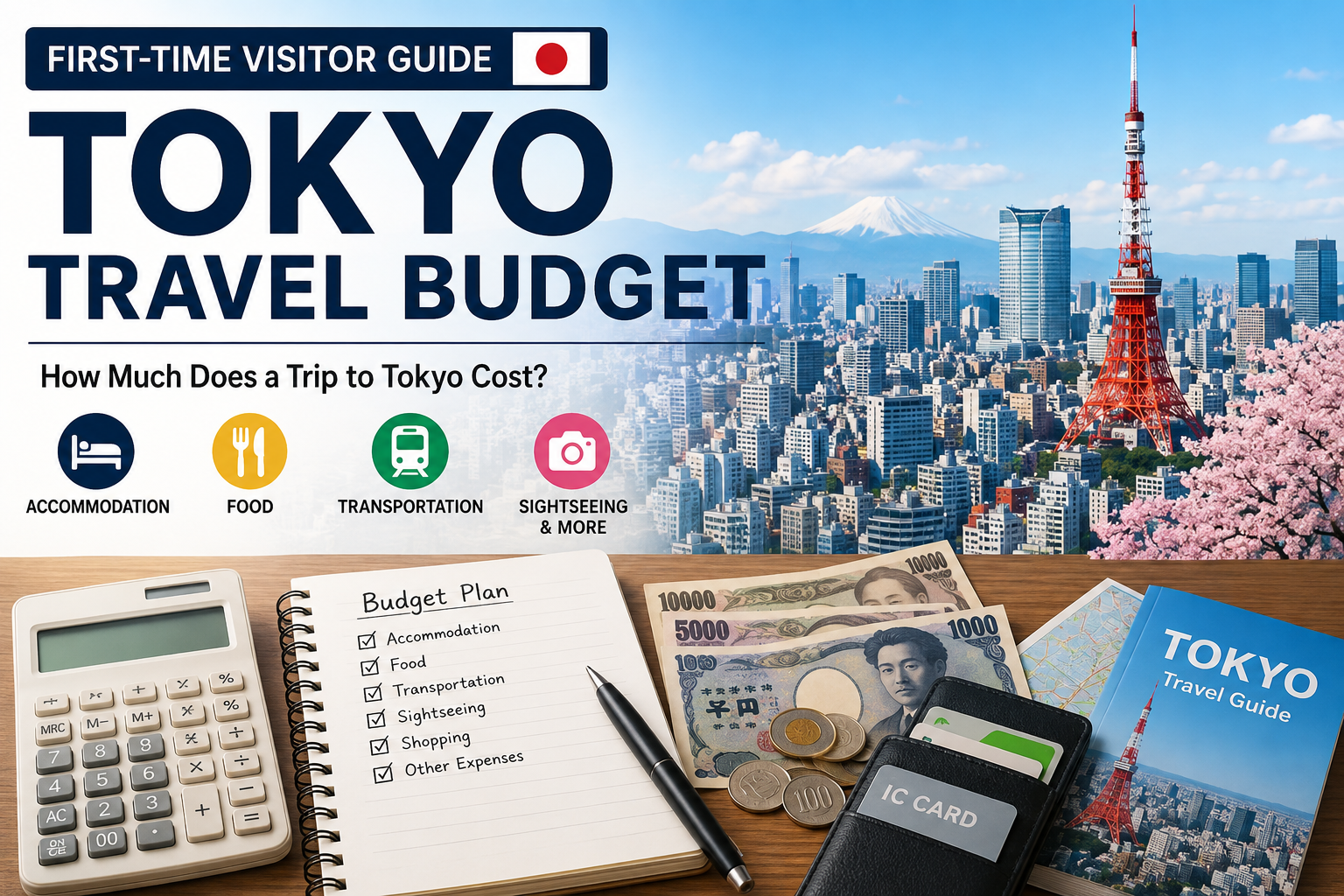
Tokyo can be surprisingly flexible when it comes to travel costs. You can enjoy the city on a relatively modest budget with affordable hotels, casual restaurants, and public transportation, or spend significantly more on luxury accommodation, fine dining, shopping, and special experiences.
For first-time visitors, the difficult part is often knowing how much to budget before the trip. Accommodation is usually one of the largest expenses, but food, transportation, attractions, and shopping can also add up depending on how you travel.
This guide breaks down the main costs of a trip to Tokyo, including accommodation, food, transportation, sightseeing, and other everyday expenses. You will also find sample travel budgets to help you estimate how much money you may need for your own trip.
Keep in mind that prices in Tokyo can vary depending on the season, location, exchange rates, availability, and your travel style. Rather than treating the figures in this guide as fixed prices, use them as a practical starting point for planning your budget.
If you are still planning the basics of your trip, our Tokyo Travel Guide for First-Time Visitors provides an overview of where to go, what to do, and how to prepare for your first visit.
How Much Does a Trip to Tokyo Cost?
The cost of a trip to Tokyo varies widely depending on your accommodation, dining choices, activities, and shopping habits. Two travelers following a similar itinerary can spend very different amounts depending on their travel style.
As a general planning guide, you can think about your daily expenses per person, excluding international flights, in three broad categories:
| Travel Style | Estimated Daily Budget | What It Typically Includes |
|---|---|---|
| Budget | ¥10,000–¥18,000 | Budget accommodation, inexpensive meals, public transportation, and mostly free or low-cost attractions |
| Mid-range | ¥20,000–¥35,000 | Comfortable hotel, a mix of casual restaurants, public transportation, and several paid attractions |
| Comfortable | ¥40,000+ | Higher-end accommodation, more expensive dining, taxis when convenient, shopping, and premium experiences |
These figures are only planning estimates. Hotel prices in particular can change significantly depending on the season, day of the week, location, and how early you book.
Budget Traveler
Travelers on a tighter budget can keep costs down by staying in hostels, capsule hotels, or simple business hotels, eating at affordable restaurants, and using trains and subways for transportation.
Tokyo also has many free attractions and neighborhoods that can be explored without paying admission fees.
Mid-Range Traveler
A mid-range budget gives you more flexibility with accommodation and dining while still relying primarily on public transportation.
This is a practical range for many first-time visitors who want a comfortable hotel, good meals, and several paid attractions without focusing on luxury experiences.
Comfortable Traveler
Travelers who prefer higher-end hotels, premium restaurants, taxis, shopping, and special experiences should expect a substantially higher daily budget.
There is no real upper limit to what you can spend in Tokyo, so travelers in this category should build their budget around their preferred hotel and major experiences rather than relying on a fixed daily amount.
Note: International airfare is not included in these estimates because flight prices vary greatly depending on your departure country, travel dates, airline, and booking timing.
Tokyo Accommodation Costs
Accommodation is often the largest part of a Tokyo travel budget. Prices vary considerably depending on the neighborhood, hotel type, room size, season, and how far in advance you book.
Tokyo offers everything from hostels and capsule hotels to business hotels, international hotel chains, and luxury properties, so there are options for many different budgets.
Budget Accommodation
Budget travelers can consider hostels, guesthouses, capsule hotels, and some simple business hotels.
As a rough planning range, budget accommodation may cost around ¥4,000–¥10,000 per person per night, although private rooms and accommodation in popular central areas can cost more.
Staying slightly outside major tourist districts can sometimes reduce accommodation costs while still providing convenient train access.
Mid-Range Hotels
For many first-time visitors, a mid-range hotel offers a good balance between price, comfort, and location.
A typical room may cost roughly ¥12,000–¥25,000 per night, but rates can rise significantly during busy travel periods.
When comparing hotels, do not look at price alone. A slightly more expensive hotel near a convenient station may save both time and transportation costs during your trip.
Higher-End Hotels
Higher-end hotels in Tokyo can start around ¥30,000 per night and increase substantially depending on the property, room type, location, and season.
Luxury hotels in areas such as central Tokyo can cost considerably more, especially for larger rooms, premium views, or special services.
For this category, it is better to decide how important the hotel experience is to your trip and set your accommodation budget accordingly.
Location can be just as important as price when choosing accommodation. Compare the major neighborhoods in our Where to Stay in Tokyo for First-Time Visitors guide.
Food Costs in Tokyo
Tokyo is one of the easiest cities in which to adjust your food budget. You can eat well without spending a lot, while the city also offers countless opportunities for high-end dining and special culinary experiences.
Your daily food costs will depend largely on how often you choose inexpensive meals, casual restaurants, cafés, and premium dining.
Budget Meals
Travelers trying to keep costs low can find many meals for around ¥500–¥1,200.
Convenience stores, supermarkets, noodle shops, curry restaurants, beef bowl chains, and other casual establishments can provide affordable options throughout the city.
You do not need to rely entirely on convenience-store food to travel cheaply in Tokyo. Many restaurants offer filling meals at relatively accessible prices.
Casual Restaurants
For a typical meal at a casual restaurant, budgeting around ¥1,000–¥3,000 per person is a useful starting point.
This range can include ramen, sushi, tonkatsu, tempura, izakaya meals, and many other popular Japanese foods, although prices vary considerably between restaurants.
Lunch can sometimes offer better value than dinner, particularly at restaurants that provide set menus or lunch specials.
Fine Dining and Special Experiences
Premium sushi, kaiseki, wagyu, omakase, and other special dining experiences can cost significantly more.
Prices may range from several thousand yen to tens of thousands of yen per person, depending on the restaurant and experience.
If food is an important part of your Tokyo trip, consider keeping everyday meals relatively affordable and setting aside a separate budget for one or two memorable dining experiences.
How Much Should You Budget for Food Per Day?
As a rough planning guide:
- Budget: around ¥2,500–¥4,000 per day
- Mid-range: around ¥5,000–¥8,000 per day
- Food-focused / comfortable: ¥10,000+ per day
These are planning estimates rather than fixed costs. Alcohol, cafés, snacks, and premium restaurants can increase your daily spending considerably.
Planning your food budget is easier when you know what you want to try. Explore our What to Eat in Tokyo: Must-Try Japanese Foods for First-Time Visitors for must-try dishes, local specialties, restaurant tips, and dining advice.
Transportation Costs in Tokyo
Tokyo’s public transportation system is extensive, reliable, and relatively affordable. For most visitors, trains and subways will account for the majority of daily transportation expenses.
Your actual costs will depend on how many journeys you make, the distances traveled, and whether you use taxis or special transportation passes.
Getting Around the City
For sightseeing within central Tokyo, many individual train and subway journeys cost only a few hundred yen.
As a rough planning estimate, setting aside around ¥800–¥1,500 per person per day for regular public transportation is reasonable for many sightseeing itineraries.
Using an IC card such as Suica or PASMO makes transportation easier because you can simply tap in and out rather than buying individual tickets for each journey.
Day passes may save money in some situations, but they are not automatically the best option. Their value depends on your itinerary and which railway or subway operators you use.
Airport Transportation
Transportation between the airport and central Tokyo should be budgeted separately from everyday sightseeing.
The cost varies considerably depending on whether you arrive at Haneda or Narita Airport and whether you choose a regular train, express train, airport bus, or taxi.
Haneda is closer to central Tokyo, while journeys from Narita generally take longer and can cost more.
For most first-time visitors, choosing a route with fewer transfers can be worth paying slightly more, particularly when traveling with large luggage.
For detailed information about trains, subways, IC cards, airport access, and navigation, read our Tokyo Transportation Guide for First-Time Visitors.
Sightseeing and Attraction Costs
One advantage of visiting Tokyo is that you do not need to spend a large amount on sightseeing every day. Many of the city’s most memorable experiences come from exploring neighborhoods, parks, shrines, temples, and shopping districts that are free to visit.
At the same time, observation decks, museums, theme parks, guided tours, and other experiences can increase your daily budget.
Free Things to Do
Many popular Tokyo experiences are free or require very little spending.
For example, you can explore areas such as Shibuya, Shinjuku, Asakusa, Ginza, and Ueno without paying an admission fee simply to walk around.
Parks, shrines, temples, shopping streets, and city viewpoints with free admission can also help balance more expensive activities during your trip.
A good itinerary does not need to include paid attractions every day.
Paid Attractions and Experiences
Admission prices vary considerably depending on the attraction. Museums and smaller attractions may cost relatively little, while observation decks, immersive experiences, theme parks, guided tours, and special activities can cost several thousand yen or more.
As a general planning estimate, consider setting aside around ¥1,000–¥5,000 per person per day for sightseeing and activities.
However, this can rise significantly if your itinerary includes premium experiences or major theme parks.
It is useful to decide which paid experiences are priorities before your trip. You can then build the rest of your itinerary around free or inexpensive sightseeing.
Not sure which experiences to prioritize? Explore our Best Things to Do in Tokyo for First-Time Visitors for ideas covering iconic attractions, culture, food, shopping, city views, and more.
Need help deciding what to do each day? Our Tokyo Itinerary for First-Time Visitors: 3, 5 & 7 Days can help you build a practical sightseeing plan.
Shopping and Other Expenses
Shopping is one of the most flexible parts of a Tokyo travel budget. Some visitors spend very little beyond basic travel expenses, while others make shopping a major part of their trip.
Tokyo offers everything from affordable souvenirs and everyday products to electronics, fashion, anime merchandise, traditional crafts, and luxury goods.
Because shopping habits vary so much, it is usually better to keep this category separate from your essential travel budget.
Souvenirs and Small Purchases
If you plan to buy snacks, small souvenirs, stationery, cosmetics, or other inexpensive items, setting aside around ¥1,000–¥3,000 per day can provide some flexibility.
You do not necessarily need to spend this amount every day, so another option is to create one shopping budget for your entire trip.
Additional Everyday Expenses
Remember to leave some room in your budget for smaller expenses that are easy to overlook, such as:
- Drinks and snacks
- Coffee and cafés
- Coin lockers
- Laundry
- Luggage storage or delivery
- Mobile internet
- Small convenience-store purchases
Individually, these expenses may seem minor, but they can add up over several days.
Keep a Separate Shopping Budget
A useful approach is to divide your money into two categories:
Essential travel expenses — accommodation, food, transportation, and sightseeing.
Optional spending — souvenirs, shopping, premium dining, nightlife, and other extras.
Keeping these separate makes it much easier to understand how much your Tokyo trip actually requires and how much additional spending you can comfortably allow.
Sample Tokyo Travel Budgets
The following examples provide a simple way to estimate your Tokyo travel budget. These figures are per person and exclude international airfare, shopping, and other optional expenses.
Accommodation costs can also differ depending on whether you are traveling alone or sharing a room, so use these figures as planning estimates rather than fixed prices.
Estimated Budget by Trip Length
| Trip Length | Budget | Mid-Range | Comfortable |
|---|---|---|---|
| 1 Day | ¥10,000–¥18,000 | ¥20,000–¥35,000 | ¥40,000+ |
| 3 Days | ¥30,000–¥54,000 | ¥60,000–¥105,000 | ¥120,000+ |
| 5 Days | ¥50,000–¥90,000 | ¥100,000–¥175,000 | ¥200,000+ |
| 7 Days | ¥70,000–¥126,000 | ¥140,000–¥245,000 | ¥280,000+ |
These estimates include accommodation, food, local transportation, and typical sightseeing expenses. They do not include international flights or significant shopping.
For example, a first-time visitor staying in a comfortable mid-range hotel, eating mostly at casual restaurants, using public transportation, and visiting several paid attractions might plan around the mid-range column.
Travelers who choose inexpensive accommodation and take advantage of Tokyo’s affordable restaurants and free attractions may be able to spend less. On the other hand, premium hotels, fine dining, taxis, nightlife, and special experiences can quickly push the total above these estimates.
Tip: Build your budget with some extra room rather than planning to spend the maximum amount every day. Unexpected expenses and spontaneous experiences are part of traveling, and having a buffer makes them easier to enjoy.
How to Save Money in Tokyo
Tokyo does not have to be an expensive destination. With a few practical choices, you can reduce your travel costs without sacrificing the quality of your trip.
The biggest opportunities to save money usually come from accommodation, transportation, food, and how you plan your sightseeing.
Choose Your Accommodation Carefully
Do not choose a hotel based on price alone. A cheaper hotel far from the places you want to visit may increase both transportation costs and travel time.
Look for accommodation within walking distance of a convenient train or subway station. Booking early can also give you more options, particularly during popular travel periods.
Use Public Transportation
For most sightseeing, trains and subways are much more economical than regularly using taxis.
An IC card makes everyday travel convenient, while transportation passes may save money when they match your itinerary.
Try to group nearby attractions together rather than crossing Tokyo several times in one day. This can reduce both transportation costs and unnecessary travel time.
Mix Affordable and Special Meals
You do not need an expensive restaurant for every meal to enjoy Tokyo’s food scene.
Use affordable restaurants, noodle shops, supermarkets, and convenience stores for some meals, then allocate part of your budget to the dining experiences that matter most to you.
This approach allows you to enjoy one or two memorable meals without dramatically increasing your overall food budget.
Take Advantage of Free Attractions
Tokyo has plenty to experience without paying admission fees.
Exploring neighborhoods, parks, shrines, temples, shopping streets, and public spaces can fill a significant part of your itinerary.
Mixing free sightseeing with a smaller number of carefully selected paid attractions is one of the easiest ways to control your daily spending.
How Much Money Should You Bring to Tokyo?
Tokyo has become increasingly convenient for cashless payments, but carrying some Japanese yen is still useful.
Credit cards and other cashless payment methods are widely accepted at hotels, department stores, convenience stores, major restaurants, and many tourist attractions. However, some smaller restaurants, local shops, ticket machines, temples, and other businesses may still prefer or require cash.
For most visitors, the best approach is to use a combination of cards, an IC card, and a reasonable amount of cash rather than relying entirely on one payment method.
How Much Cash Do You Need?
There is no single amount that works for every traveler. Your cash needs will depend on where you eat, shop, and travel.
Instead of carrying enough cash for your entire trip, consider keeping enough yen for smaller purchases and situations where cards are not accepted. You can then withdraw additional cash if necessary.
This also reduces the amount of money you need to carry at one time.
Using Credit Cards in Tokyo
Major credit cards are accepted at many businesses in Tokyo, particularly in tourist areas and larger establishments.
Before traveling, check whether your card charges foreign transaction fees and make sure you have a backup payment method in case your primary card does not work.
When a payment terminal offers to charge you in your home currency instead of Japanese yen, check the exchange rate and fees carefully before choosing an option.
ATMs and Cash Withdrawals
International visitors can withdraw Japanese yen from certain ATMs that accept overseas cards.
Availability, withdrawal limits, and fees depend on the ATM and your card issuer, so check the conditions for your own card before traveling.
It is also useful to notify your bank of your travel plans if required and confirm that overseas withdrawals are enabled.
Tip: Do not keep all of your cash and payment cards in the same place. Having a backup payment method can be useful if a card is lost, blocked, or temporarily unavailable.
Tokyo Travel Budget Tips for First-Time Visitors
Planning a realistic budget before your trip can make traveling in Tokyo much more comfortable. You do not need to calculate every yen in advance, but understanding your major expenses will help you avoid surprises.
Set Your Accommodation Budget First
Accommodation is often your largest fixed expense, so start there.
Once you know how much your hotel will cost, it becomes much easier to decide how much you can spend on food, sightseeing, shopping, and other experiences.
Separate Essential and Optional Expenses
Divide your budget into two categories.
Essential expenses include accommodation, food, transportation, and basic sightseeing.
Optional expenses include shopping, nightlife, premium restaurants, taxis, and special experiences.
This makes it easier to reduce spending without affecting the essentials of your trip.
Keep a Budget Buffer
Do not plan to spend every yen of your travel budget.
Unexpected expenses can occur, and you may discover a restaurant, attraction, or experience that you did not originally plan for.
Keeping some extra money available gives you more flexibility during your trip.
Plan by Day, Not Just by Trip
Your spending will not be the same every day.
One day may involve mostly free sightseeing and inexpensive meals, while another might include a paid attraction and a special dinner.
Focus on your average daily budget across the entire trip rather than trying to stay within exactly the same amount each day.
Prioritize What Matters to You
A good travel budget is not necessarily the cheapest one.
If food is important to you, spend more on dining and save elsewhere. If you value a convenient hotel location, paying more for accommodation may be worthwhile.
The goal is to spend your money on the experiences that will make your Tokyo trip more enjoyable.
Final Thoughts
Tokyo can accommodate a surprisingly wide range of travel budgets. You do not need to spend heavily to enjoy the city, but your choices of accommodation, dining, transportation, sightseeing, and shopping will have a major impact on the total cost of your trip.
For most first-time visitors, the best approach is to decide on your accommodation first, estimate a realistic daily budget for food and transportation, and then add the attractions and experiences that matter most to you.
Use the sample budgets in this guide as a starting point rather than a strict spending target. Prices can change, and every traveler has different priorities.
Most importantly, leave some flexibility in your budget. Tokyo is full of unexpected restaurants, shops, neighborhoods, and experiences, and having a little extra room in your spending plan allows you to enjoy those discoveries without worrying about every yen.
Once you have a budget in mind, use our Tokyo Itinerary for First-Time Visitors: 3, 5 & 7 Days to turn your travel budget into a practical sightseeing plan.
