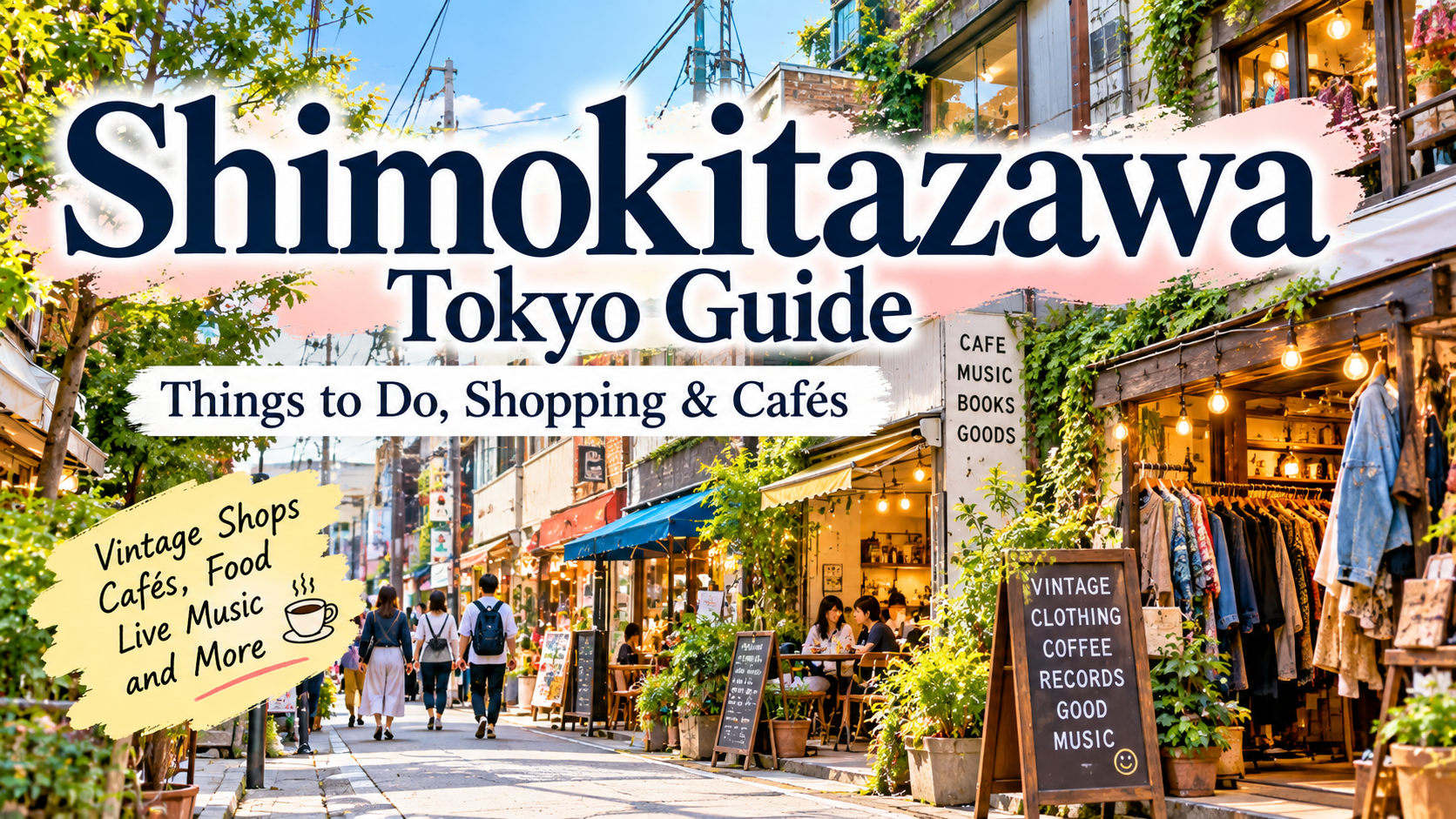
Shimokitazawa offers a side of Tokyo that feels very different from the city’s famous sightseeing districts.
Located just a few minutes from Shibuya by train, the neighborhood is known for vintage clothing, independent shops, cafés, live music, small theaters, and streets that reward wandering without a strict itinerary.
You will not find a landmark comparable to Senso-ji or Tokyo Skytree here. Instead, Shimokitazawa is about experiencing a neighborhood — browsing secondhand stores, stopping for coffee, discovering small businesses, and seeing a more creative and casual side of Tokyo.
This guide explains the best things to do in Shimokitazawa, where to shop, what kind of cafés and food to look for, how much time to spend, and whether the area deserves a place in your Tokyo itinerary.
Is Shimokitazawa Worth Visiting?
Yes — especially if you enjoy vintage shopping, cafés, music, or exploring neighborhoods beyond Tokyo’s major tourist attractions.
Shimokitazawa is not a conventional sightseeing destination.
There is no single attraction that defines the area. The experience comes from walking through its streets and discovering shops, cafés, restaurants, and cultural spaces along the way.
Shimokitazawa May Be a Good Choice If You:
- Enjoy vintage and secondhand shopping
- Like independent cafés and small restaurants
- Are interested in music, theater, or creative culture
- Prefer exploring neighborhoods on foot
- Want to see Tokyo beyond its major landmarks
- Are looking for an easy side trip from Shibuya
- Have visited Tokyo before and want somewhere different
Shimokitazawa May Be Less Suitable If You:
- Have very limited time on your first Tokyo trip
- Prefer famous landmarks and traditional sightseeing
- Want luxury shopping or large department stores
- Need a tightly structured sightseeing schedule
- Are mainly looking for traditional Japanese architecture
Miruvia’s take: Shimokitazawa is not essential for every first-time visitor, but it becomes a strong choice if vintage shopping, cafés, music, or neighborhood exploration match your interests. It is particularly easy to add when you are already visiting Shibuya.
What Makes Shimokitazawa Different?
Tokyo has many major shopping and entertainment districts, but Shimokitazawa operates on a smaller scale.
Rather than enormous department stores and shopping complexes, much of the appeal comes from independent businesses packed into walkable streets around the station.
Vintage clothing is one of the neighborhood’s biggest attractions, but Shimokitazawa is not only a shopping destination.
Its identity is also connected to live music, theater, cafés, curry restaurants, bars, and creative culture.
Recent redevelopment around the railway tracks has added newer commercial and community spaces while the surrounding streets continue to contain many of the smaller businesses associated with the neighborhood.
The result is an interesting mixture of old and new Tokyo.
Best Things to Do in Shimokitazawa
Explore the Vintage and Secondhand Shops
For many travelers, vintage shopping is the main reason to visit Shimokitazawa.
The streets around the station contain a large concentration of secondhand and vintage clothing stores, ranging from small independent shops to larger stores with extensive selections.
Styles and prices vary considerably.
Some shops focus on inexpensive used clothing, while others specialize in carefully selected vintage pieces, American clothing, streetwear, designer items, or particular decades.
Instead of choosing only one store in advance, allow time to browse several.
That is the best way to understand what makes shopping in Shimokitazawa different from visiting a conventional shopping mall.
For a broader overview of fashion, souvenirs, department stores, and other shopping options, see our Tokyo Shopping Guide.
Walk Through the Streets Around Shimokitazawa Station
Do not treat Shimokitazawa as a destination where you travel directly from attraction A to attraction B.
Walking is the attraction.
Explore both sides of the station and follow smaller streets when something looks interesting.
You may encounter clothing stores, record shops, cafés, bookstores, restaurants, bars, theaters, and businesses that would be easy to miss with a rigid itinerary.
A flexible route works much better here than a detailed checklist.
Explore BONUS TRACK
BONUS TRACK is a small commercial and cultural area created along the former railway site between Shimokitazawa and Setagaya-Daita.
The area includes shops, food and drink businesses, and spaces designed for events and community activities.
Its more contemporary atmosphere provides an interesting contrast with the dense shopping streets closer to Shimokitazawa Station.
You do not need a long time here, but it works naturally as part of a longer neighborhood walk.
Walk Through Reload
Reload is another development built along the former railway area.
Its narrow pedestrian layout contains independent shops, cafés, restaurants, and other businesses.
Rather than treating Reload as a major attraction by itself, include it as part of your exploration of the neighborhood.
Combining the older shopping streets with newer spaces such as Reload helps show how Shimokitazawa continues to evolve.
Browse Record Shops and Independent Stores
Shimokitazawa’s creative identity extends beyond clothing.
Depending on where you walk, you may find record stores, bookstores, lifestyle shops, small galleries, and businesses selling unusual or specialized products.
Travelers interested in music may particularly enjoy browsing the neighborhood’s record shops before experiencing its live music culture later in the day.
Experience Shimokitazawa’s Music Culture
Shimokitazawa has a long association with Tokyo’s independent music scene.
Numerous live houses operate around the neighborhood, hosting performances across different genres.
If live music is an important part of your trip, check event schedules in advance rather than expecting to find the right performance spontaneously.
For other visitors, simply seeing the small venues scattered through the neighborhood adds another dimension to the daytime walk.
Stop at a Café
Shimokitazawa is a good neighborhood for building a café break into your itinerary.
You will find independent coffee shops, modern cafés, dessert spots, and businesses occupying distinctive small spaces.
Rather than traveling across Tokyo for one famous café, consider choosing somewhere that fits naturally into your walking route.
This keeps the visit flexible and gives you more time to explore the neighborhood itself.
What to Eat in Shimokitazawa
Shimokitazawa has a wide variety of restaurants, but curry has become particularly associated with the neighborhood.
Try Japanese Curry
The area contains numerous curry restaurants serving different interpretations of the dish.
You may encounter Japanese-style curry, spice curry, soup curry, and more experimental variations.
If you already plan to spend several hours in Shimokitazawa, having curry for lunch or dinner is an easy way to add a local food experience without creating a separate trip across Tokyo.
Explore Small Restaurants
Do not limit yourself to curry.
Shimokitazawa contains ramen shops, cafés, izakaya, international food, bakeries, desserts, and many other options.
The neighborhood works particularly well for travelers who prefer deciding where to eat while exploring rather than reserving every meal far in advance.
How Much Time Do You Need in Shimokitazawa?
For most travelers, three to five hours is a useful starting point.
The right amount of time depends heavily on whether you plan to shop.
Around 2 Hours
Suitable if you mainly want to:
- Walk around the station
- Browse a few vintage stores
- Stop for coffee
- Get a quick sense of the neighborhood
Around 3–5 Hours
Better if you want to:
- Visit several vintage shops
- Explore both older and newer parts of the neighborhood
- Have lunch or dinner
- Stop at a café
- Browse record shops and independent stores
Half a Day or Longer
Consider this if vintage shopping is one of your main Tokyo priorities or if you plan to stay into the evening for food, drinks, theater, or live music.
Miruvia’s take: Travelers who are not interested in shopping can experience Shimokitazawa relatively quickly. Vintage shoppers can easily spend much longer than expected, so avoid placing an important timed reservation immediately after your visit.
A Simple Shimokitazawa Walking Plan
Shimokitazawa does not require a precise route, but having a loose structure can help.
A simple visit could look like:
Shimokitazawa Station → Vintage Shopping Streets → Café or Lunch → Reload → BONUS TRACK → Return Toward Shimokitazawa
Treat this as a framework rather than a fixed itinerary.
Short Visit
If you have around two hours:
Station → Vintage shops → Café → Station
Longer Visit
If you have half a day:
Station → Vintage shopping → Lunch → Independent shops → Reload → BONUS TRACK → Dinner or live music
The longer version is particularly suitable for repeat visitors who do not need to rush toward another major sightseeing attraction.
Shimokitazawa vs Harajuku: Which Should You Visit?
Both neighborhoods are associated with fashion and youth culture, but they offer different experiences.
| Shimokitazawa | Harajuku | |
|---|---|---|
| Main appeal | Vintage, cafés and creative culture | Fashion, trends and famous streets |
| Shopping style | Secondhand and independent | Mix of trend-driven, branded and youth fashion |
| Atmosphere | Casual neighborhood | Major tourist and shopping destination |
| Famous sights | Few major landmarks | Takeshita Street, Meiji Jingu nearby |
| Walking style | Wandering and discovery | More attraction-focused |
| Best for | Vintage shoppers and repeat visitors | First-time visitors and fashion fans |
| Typical visit | 3–5 hours | 2–4 hours |
If you are comparing neighborhoods for your trip, see our Best Areas to Visit in Tokyo for First-Time Visitors.
Choose Harajuku If:
You are visiting Tokyo for the first time and want to experience one of the city’s famous fashion districts while also having easy access to major attractions nearby.
Choose Shimokitazawa If:
Vintage clothing, independent shops, cafés, music, or exploring a neighborhood at your own pace are more important to you.
Visit Both If:
Fashion and shopping are major priorities for your Tokyo trip.
The two neighborhoods are different enough that visiting both does not necessarily feel repetitive.
Shimokitazawa for First-Time vs Repeat Visitors
First-Time Visitors
Shimokitazawa is worth considering if its specific strengths match your interests.
A traveler who loves vintage clothing may reasonably prioritize it over a more famous sightseeing area.
For a general first-time itinerary with only a few days, however, Tokyo’s major districts will usually take priority.
Because Shimokitazawa is close to Shibuya, it is easier to include when you have already planned time on Tokyo’s western side.
If you are deciding where Shimokitazawa could fit into your trip, start with our Tokyo Itinerary for First-Time Visitors: 3, 5 & 7 Days.
Repeat Visitors
Shimokitazawa becomes especially attractive on a repeat trip.
Once you have visited Tokyo’s major landmarks, neighborhoods where the experience is simply walking, shopping, eating, and observing everyday city life can become much more rewarding.
Shimokitazawa fits that style of travel particularly well.
How to Combine Shimokitazawa with Shibuya
Shibuya is one of the easiest major Tokyo districts to combine with Shimokitazawa.
The two neighborhoods are connected by the Keio Inokashira Line, making the journey between them quick.
A practical day could look like:
- Morning: Shibuya sightseeing
- Lunch: Shibuya or Shimokitazawa
- Afternoon: Shimokitazawa shopping and cafés
- Evening: Dinner, drinks, or live music in Shimokitazawa
You can also reverse the order if you want to experience Shibuya after dark.
This combination works because the neighborhoods provide contrasting experiences despite being close together.
Shibuya delivers large-scale, high-energy Tokyo. Shimokitazawa provides smaller streets and a more relaxed neighborhood atmosphere.
Best Time to Visit Shimokitazawa
Late Morning
Late morning is a reasonable starting time, particularly if shopping is your priority.
Avoid arriving very early solely for shopping, as smaller independent businesses may open later than major department stores.
Afternoon
For most visitors, afternoon is the easiest time to experience Shimokitazawa.
Shops and cafés are active, and you can continue naturally into dinner.
Evening
Stay into the evening if restaurants, bars, theater, or live music are part of your plans.
The character of the neighborhood changes as daytime shopping gives way to nightlife and entertainment.
How to Get to Shimokitazawa
Shimokitazawa Station is served by the Keio Inokashira Line and the Odakyu Line.
From Shibuya
Take the Keio Inokashira Line.
This is one of the simplest ways to include Shimokitazawa in a day of sightseeing on Tokyo’s western side.
From Shinjuku
Take the Odakyu Line toward Shimokitazawa.
Because the neighborhood is accessible from both Shibuya and Shinjuku, it can fit into many Tokyo itineraries without requiring a major detour.
Practical Tips for Visiting Shimokitazawa
Wear Comfortable Shoes
This is a neighborhood designed for walking and browsing.
You may cover more distance than expected while moving between shops.
Leave Space in Your Schedule
The appeal of Shimokitazawa is discovery.
A schedule that assigns ten minutes to every store defeats much of the purpose of visiting.
Check Store Hours
Independent businesses may open later, close on particular days, or change their schedules.
Check current information if there is one specific shop you do not want to miss.
Compare Before Buying
Vintage stores vary considerably in style and price.
Unless you find something you genuinely do not want to lose, browsing several stores before making larger purchases can help you understand the range available.
Bring a Shopping Bag
If you expect to buy clothing or other items, having a reusable bag can be convenient.
Check Event Schedules in Advance
For live music or theater, research specific performances before your visit.
Do not assume that arriving at a venue will guarantee a suitable event or available ticket.
Is Shimokitazawa Good for Solo Travelers?
Yes.
Shimokitazawa is particularly well suited to solo travel because browsing shops and cafés does not require a fixed group schedule.
You can spend as much or as little time as you want in each store, stop for coffee whenever you need a break, and change your route easily.
Travelers who enjoy photography, fashion, music, or simply walking through neighborhoods may find it especially comfortable alone.
Is Shimokitazawa Good for Families?
It depends on the family’s interests.
Families with teenagers interested in fashion, vintage clothing, music, or Japanese youth culture may enjoy the area considerably.
Families with very young children may find that other Tokyo neighborhoods offer more obvious child-focused attractions.
The streets can also require a fair amount of walking, so consider how well that fits your family’s itinerary.
Frequently Asked Questions
Is Shimokitazawa Worth Visiting?
Yes, particularly for travelers interested in vintage shopping, cafés, independent businesses, music, or exploring Tokyo neighborhoods beyond the major tourist sights.
What Is Shimokitazawa Famous For?
Shimokitazawa is especially known for vintage and secondhand clothing, independent shops, cafés, curry restaurants, live music, and theater.
How Long Should I Spend in Shimokitazawa?
Around three to five hours works well for many visitors. Vintage shoppers or travelers planning to experience the neighborhood’s evening culture may want half a day or longer.
Is Shimokitazawa Good for Vintage Shopping?
Yes. Vintage and secondhand clothing are among the main reasons travelers visit the neighborhood, with shops covering a broad range of styles and prices.
Is Shimokitazawa Close to Shibuya?
Yes. Shimokitazawa is easily accessible from Shibuya on the Keio Inokashira Line, making the two neighborhoods easy to combine.
Is Shimokitazawa Better During the Day or at Night?
Afternoon is best for general exploration and shopping. Evening becomes more attractive if you are interested in restaurants, bars, theater, or live music.
Final Thoughts
Shimokitazawa is not a neighborhood built around a checklist of famous Tokyo attractions.
Its appeal comes from everything between them.
Vintage shops, cafés, record stores, small restaurants, music venues, and independent businesses turn a simple walk into the main experience.
For first-time visitors, Shimokitazawa makes the most sense when its creative culture or vintage shopping directly matches your interests.
For repeat visitors, it offers something even more valuable: a reason to slow down and experience Tokyo without feeling the need to move from landmark to landmark.
If you want to see a more casual, creative, and independent side of the city, make room for a few hours in Shimokitazawa.
