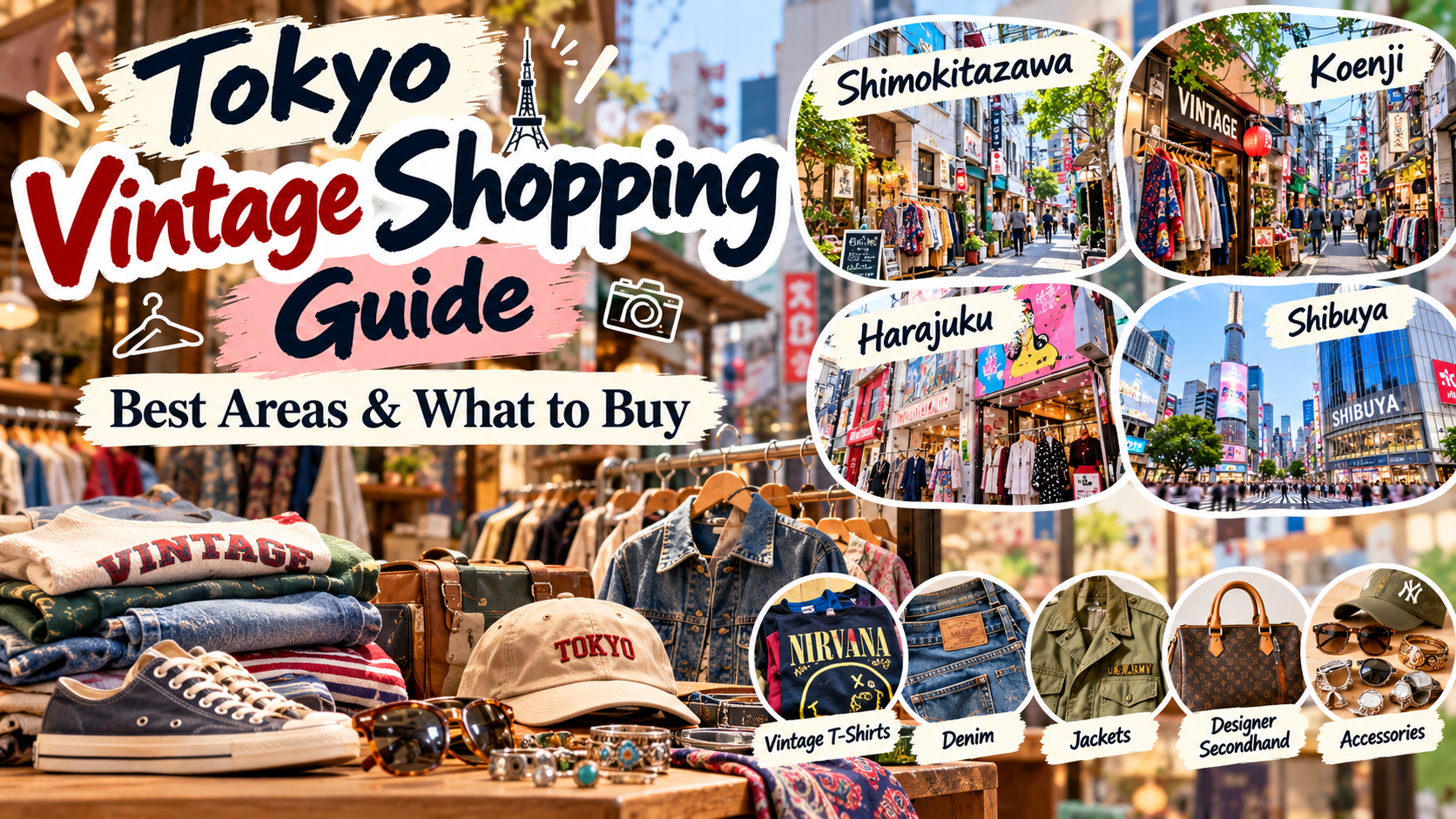
Tokyo is one of the most exciting cities in the world for vintage shopping.
From carefully selected American vintage clothing to affordable secondhand fashion, designer pieces, streetwear, accessories, and one-of-a-kind finds, Tokyo offers an enormous range of options for travelers who enjoy shopping for clothes with character.
The challenge is deciding where to go.
Areas such as Shimokitazawa and Koenji are famous for secondhand clothing, but they offer different shopping experiences. Other parts of Tokyo can also be useful depending on whether you are looking for designer fashion, affordable clothes, or simply an interesting souvenir from your trip.
This Tokyo vintage shopping guide explains what you can buy, which areas to consider, how much to budget, and what to check before purchasing secondhand clothing in Japan.
Why Go Vintage Shopping in Tokyo?
Tokyo’s vintage shopping scene stands out because of its variety.
You can find everything from inexpensive everyday secondhand clothing to highly curated vintage pieces that cost considerably more.
Stores may specialize in categories such as:
- American vintage clothing
- Japanese fashion
- Designer brands
- Streetwear
- Denim
- Military clothing
- Workwear
- Sportswear
- Accessories
- Bags
- Shoes
This means two stores located on the same street can offer completely different experiences.
For travelers, vintage shopping can also be a way to explore Tokyo beyond major sightseeing attractions.
Instead of simply visiting another shopping mall, you can walk through local neighborhoods, browse independent stores, stop at cafés, and discover parts of the city that feel different from central commercial districts.
Vintage vs Secondhand: What Is the Difference?
You will encounter both vintage and secondhand clothing while shopping in Tokyo.
The terms are sometimes used loosely, but they do not necessarily mean the same thing.
Secondhand Clothing
Secondhand simply means that an item has previously been owned.
It can include relatively recent clothing and does not automatically make something rare or collectible.
Secondhand stores can therefore be excellent places to find affordable everyday clothes.
Vintage Clothing
Vintage generally refers to older clothing that has value because of its age, design, rarity, brand, manufacturing details, or cultural significance.
A curated vintage store may carefully select every item rather than simply selling large quantities of used clothing.
As a result, vintage does not necessarily mean cheap.
Some pieces can cost significantly more than new clothing.
Miruvia’s Take: Choose the Area Before the Store
If you are visiting Tokyo for a limited time, do not begin by creating a huge list of individual vintage stores across the city.
Choose the neighborhood first.
Tokyo is enormous, and traveling between several unrelated shopping areas can consume a surprising amount of your day.
A better strategy is:
- Decide what type of shopping you want.
- Choose one neighborhood that matches that style.
- Spend a few hours walking between stores.
- Combine the shopping trip with food, cafés, or sightseeing nearby.
This turns vintage shopping into part of your Tokyo experience rather than a checklist of stores.
Best Areas for Vintage Shopping in Tokyo
Several Tokyo neighborhoods are particularly useful for travelers interested in secondhand and vintage fashion.
The right choice depends on your style, budget, and how much time you want to spend shopping.
Shimokitazawa
Shimokitazawa is probably the most recognizable vintage-shopping neighborhood for many international visitors.
The area contains numerous secondhand and vintage clothing stores within a relatively walkable district.
You can find:
- Casual vintage clothing
- American-style vintage
- Streetwear
- Denim
- Jackets
- T-shirts
- Accessories
- Affordable secondhand pieces
- More carefully curated stores
One advantage is convenience.
You can browse many stores without traveling across Tokyo, while cafés, restaurants, music venues, and small independent businesses make it easy to spend half a day in the neighborhood.
Who Is Shimokitazawa Best For?
Shimokitazawa is particularly suitable for:
- First-time vintage shoppers
- Travelers who want many stores close together
- Casual fashion shoppers
- Visitors who also want cafés and food
- People looking for a lively neighborhood experience
However, its popularity also means you should not assume everything will be inexpensive.
Prices vary substantially depending on the store and item.
Koenji
Koenji is another major destination for Tokyo vintage shopping.
Compared with Shimokitazawa, it can feel particularly rewarding for travelers who genuinely enjoy browsing through clothing stores and searching for unusual pieces.
The neighborhood is associated with alternative culture, independent businesses, music, and secondhand fashion.
You may encounter:
- Vintage denim
- Military clothing
- Workwear
- Old T-shirts
- Jackets
- American vintage
- Japanese secondhand fashion
- Accessories
- Specialist stores
Who Is Koenji Best For?
Consider Koenji if:
- Vintage shopping is a major purpose of your day
- You enjoy exploring independent stores
- You prefer a more local neighborhood atmosphere
- You are willing to spend time searching rather than shopping quickly
- You have already visited Tokyo’s most famous shopping districts
For repeat visitors to Tokyo, Koenji can be especially appealing.
Shimokitazawa vs Koenji
If you only have time for one, think about the type of experience you want.
Choose Shimokitazawa If:
- This is your first vintage-shopping experience in Tokyo
- You want a large concentration of accessible stores
- You want to combine shopping with cafés and restaurants
- You prefer a lively and popular neighborhood
Choose Koenji If:
- You are particularly interested in vintage clothing
- You enjoy digging through different stores
- You want a more local-feeling shopping day
- You are a repeat visitor looking beyond Tokyo’s most famous areas
Neither neighborhood is automatically better.
The right choice depends on your priorities.
Harajuku
Harajuku offers a different style of secondhand and vintage shopping.
Because the area is closely connected with Japanese youth fashion, streetwear, and fashion culture, it can be useful for travelers interested in trend-driven shopping.
You may find vintage stores alongside:
- Streetwear stores
- Designer resale
- Fashion boutiques
- Sneaker shops
- Character and pop-culture stores
Harajuku can work particularly well if vintage shopping is only one part of your day.
You can combine it with Omotesando, Meiji Shrine, or Shibuya depending on your itinerary.
Shibuya
Shibuya is not primarily a vintage-shopping neighborhood, but it can still be useful for secondhand and resale shopping.
Its biggest advantage is convenience.
Many travelers already visit Shibuya, so browsing secondhand fashion does not necessarily require a separate trip.
Consider Shibuya if you are interested in:
- Designer resale
- Streetwear
- Contemporary secondhand fashion
- Accessories
- Shopping as part of a larger Shibuya itinerary
For a dedicated vintage-shopping day, Shimokitazawa or Koenji will usually provide a more focused neighborhood experience.
What Should You Buy?
There is no single item that represents Tokyo vintage shopping.
However, several categories are particularly enjoyable to browse.
Vintage T-Shirts
Vintage T-shirts are easy to pack and can make memorable purchases.
Depending on the store, you may find:
- Music T-shirts
- Sports designs
- College designs
- Movie and entertainment graphics
- Brand logos
- Japanese graphics
- Older printed designs
Prices can vary dramatically depending on rarity, age, condition, and demand.
Do not assume an old-looking T-shirt will automatically be inexpensive.
Denim
Japan has a strong reputation among denim enthusiasts, making jeans and denim jackets interesting categories to explore.
Vintage stores may carry both international and Japanese items.
When buying denim, check:
- Waist measurement
- Length
- Rise
- Condition
- Repairs
- Fading
- Fabric
- Brand
- Manufacturing details
Sizing labels alone may not tell you whether an item will fit.
Whenever possible, check measurements or try the item on.
Jackets
Jackets can be among the most interesting vintage finds in Tokyo.
You may encounter:
- Denim jackets
- Military jackets
- Work jackets
- Varsity jackets
- Sports jackets
- Leather jackets
The downside is luggage space.
If you are traveling with limited baggage, consider how you will carry a bulky purchase before buying it.
Military and Workwear
Some Tokyo vintage stores specialize in military clothing and traditional workwear.
These categories can attract serious vintage enthusiasts because details such as manufacturing period, fabric, country of origin, and condition can significantly affect value.
If you are unfamiliar with vintage clothing, buy something because you genuinely like it rather than because you assume it is rare.
Designer Secondhand Fashion
Tokyo also has a substantial resale market for designer fashion.
Depending on the store, you may find clothing, bags, shoes, and accessories from Japanese and international designers.
This is somewhat different from traditional vintage shopping.
If designer resale is your main interest, central shopping areas may be more convenient than spending an entire day visiting vintage neighborhoods.
Japanese Brands
Travelers may also enjoy looking for secondhand clothing from Japanese brands.
This can be particularly interesting if those brands are expensive or difficult to find in your home country.
However, availability changes constantly.
Vintage and secondhand shopping works best when you remain flexible rather than searching for one exact item.
Accessories
Accessories are practical purchases because they require less luggage space.
Possible finds include:
- Caps
- Hats
- Scarves
- Belts
- Bags
- Jewelry
- Watches
- Sunglasses
They can also be easier to buy when Japanese clothing sizes are not suitable for you.
Is Vintage Shopping in Tokyo Cheap?
Sometimes—but not always.
One of the biggest mistakes visitors make is assuming that secondhand automatically means inexpensive.
Tokyo has several types of resale stores.
At one end, you may find relatively affordable used clothing.
At the other, carefully curated vintage stores may sell rare or highly desirable items at premium prices.
Factors affecting price include:
- Brand
- Age
- Rarity
- Condition
- Demand
- Store specialization
- Historical significance
- Current fashion trends
The best approach is to decide whether your priority is bargain hunting or finding distinctive pieces.
Those are different shopping goals.
How Much Should You Budget?
Your budget can vary enormously.
If you simply want an inexpensive secondhand shirt or accessory, you may not need to spend much.
If you are searching for rare vintage denim, jackets, designer clothing, or collectible items, prices can become much higher.
Instead of setting one universal budget, divide your shopping into three categories:
Casual Purchase
Something inexpensive that you simply like.
Tokyo Souvenir
A piece that reminds you of your trip and feels more personal than a conventional souvenir.
Serious Vintage Purchase
A higher-priced item where condition, authenticity, rarity, and fit deserve more careful consideration.
This prevents you from treating every interesting item as an essential purchase.
Check the Condition Before Buying
Secondhand clothing may show signs of previous use.
Before purchasing, examine the item carefully.
Check for:
- Stains
- Holes
- Tears
- Fading
- Missing buttons
- Broken zippers
- Damaged seams
- Odors
- Repairs
- Worn fabric
Some wear may be part of the appeal of vintage clothing.
The important point is understanding the condition before paying.
Store policies regarding returns and exchanges can vary, and secondhand items may have stricter conditions than new merchandise.
Check the Size Carefully
Japanese clothing sizes may feel different from the sizing systems you use at home.
Vintage clothing creates another complication because older garments may follow different sizing standards.
Do not rely only on S, M, L, or the original size label.
Useful measurements can include:
- Shoulder width
- Chest width
- Sleeve length
- Waist
- Inseam
- Total length
If fitting rooms are available, trying the item on is usually the easiest solution.
Can You Try Vintage Clothes On?
Many stores provide fitting rooms, but policies vary.
Some shops may limit the number of items you can try at once, and certain delicate products or accessories may have restrictions.
Follow the store’s instructions and ask staff when you are unsure.
A simple question such as “Can I try this on?” is usually enough.
Do Tokyo Vintage Stores Accept Credit Cards?
Many stores accept major credit cards and electronic payments, particularly in popular shopping neighborhoods.
However, payment methods vary by business.
Keeping some Japanese yen available is useful when visiting smaller independent stores.
Do not assume every shop will support exactly the same payment options.
Tax-Free Shopping
Some secondhand and vintage stores may offer tax-free shopping to eligible international visitors.
Participation and conditions vary by store.
If tax-free shopping matters to you, check the current requirements at the store and have your passport available when necessary.
Do not choose a vintage store solely because of tax-free availability.
Finding an item you actually want is usually more important than optimizing a relatively small difference in price.
How Much Time Do You Need?
Vintage shopping takes longer than ordinary shopping because inventory is less predictable.
For one neighborhood, a useful guideline is:
1–2 Hours
Enough for a quick look at several stores.
3–4 Hours
Better if vintage shopping is an important activity and you want time to compare stores.
Half a Day
Ideal for travelers who enjoy browsing slowly, taking café breaks, and exploring the neighborhood itself.
Trying to visit Shimokitazawa, Koenji, Harajuku, and Shibuya in one vintage-shopping session is usually unnecessary.
Choose one or two areas and explore them properly.
Best Time of Day for Vintage Shopping
Vintage shopping is generally better from late morning onward rather than very early in the day.
Independent shops may open later than major tourist attractions or department stores.
Before traveling specifically for one store, check its current opening hours.
A practical itinerary is to spend the morning sightseeing, then dedicate the afternoon to shopping.
First-Time Visitors vs Repeat Visitors
First-Time Visitors
If this is your first Tokyo trip, Shimokitazawa is an easy place to introduce vintage shopping into your itinerary.
It provides enough stores to make the trip worthwhile while also offering food, cafés, and an enjoyable neighborhood atmosphere.
Harajuku can also be convenient when you are already visiting nearby attractions.
Repeat Visitors
Repeat visitors can go deeper.
Koenji is particularly worth considering if you want to spend several hours browsing independent stores and exploring a neighborhood outside the most typical first-trip route.
You can also choose stores based on a specific category such as denim, military clothing, designer resale, or Japanese brands.
Vintage Shopping for Travelers Who Do Not Usually Buy Vintage
You do not need to be a fashion expert.
A simple strategy is to look for something that meets three conditions:
- You genuinely like it.
- It fits comfortably.
- You can imagine using it after returning home.
This is more useful than trying to identify the “best” or rarest item in a store.
A vintage piece that becomes part of your everyday wardrobe can be a more meaningful Tokyo souvenir than something purchased only because it seems collectible.
Vintage Shopping as a Tokyo Souvenir
Clothing can make an unusually personal souvenir.
Unlike packaged food or standard tourist merchandise, a vintage purchase may remind you of the neighborhood where you discovered it.
A T-shirt found in Shimokitazawa or a jacket discovered while wandering through Koenji can become connected with the experience of your trip.
The tradeoff is practicality.
Clothing requires more consideration regarding:
- Size
- Condition
- Price
- Luggage space
- Future use
For smaller and easier gifts, conventional souvenirs or Japanese stationery may be more practical.
How to Combine Vintage Shopping With Your Tokyo Itinerary
The most efficient approach is to combine vintage shopping with activities in the same area.
Shimokitazawa
Combine vintage stores with cafés, restaurants, and walking around the neighborhood.
Koenji
Spend several hours browsing independent stores, then explore local restaurants, cafés, bars, or music-related culture.
Harajuku
Combine shopping with Meiji Shrine, Omotesando, or nearby Shibuya.
Shibuya
Add secondhand shopping to a larger day of sightseeing, restaurants, and contemporary Tokyo shopping.
This is usually more efficient than crossing the city solely to visit individual stores.
Vintage Shopping vs Regular Shopping
Tokyo offers excellent opportunities for both.
Choose regular shopping if:
- You need a specific product
- You want predictable sizes and inventory
- You prefer easy returns
- You want the latest collections
Choose vintage shopping if:
- You enjoy discovering unexpected items
- You want something distinctive
- You enjoy browsing
- The shopping experience itself is part of the trip
You do not need to choose only one.
A Tokyo shopping itinerary can easily include both.
Common Vintage Shopping Mistakes
Visiting Too Many Neighborhoods
Tokyo’s transportation system is efficient, but traveling still consumes time.
One good vintage neighborhood is better than rushing through four.
Assuming Everything Is Cheap
Curated vintage can be expensive.
Check the item rather than judging value based only on the word “secondhand.”
Ignoring Condition
Inspect clothing carefully before purchasing.
Trusting the Size Label
Fit matters more than the label.
Buying Because Something Seems Rare
Unless you understand the category well, rarity can be difficult to evaluate.
Buy items you actually like.
Forgetting About Luggage
A large jacket can suddenly make your suitcase much more difficult to close.
A Simple Vintage Shopping Strategy
For most international visitors, this approach works well:
Step 1: Decide whether you want affordable secondhand clothing or curated vintage.
Step 2: Choose Shimokitazawa for an accessible first experience or Koenji for a deeper vintage-shopping day.
Step 3: Allow at least two to three hours.
Step 4: Browse several stores before making an expensive purchase.
Step 5: Check size and condition carefully.
Step 6: Buy something you will genuinely wear rather than simply searching for the rarest item.
Step 7: Combine shopping with food, cafés, or other attractions in the same neighborhood.
Frequently Asked Questions
Is Tokyo good for vintage shopping?
Yes. Tokyo has a wide variety of secondhand and vintage stores, ranging from affordable used clothing shops to highly curated stores specializing in particular styles, periods, or brands.
What is the best area for vintage shopping in Tokyo?
Shimokitazawa and Koenji are two of the most useful areas for dedicated vintage shopping. Shimokitazawa is particularly accessible for first-time visitors, while Koenji can appeal to travelers who want a deeper vintage-shopping experience.
Is vintage clothing cheap in Tokyo?
Not necessarily. Affordable secondhand clothing is available, but rare or carefully curated vintage pieces can be expensive.
Is Shimokitazawa or Koenji better for vintage shopping?
It depends on your priorities. Shimokitazawa works well for first-time visitors who want shopping, cafés, and a lively neighborhood in one trip. Koenji is a strong choice for travelers who want to spend more time exploring independent vintage stores.
Can I find Japanese brands secondhand in Tokyo?
Yes. Availability changes constantly, but secondhand stores may carry Japanese brands alongside international brands and vintage clothing.
Can I try on secondhand clothes in Japan?
Many stores have fitting rooms, although individual policies vary. Check with staff before trying on clothing.
Should I bring cash?
Credit cards and electronic payments are widely accepted in many Tokyo shops, but having some cash is useful when visiting smaller independent stores.
How long should I spend vintage shopping?
Allow around two to four hours for one neighborhood if vintage shopping is an important part of your day. Serious shoppers may prefer half a day.
Is vintage shopping worth it for first-time Tokyo visitors?
Yes, if fashion or shopping interests you. However, you do not need to visit multiple vintage districts. Adding one neighborhood such as Shimokitazawa to your itinerary is usually enough for a first trip.
Final Thoughts
Tokyo vintage shopping is less about finding one famous store and more about enjoying the search.
Shimokitazawa offers an accessible introduction with many shops, cafés, and restaurants concentrated in a lively neighborhood. Koenji provides another strong option for travelers who want to spend more time exploring independent stores and local culture.
Harajuku and Shibuya can also work well when you want to combine secondhand shopping with other major Tokyo experiences.
Most importantly, do not assume vintage shopping has to mean finding something rare or expensive.
Choose an area that fits your itinerary, give yourself enough time to browse, check the condition and fit carefully, and look for something you will genuinely enjoy using after your trip.
The best vintage purchase can become more than clothing—it can become a practical reminder of the Tokyo neighborhood where you found it.
