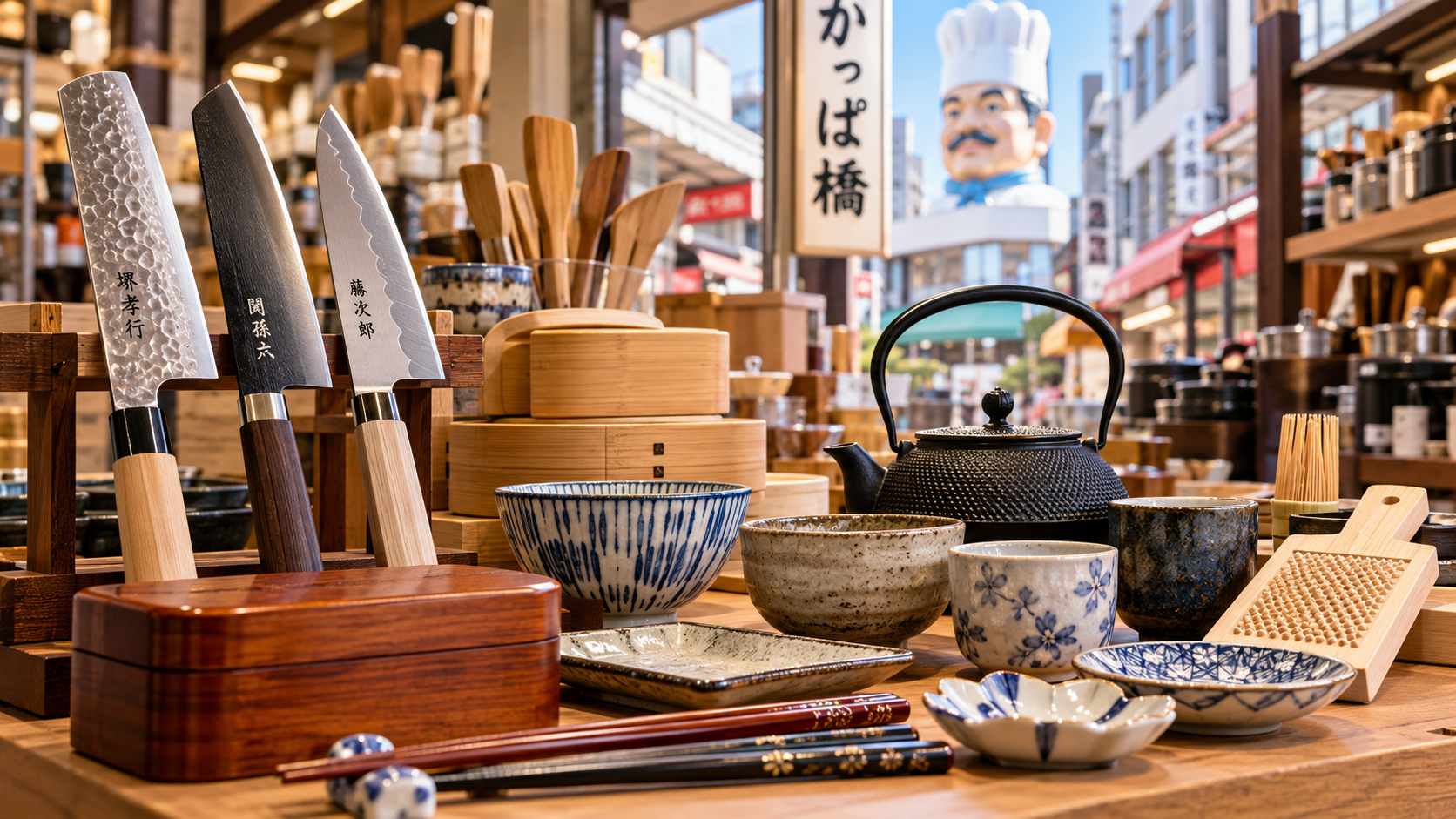
Why Buy Japanese Kitchenware in Tokyo?
Japanese kitchenware is one of the most practical things you can bring home from a trip to Tokyo.
Instead of buying a souvenir that simply sits on a shelf, you can choose something you will actually use: a Japanese kitchen knife, ceramic bowl, pair of chopsticks, teapot, bento box, or specialized cooking tool.
Tokyo is especially convenient for kitchenware shopping because the city offers everything from affordable everyday utensils to handmade ceramics and professional-grade knives.
For travelers who enjoy cooking, food, or Japanese design, exploring kitchenware shops can also be an experience in itself.
This guide explains what Japanese kitchenware is worth buying in Tokyo, where to shop, how much to budget, and what international travelers should know before taking their purchases home.
Miruvia’s Take: Buy Something You Will Actually Use
Tokyo has an enormous variety of kitchenware, and it is easy to become overwhelmed.
Our recommendation is simple:
Choose one or two items that fit the way you actually cook or eat at home.
A beautiful Japanese knife can be an excellent purchase for someone who cooks regularly, but it may not make sense for a traveler who rarely prepares food.
Likewise, handmade ceramics can be memorable, but fragile pieces require more care when packing.
Rather than trying to buy everything, focus on items that combine three things:
- Practical use
- Japanese craftsmanship or design
- Easy transportation home
This usually leads to a more satisfying purchase than choosing something simply because it looks traditionally Japanese.
What Japanese Kitchenware Should You Buy in Tokyo?
There is no single best item for every traveler.
Some kitchenware is highly practical, while other items are primarily appreciated for craftsmanship and design.
Popular choices include:
- Japanese kitchen knives
- Chopsticks
- Ceramic bowls and plates
- Tea cups
- Teapots
- Bento boxes
- Rice bowls
- Sake cups
- Cooking utensils
- Cast-iron cookware
- Wooden kitchen tools
- Small specialty cooking tools
The best choice depends on your budget, luggage space, cooking habits, and how carefully you can transport the item.
Japanese Kitchen Knives
Japanese kitchen knives are among the most famous kitchen products travelers buy in Japan.
They are known for sharp blades, precise cutting performance, and a long tradition of metalworking craftsmanship.
You may encounter several types of knives while shopping.
Common examples include:
- Gyuto — versatile chef’s knife
- Santoku — multipurpose Japanese kitchen knife
- Nakiri — vegetable knife
- Petty — small utility knife
- Deba — heavier knife traditionally used for fish
- Yanagiba — long slicing knife commonly associated with sashimi preparation
For most travelers buying their first Japanese knife, a santoku or gyuto is usually the easiest place to start.
Santoku vs Gyuto
Both are versatile knives, but they feel slightly different.
A santoku typically has a shorter blade and is designed for everyday tasks such as cutting vegetables, meat, and fish.
A gyuto is the Japanese interpretation of a Western chef’s knife and generally has a longer blade.
Choose a santoku if you prefer:
- A compact knife
- Everyday home cooking
- A relatively easy first Japanese knife
Choose a gyuto if you prefer:
- A longer blade
- More room for slicing
- A knife closer to a traditional Western chef’s knife
Whenever possible, hold the knife before buying it.
Balance and handle comfort can matter just as much as blade specifications.
Carbon Steel vs Stainless Steel
One important decision is the type of steel.
Stainless steel is generally easier for beginners because it is more resistant to rust and requires less maintenance.
Carbon steel can develop an extremely sharp edge and is popular with enthusiasts, but it requires more care.
Carbon steel may:
- React with acidic foods
- Develop discoloration
- Rust if left wet
- Require careful drying after use
If you want a low-maintenance knife, stainless steel is usually the safer choice.
If sharpening, maintenance, and blade characteristics are part of the appeal for you, carbon steel may be worth considering.
How Much Do Japanese Kitchen Knives Cost?
Prices vary dramatically.
You can find relatively affordable knives for everyday cooking as well as handcrafted professional knives costing many times more.
A rough traveler-oriented range is:
- Entry level: around ¥5,000–¥10,000
- Mid-range: around ¥10,000–¥30,000
- Premium or specialist knives: ¥30,000 and above
These are general ranges rather than fixed prices.
Steel, craftsmanship, brand, blade construction, handle materials, and production method can all affect the price.
Do not assume that the most expensive knife is automatically the best choice for you.
Should You Have a Knife Engraved?
Some specialist knife shops offer engraving.
Depending on the store, your name or selected characters may be engraved onto the blade.
This can turn a practical purchase into a more personal souvenir.
However, engraving availability, languages, cost, and waiting time vary.
Ask before purchasing if engraving is important to you.
Can You Take a Japanese Kitchen Knife Home?
Usually, travelers can transport legally purchased kitchen knives internationally, but you need to consider airline rules, customs regulations, and the laws of your destination.
Most importantly:
Do not put a kitchen knife in your carry-on luggage.
Sharp objects are generally restricted in aircraft cabins.
Pack the knife securely in your checked baggage according to your airline’s requirements.
You should also check the import and possession rules of the country or region you are returning to.
Regulations vary, and certain blade types or lengths may be restricted.
How Should You Pack a Kitchen Knife?
Keep the knife in its original box or protective packaging whenever possible.
A specialist store may package the blade securely for travel.
You can add additional protection by placing the boxed knife between soft items inside your checked suitcase.
Avoid packing it loosely.
The blade should never be able to move freely inside your luggage.
Japanese Ceramics
Ceramics are another excellent kitchenware purchase in Tokyo.
Japanese tableware often combines practical everyday use with subtle variations in color, texture, glaze, and shape.
Popular items include:
- Rice bowls
- Ramen bowls
- Small side-dish plates
- Sake cups
- Tea cups
- Serving plates
- Chopstick rests
Unlike standardized mass-produced tableware, handmade pieces may have slight differences.
Those variations are often part of their character rather than defects.
What Japanese Ceramics Should First-Time Buyers Choose?
Small pieces are usually easiest for international travelers.
Consider:
- A tea cup
- A small bowl
- A small plate
- A sake cup
- Chopstick rests
Large plates and heavy ceramic sets can become difficult to transport.
If you are flying home, compact pieces offer a better balance between usefulness and portability.
How to Pack Ceramics for the Flight Home
Fragile kitchenware requires more planning than clothing or packaged souvenirs.
Ask the store to wrap ceramics carefully.
Then place them near the center of your suitcase, surrounded by soft clothing.
Avoid placing fragile ceramics directly against the outer shell of your luggage.
For particularly valuable pieces, consider whether carrying them personally is safer, provided they comply with airline baggage rules.
Japanese Chopsticks
Chopsticks are one of the easiest Japanese kitchenware souvenirs to take home.
They are:
- Lightweight
- Compact
- Practical
- Easy to pack
- Available at many price points
Designs range from inexpensive everyday chopsticks to lacquered and handcrafted sets.
Some stores also offer personalization or engraving.
Chopsticks are especially useful when buying gifts for several people because they take up very little luggage space.
Chopstick Rests
Chopstick rests, or hashioki, are another compact option.
They come in an enormous range of designs, including:
- Traditional motifs
- Seasonal designs
- Animals
- Food shapes
- Minimalist ceramics
- Regional themes
Because they are small, they are easy to combine with other purchases.
A set of chopsticks and chopstick rests can make a practical Japanese-themed gift.
Japanese Teapots
Travelers interested in Japanese tea may want to buy a teapot.
Traditional Japanese teapots come in different shapes and materials, with kyusu being one of the most recognizable styles.
Before buying one, consider:
- Capacity
- Weight
- Built-in strainer
- Handle style
- Fragility
- How you normally prepare tea at home
A beautiful teapot is appealing, but choose one that matches how you actually drink tea.
Tea Cups
Tea cups are often easier to transport than full teapots.
Japanese tea cups may be sold individually rather than as matching sets.
This makes it easy to choose a single handmade piece.
If you enjoy matcha, you may also encounter larger tea bowls associated with tea ceremony culture.
Bento Boxes
Japanese bento boxes can be practical souvenirs for travelers who prepare lunches at home.
They range from inexpensive plastic containers to lacquered or wood-inspired designs.
Before buying, check:
- Microwave compatibility
- Dishwasher compatibility
- Leak resistance
- Internal dividers
- Capacity
- Care instructions
A beautiful traditional-looking bento box may require more careful maintenance than a modern plastic version.
Japanese Cooking Utensils
Tokyo is also an excellent place to find everyday cooking utensils.
Depending on the shop, you may see:
- Wooden spatulas
- Rice paddles
- Graters
- Tongs
- Ladles
- Strainers
- Peelers
- Mortars and pestles
- Tamagoyaki pans
- Cooking brushes
- Measuring tools
Some are distinctly Japanese, while others are familiar kitchen tools made with Japanese design or craftsmanship.
Tamagoyaki Pans
A rectangular tamagoyaki pan is one of the most recognizable Japanese cooking tools.
It is designed for making Japanese rolled omelets.
For travelers who regularly cook Japanese food at home, it can be a fun and practical purchase.
Before buying, check whether the pan is compatible with your stove.
Induction compatibility is particularly important if you use an IH cooktop.
Japanese Graters
Japanese graters can be surprisingly specialized.
You may find tools designed for ingredients such as:
- Daikon
- Ginger
- Wasabi
- Garlic
Some traditional versions use materials and surfaces quite different from standard Western graters.
These are compact purchases, making them easier to bring home than large cookware.
Cast-Iron Kitchenware
Japanese cast-iron products can be beautiful and extremely durable.
However, they are also heavy.
A cast-iron teapot or cooking vessel can quickly consume a significant portion of your luggage weight allowance.
Before buying, consider both:
- The product price
- The potential baggage cost
For many international travelers, smaller kitchenware is more practical.
Where to Buy Japanese Kitchenware in Tokyo
Kitchenware is available throughout Tokyo, but different areas suit different shopping styles. For a broader overview of shopping areas and products, see our Tokyo Shopping Guide.
For the largest concentration of specialist shops, Kappabashi is the obvious starting point.
Department stores and lifestyle retailers can be more convenient if you want a curated selection without visiting many individual specialist shops.
Kappabashi Kitchen Town
Kappabashi is Tokyo’s best-known kitchenware shopping district.
Located between Asakusa and Ueno, the area developed around businesses supplying restaurants and food professionals.
Today, it attracts both industry buyers and international visitors.
Shops sell products such as:
- Kitchen knives
- Ceramics
- Pots and pans
- Cooking utensils
- Restaurant equipment
- Tableware
- Baking supplies
- Chopsticks
- Food display items
The major advantage of Kappabashi is concentration.
Instead of traveling across Tokyo to compare kitchenware, you can explore many specialist shops within one area.
How Much Time Should You Spend in Kappabashi?
Allow at least two hours if you simply want to browse.
If you plan to compare knives, ceramics, or specialist equipment carefully, half a day is more comfortable.
Travelers who love cooking can easily spend longer.
Avoid creating an overly packed schedule immediately afterward, especially if you expect to carry multiple purchases.
Kappabashi vs Regular Shopping Areas
Kappabashi is best if kitchenware itself is a major reason for your visit.
Choose Kappabashi if you want:
- Specialist stores
- Professional equipment
- A wide range of knives
- Extensive tableware choices
- Comparison shopping
Choose a department store or general shopping district if you want:
- A more curated selection
- Easier shopping
- Multiple categories in one building
- Kitchenware as only one part of your shopping day
Neither is automatically better.
It depends on how important kitchenware shopping is to your itinerary.
Combine Kappabashi with Asakusa
Kappabashi is relatively close to Asakusa, making the two areas easy to combine.
A practical day could include:
- Visiting Senso-ji and exploring Asakusa
- Having lunch in the area
- Walking toward Kappabashi
- Spending the afternoon shopping for kitchenware
This creates a good balance between sightseeing and shopping.
It also works particularly well for travelers interested in traditional Japanese culture, food, and craftsmanship.
Department Stores
Major Tokyo department stores often have high-quality kitchenware and tableware sections.
These can be useful if you want:
- Japanese ceramics
- Premium chopsticks
- Tea accessories
- Cooking tools
- Gift-quality products
Department stores are generally easier to navigate than specialist districts and may provide convenient tax-free shopping services for eligible international visitors.
The trade-off is that you may see a smaller range than in a dedicated kitchenware district.
Lifestyle and Variety Stores
Tokyo’s lifestyle retailers are useful for affordable and contemporary kitchen goods.
These stores may carry:
- Bento boxes
- Chopsticks
- Storage containers
- Small cooking tools
- Tableware
- Kitchen accessories
They are a good choice if you want practical Japanese design rather than specialist craftsmanship.
Specialist Knife Shops
If buying a Japanese knife is your main objective, consider visiting a specialist knife store.
Staff may be able to explain:
- Steel types
- Blade shapes
- Handle materials
- Maintenance
- Sharpening
- Intended uses
This guidance is particularly valuable for first-time buyers.
Instead of choosing based only on appearance, you can select a knife that matches your cooking style and maintenance preferences.
How Much Should You Budget for Japanese Kitchenware?
Your budget can vary enormously.
A traveler buying chopsticks and small utensils may spend only a few thousand yen.
Someone purchasing a premium knife and handmade ceramics can spend tens of thousands of yen or more.
A practical shopping budget might look like:
- Small souvenirs and utensils: ¥1,000–¥5,000
- Quality tableware or specialty tools: ¥3,000–¥10,000
- Japanese kitchen knife: ¥5,000–¥30,000+
- Premium handcrafted items: ¥20,000+
You do not need a large budget to find useful Japanese kitchenware.
Is Expensive Kitchenware Always Better?
No.
Price can reflect:
- Materials
- Craftsmanship
- Production method
- Brand
- Rarity
- Decoration
- Handmade processes
But your goal should be finding something appropriate for your needs.
A ¥7,000 knife that you use every week may be a better purchase than a ¥40,000 knife you are afraid to maintain.
The same applies to ceramics and cookware.
Can Tourists Shop Tax-Free?
Some Japanese retailers offer tax-free shopping to eligible international visitors.
Eligibility rules, minimum purchase requirements, procedures, and participating stores can change.
Look for tax-free signs and ask staff before paying.
You may need to present your passport or follow digital procedures depending on the current system.
Do not assume every kitchenware shop participates.
Should You Bring Your Passport Shopping?
If you plan to use tax-free shopping, follow the current requirements for proving eligibility.
Because Japan’s tax-free system can change, check the latest official rules before your trip.
It is better to know the requirements before making a large purchase rather than discovering at checkout that you cannot complete the tax-free procedure.
Cash or Credit Card?
Many Tokyo kitchenware shops accept major credit cards, especially larger stores and businesses popular with international visitors.
However, smaller specialist shops may have different payment options.
Having more than one payment method is useful.
If you are planning a major knife or ceramics purchase, confirm accepted payment methods before finalizing the transaction.
Do Kitchenware Shops Speak English?
English support varies.
Stores frequently visited by international travelers may have:
- English-speaking staff
- English product labels
- Translation sheets
- Multilingual signage
Smaller shops may have limited English.
Fortunately, many kitchenware purchases can still be handled with basic communication.
When buying technical products such as knives, however, language support can make it easier to understand maintenance and materials.
How to Choose Kitchenware as a Souvenir
Before buying something, ask yourself:
- Will I actually use this?
- Is it difficult to buy at home?
- Can I transport it safely?
- Does it fit my luggage?
- Do I understand how to maintain it?
- Is it allowed in my baggage and destination country?
These questions are especially useful for knives, ceramics, and heavy cookware.
Best Kitchenware for Limited Luggage Space
If suitcase space is limited, prioritize compact items.
Good options include:
- Chopsticks
- Chopstick rests
- Small bowls
- Tea cups
- Small cooking utensils
- Japanese graters
- Kitchen cloths
- Compact bento accessories
Avoid large cookware unless it is a particularly important purchase.
Best Kitchenware for Gifts
Kitchenware can make excellent gifts because many items are both practical and distinctly Japanese.
Easy gift options include:
- Chopsticks
- Chopstick rests
- Small ceramics
- Tea cups
- Kitchen cloths
- Small serving dishes
If buying for several people, choose lightweight items that are easy to pack.
Best Kitchenware for Serious Home Cooks
Travelers who cook frequently may want to focus on tools rather than decorative items.
Consider:
- Japanese knives
- Specialized graters
- Tamagoyaki pans
- Mortars and pestles
- Quality cooking utensils
- Professional-style kitchen tools
Kappabashi is particularly useful because you can compare products designed for both home and professional kitchens.
Best Kitchenware for Tea Lovers
Tea enthusiasts may prefer:
- Kyusu teapots
- Tea cups
- Matcha bowls
- Tea scoops
- Tea strainers
- Tea storage containers
If you have participated in a tea ceremony during your Tokyo trip, buying a tea-related item afterward can also give the souvenir more personal meaning.
Best Kitchenware for Ceramic Lovers
If ceramics are your main interest, avoid rushing.
Look at:
- Shape
- Weight
- Glaze
- Texture
- Intended use
- Care instructions
Handmade ceramics may vary from piece to piece.
If several similar pieces are available, compare them individually rather than assuming they are identical.
Kitchenware Shopping vs General Souvenir Shopping
General souvenir shopping usually prioritizes items that represent the destination.
Kitchenware shopping is different because usefulness matters just as much as appearance.
The best kitchenware souvenir should ideally remind you of Japan while still fitting naturally into your everyday life.
This is why kitchenware can be particularly satisfying for travelers who enjoy cooking or Japanese food.
Kitchenware Shopping vs a Pottery Experience
Buying ceramics gives you access to professionally finished products immediately.
A pottery workshop offers something different: the experience of making an object yourself.
Choose kitchenware shopping if you want:
- More choice
- Professional craftsmanship
- Immediate purchase
- Easier comparison
Choose a pottery experience if you want:
- A hands-on activity
- A personal creation
- A deeper craft experience
- A memorable activity rather than only shopping
Travelers interested in ceramics can easily enjoy both.
Kitchenware Shopping vs Depachika
Department store food halls focus primarily on food, sweets, prepared dishes, and edible gifts.
Kitchenware shopping focuses on objects used to prepare, serve, or enjoy food.
If your interest in Japanese food extends beyond eating, combining both can provide a broader view of Japanese food culture.
How to Plan a Tokyo Kitchenware Shopping Day
A simple plan could look like this:
Morning
Visit Asakusa before the area becomes busier.
Explore Senso-ji and the surrounding streets.
Late Morning to Afternoon
Walk or travel to Kappabashi.
Browse specialist stores and compare kitchenware.
Take your time if purchasing a knife or handmade ceramics.
Lunch
Eat in Asakusa, Ueno, or another nearby area.
Afternoon
Continue shopping or visit another nearby neighborhood.
If you bought fragile or heavy items, consider returning to your hotel before continuing with evening activities.
First-Time Visitor Recommendation
For a first trip to Tokyo, keep kitchenware shopping focused.
A strong plan is:
Asakusa + Kappabashi
This combination gives you major sightseeing, traditional atmosphere, food, and specialist shopping without requiring complicated travel across the city.
Allow enough time to browse rather than treating Kappabashi as a quick stop.
Repeat Visitor Recommendation
Repeat visitors can approach kitchenware shopping more selectively.
Instead of browsing everything, focus on a specific category such as:
- Japanese knives
- Handmade ceramics
- Tea ware
- Professional cooking tools
- Specialty utensils
You can also revisit shops discovered on a previous trip and invest in a higher-quality item once you better understand what you want.
Common Mistakes to Avoid
Buying a Knife Without Understanding Maintenance
Some high-performance knives require more care than beginners expect.
Ask about steel type, sharpening, drying, and storage.
Putting a Knife in Carry-On Luggage
Sharp kitchen knives should not be treated like ordinary souvenirs.
Check airline and security rules and pack them appropriately in checked baggage.
Buying Large Ceramics Without Thinking About Packing
A large bowl or plate may look manageable in the store but become difficult to protect inside a suitcase.
Ignoring Weight
Cookware, ceramics, and cast iron can be heavy.
Check your baggage allowance.
Assuming Every Store Is Tax-Free
Tax-free participation varies by retailer.
Confirm before purchasing.
Buying Based Only on Appearance
Beautiful kitchenware is appealing, but usability matters.
Consider how the item fits your cooking habits at home.
Leaving Kappabashi Too Late in the Day
Specialist shopping districts do not necessarily operate on the same schedule as major department stores.
Check the current opening hours of specific shops you want to visit.
Who Should Add Kitchenware Shopping to Their Tokyo Trip?
Kitchenware shopping is especially suitable for:
- Home cooks
- Food lovers
- Professional chefs
- Design enthusiasts
- Tea lovers
- Ceramic collectors
- Travelers looking for practical souvenirs
- Repeat visitors seeking a more specialized Tokyo experience
You do not need to be a serious cook to enjoy browsing.
The variety of tools, ceramics, and restaurant equipment makes kitchenware shopping an interesting cultural experience as well.
Who Might Skip It?
You may want to spend your time elsewhere if:
- You rarely cook
- Your luggage is already full
- You prefer edible souvenirs
- You are traveling with only minimal baggage
- Shopping is not a priority
Tokyo has many specialized experiences, so there is no need to force kitchenware shopping into your itinerary simply because it is popular.
Frequently Asked Questions
Where is the best place to buy kitchenware in Tokyo?
Kappabashi is the most famous specialist kitchenware district and is an excellent choice for travelers who want to compare knives, ceramics, cooking utensils, and professional equipment.
Is Kappabashi worth visiting for tourists?
Yes, particularly if you enjoy cooking, Japanese food, ceramics, knives, or specialized shopping. Travelers with little interest in kitchenware may prefer to spend the time elsewhere.
What Japanese kitchenware makes the best souvenir?
Chopsticks, small ceramics, tea cups, chopstick rests, and compact cooking tools are among the easiest options to transport. Japanese knives are also popular but require additional baggage and legal considerations.
Can I bring a Japanese kitchen knife on a plane?
Kitchen knives should not be placed in carry-on luggage. Travelers should check their airline’s current baggage rules and the import or possession laws of their destination before purchasing.
Are Japanese kitchen knives expensive?
Prices vary widely. Entry-level and mid-range knives can be accessible to home cooks, while handcrafted and specialist knives can cost considerably more.
Can tourists buy kitchenware tax-free in Japan?
Eligible international visitors may be able to use tax-free shopping at participating retailers. Requirements and procedures can change, so check the current official rules and confirm with the store.
Is Japanese pottery safe to put in a dishwasher or microwave?
It depends on the individual product. Handmade ceramics, metallic decoration, special glazes, and certain traditional materials may require hand washing or other care. Check the manufacturer’s or shop’s instructions.
Is Kappabashi close to Asakusa?
Yes. Kappabashi is located near Asakusa, making the two areas practical to combine during the same part of your Tokyo itinerary.
How long should I spend shopping for kitchenware in Tokyo?
Around two hours can be enough for casual browsing, while travelers comparing knives or specialist products may want to spend half a day.
Should I buy a Japanese knife if I am a beginner?
Yes, but choose a knife suited to your experience and willingness to maintain it. A stainless steel santoku is often an approachable option for everyday home cooking.
Final Thoughts
Japanese kitchenware can be one of the most useful and memorable things you buy in Tokyo.
The city offers everything from simple chopsticks and tea cups to handmade ceramics and professional-grade Japanese knives.
For most travelers, the key is not buying the most expensive or most traditional item.
It is choosing something that fits your daily life, can be transported safely, and reminds you of your time in Japan every time you use it.
If kitchenware is a major interest, spend a few hours exploring Kappabashi and compare products before buying.
If it is only a small part of your trip, a carefully selected pair of chopsticks, ceramic cup, or cooking tool can still make an excellent souvenir.
The best Japanese kitchenware purchase is ultimately the one you will continue using long after your Tokyo trip is over.
