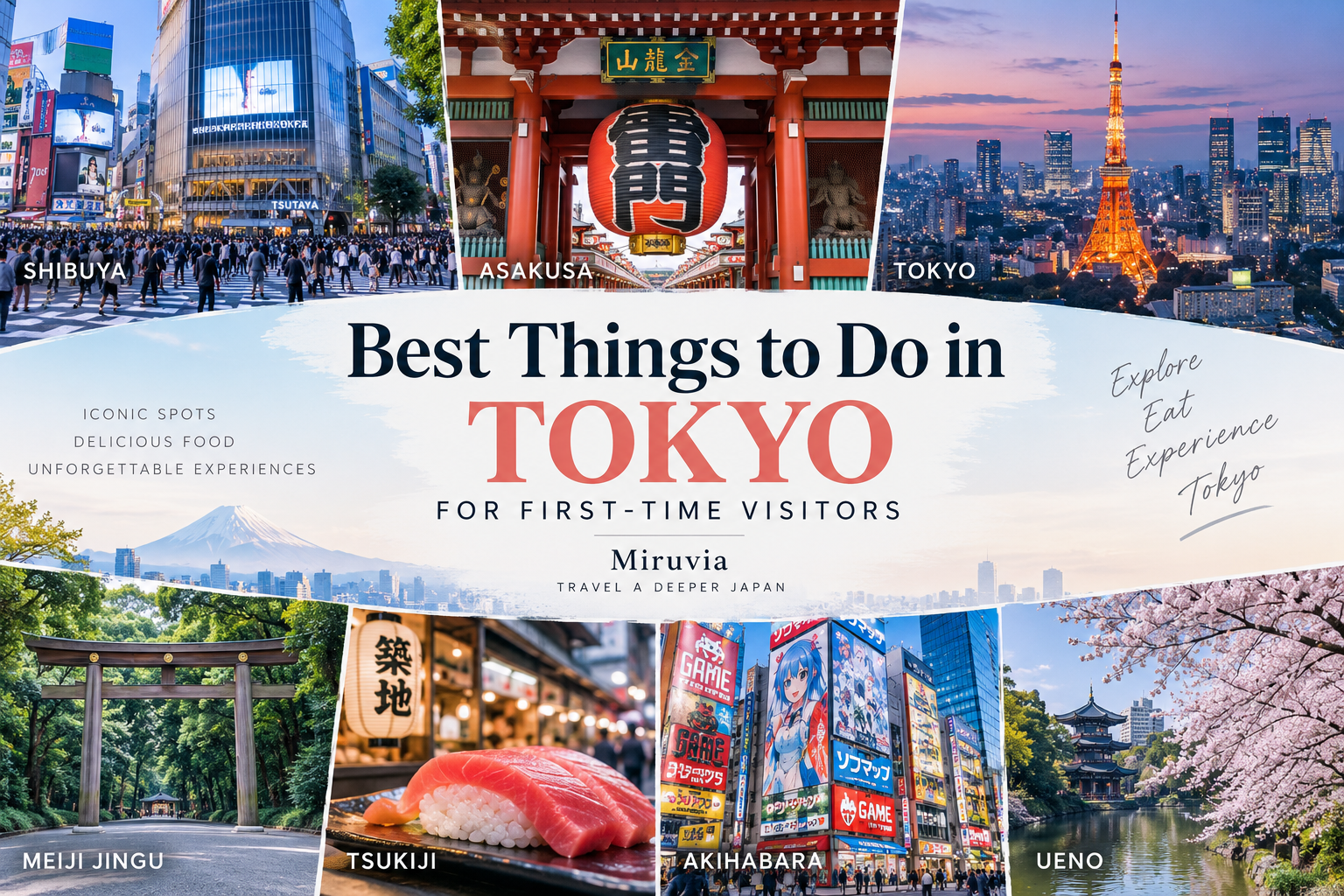
Tokyo is one of the most exciting cities in the world, but with so much to see and do, planning your first visit can feel overwhelming.
From the bright lights of Shibuya and Shinjuku to the historic streets of Asakusa, Tokyo offers an incredible mix of modern city life, traditional culture, food, shopping, and unforgettable views.
If this is your first trip, you do not need to see everything. The key is choosing a mix of experiences that show you different sides of the city.
In this guide, we have selected some of the best things to do in Tokyo for first-time visitors, along with practical tips to help you plan your sightseeing.
Planning your first trip? Start with our complete Tokyo Travel Guide for first-time visitors.
Best Things to Do in Tokyo at a Glance
Here are some of the experiences we recommend prioritizing on your first visit.
| Experience | Area | Best For |
|---|---|---|
| Cross Shibuya Crossing | Shibuya | Iconic Tokyo experience |
| Visit Senso-ji Temple | Asakusa | Traditional culture |
| Explore Shinjuku | Shinjuku | City atmosphere & nightlife |
| Visit Meiji Jingu | Harajuku | Shrines & nature |
| Explore Tsukiji Outer Market | Tsukiji | Japanese food |
| See Tokyo from above | Shibuya / Tokyo | City views |
| Walk around Harajuku | Harajuku | Fashion & pop culture |
| Explore Ueno Park | Ueno | Museums & culture |
| Experience Akihabara | Akihabara | Anime, manga & electronics |
| Enjoy Tokyo at night | Various areas | Night views & atmosphere |
You do not need to fit all of these into one day. For most first-time visitors, spreading them across several days makes the experience much more enjoyable.
1. Cross the Famous Shibuya Crossing
Shibuya Crossing is one of Tokyo’s most recognizable sights and an excellent place to begin exploring the modern side of the city.
When the traffic lights change, pedestrians move across the intersection from multiple directions at once, surrounded by giant screens, shops, restaurants, and the energy of central Tokyo.
Crossing the intersection itself only takes a few minutes, but the surrounding neighborhood is worth exploring as well.
You can visit Shibuya Center-gai, explore large shopping complexes, stop at cafés and restaurants, or simply walk through the streets and experience the atmosphere.
Best for
- First-time visitors
- Photography
- Shopping
- Modern Tokyo
- Evening sightseeing
Tip: Visit once during the day and again after sunset if your itinerary allows. Shibuya feels noticeably different when the surrounding signs and buildings light up.
2. Visit Senso-ji Temple in Asakusa
For a glimpse of traditional Tokyo, head to Asakusa and visit Senso-ji.
Approaching the temple through the famous Kaminarimon Gate is one of Tokyo’s classic sightseeing experiences.
From there, Nakamise Shopping Street leads toward the temple and is lined with shops selling souvenirs, snacks, and traditional Japanese items.
Once you reach the temple grounds, take some time to explore rather than immediately moving on to the next attraction.
The surrounding streets of Asakusa are also worth wandering through, especially if you want a slower and more traditional atmosphere than areas such as Shibuya or Shinjuku.
Best for
- Japanese culture
- Temples
- Traditional streets
- Souvenirs
- Photography
Tip: Arriving earlier in the morning can make it easier to enjoy the temple area before the busiest part of the day.
3. Experience the Energy of Shinjuku
Shinjuku shows another side of Tokyo.
Around Shinjuku Station, you will find skyscrapers, department stores, restaurants, entertainment districts, and some of the city’s busiest streets.
During the day, you can explore areas such as Shinjuku Gyoen National Garden or the skyscraper district on the western side of the station.
After sunset, the atmosphere changes dramatically.
Neon signs illuminate the streets around Kabukicho, while smaller restaurant and nightlife areas offer a more intimate side of the neighborhood.
Best for
- Nightlife
- Restaurants
- Photography
- Shopping
- Experiencing Tokyo after dark
Because Shinjuku Station is extremely large, check which station exit you need before arriving at your destination.
4. Visit Meiji Jingu and Explore Harajuku
Meiji Jingu provides a peaceful contrast to Tokyo’s busy streets.
The shrine is surrounded by a large forested area, and the walk toward the main shrine buildings can feel surprisingly calm considering its location in central Tokyo.
After visiting the shrine, you can walk toward Harajuku.
Takeshita Street is known for youth fashion, colorful shops, sweets, and pop culture, while nearby Omotesando offers a more sophisticated shopping environment.
Combining Meiji Jingu and Harajuku allows you to experience two very different sides of Tokyo within the same part of the city.
Best for
- Japanese culture
- Nature
- Fashion
- Pop culture
- Walking
Allow enough time to explore both areas rather than treating the shrine as a quick stop.
5. Eat Your Way Through Tsukiji Outer Market
Food is an essential part of visiting Tokyo, and Tsukiji Outer Market is an easy place for first-time visitors to explore Japanese cuisine.
Although the wholesale fish market moved to Toyosu, the outer market remains filled with restaurants, seafood shops, street-food stalls, and specialty stores.
Depending on what is available, you may encounter sushi, sashimi, grilled seafood, tamagoyaki, Japanese tea, and other local foods.
Rather than arriving with a single restaurant in mind, walking around and trying several smaller items can be part of the experience.
Best for
- Japanese food
- Seafood
- Morning sightseeing
- Casual eating
- Food photography
Tip: Visit earlier in the day. Many businesses in the area operate primarily during morning and daytime hours.
6. See Tokyo from Above
Tokyo’s scale is difficult to understand from street level.
Visiting an observation deck gives you a completely different perspective on the city and can be one of the most memorable experiences of your trip.
Several observation facilities are available across Tokyo, offering views of the skyline from different parts of the city.
Depending on the weather and location, you may even be able to see Mount Fuji in the distance.
Best for
- City views
- Photography
- Couples
- Sunset
- Night views
Sunset is especially popular because you can watch Tokyo transition from daylight into a sea of city lights.
If you want to visit a popular observation deck around sunset, consider reserving your preferred time in advance where reservations are available.
7. Walk Through Harajuku and Omotesando
Harajuku is one of Tokyo’s best-known centers of youth culture and fashion.
Takeshita Street provides the most energetic introduction, with small shops, colorful food, fashion stores, and crowds of visitors.
However, Harajuku is more than a single street.
Walk toward Cat Street and Omotesando and you will discover cafés, boutiques, architecture, and a noticeably different atmosphere.
Exploring the area on foot is the best way to appreciate these contrasts.
Best for
- Fashion
- Shopping
- Pop culture
- Cafés
- Street photography
Harajuku can easily be combined with nearby Shibuya and Meiji Jingu as part of the same sightseeing day.
8. Explore Ueno Park and Its Museums
Ueno is a good choice for travelers interested in museums, culture, parks, and a slightly more relaxed side of Tokyo.
Ueno Park contains several major cultural institutions, making it possible to spend several hours or even most of a day in the area.
The park is also particularly popular during cherry blossom season.
After exploring the park, walk toward Ameyoko, where busy shopping streets, casual restaurants, and market-style shops create a completely different atmosphere.
Best for
- Museums
- Art and culture
- Families
- Parks
- Cherry blossom season
If museums are a priority, check opening days and admission information before your visit.
9. Discover Akihabara
Anime, manga, games, electronics, and Japanese pop culture make Akihabara one of Tokyo’s most distinctive neighborhoods.
Large electronics stores stand alongside specialist shops selling figures, trading cards, manga, games, and collectibles.
Even if you are not a dedicated anime fan, walking through Akihabara can be an interesting way to experience an important part of contemporary Japanese culture.
The neighborhood becomes particularly atmospheric after dark when its colorful signs illuminate the main streets.
Best for
- Anime
- Manga
- Video games
- Electronics
- Japanese pop culture
Take time to explore smaller specialist stores as well as the large shops along the main streets.
10. Experience Tokyo at Night
Do not end your sightseeing as soon as the sun goes down.
Tokyo is one of those cities where nighttime is part of the experience.
Shinjuku and Shibuya become filled with illuminated signs and crowds, while areas such as Tokyo Station and Ginza offer a more polished evening atmosphere.
You do not necessarily need to visit bars or clubs to enjoy Tokyo at night.
Walking through the city, having dinner, visiting an observation deck, or simply seeing familiar neighborhoods illuminated after dark can be enough.
Best for
- Photography
- Couples
- Night views
- Restaurants
- City atmosphere
Try to experience at least one major Tokyo neighborhood both during the day and after dark.
How Many Days Do You Need in Tokyo?
For most first-time visitors, 3 to 5 days is a practical starting point.
Three days gives you enough time to see several of the major neighborhoods and attractions, although your schedule will be relatively busy.
Four or five days allows you to slow down, explore individual neighborhoods more thoroughly, and potentially include museums, shopping, or a day trip.
Instead of crossing the city repeatedly, group nearby attractions together.
If you have three days in the city, follow our Tokyo 3-day itinerary for a practical sightseeing route.
For example:
Shibuya + Harajuku + Meiji Jingu
Asakusa + Ueno + Akihabara
Shinjuku + evening sightseeing
This can significantly reduce unnecessary travel time.
Where Should You Stay in Tokyo?
Where you stay can have a major impact on how easy it is to explore Tokyo.
Shinjuku and Shibuya are convenient for travelers who want excellent transportation and plenty of entertainment nearby.
Asakusa provides a more traditional atmosphere, while Ginza and Tokyo Station are useful for travelers who value central locations and transportation convenience.
Ueno can also be a practical base, particularly for culture, transportation, and potentially better hotel value.
Compare our guide to the best areas to stay in Tokyo for first-time visitors before booking your accommodation.
Tips for Sightseeing in Tokyo
Tokyo is generally easy to explore once you understand the train and subway system, but distances can be larger than they appear on a map.
A few simple habits can make sightseeing easier:
- Group attractions by area.
- Wear comfortable walking shoes.
- Leave extra time for large train stations.
- Avoid packing too many neighborhoods into one day.
- Check opening hours before traveling to a specific attraction.
- Allow some unplanned time to explore.
Some of the most memorable moments in Tokyo come from discovering a small restaurant, quiet street, shop, or neighborhood that was not originally part of your itinerary.
Final Thoughts
Tokyo can feel overwhelming when you first start planning, but you do not need to experience everything in one trip.
For your first visit, focus on a combination of modern neighborhoods, traditional culture, Japanese food, city views, and time to simply explore.
Cross Shibuya Crossing, visit Senso-ji, experience Shinjuku after dark, walk through Meiji Jingu, try Japanese food, and see Tokyo from above.
These experiences will give you a strong introduction to the city while still leaving plenty to discover on your next visit.
The goal is not to check every attraction off a list.
Give yourself enough time to experience Tokyo rather than simply rushing through it.
