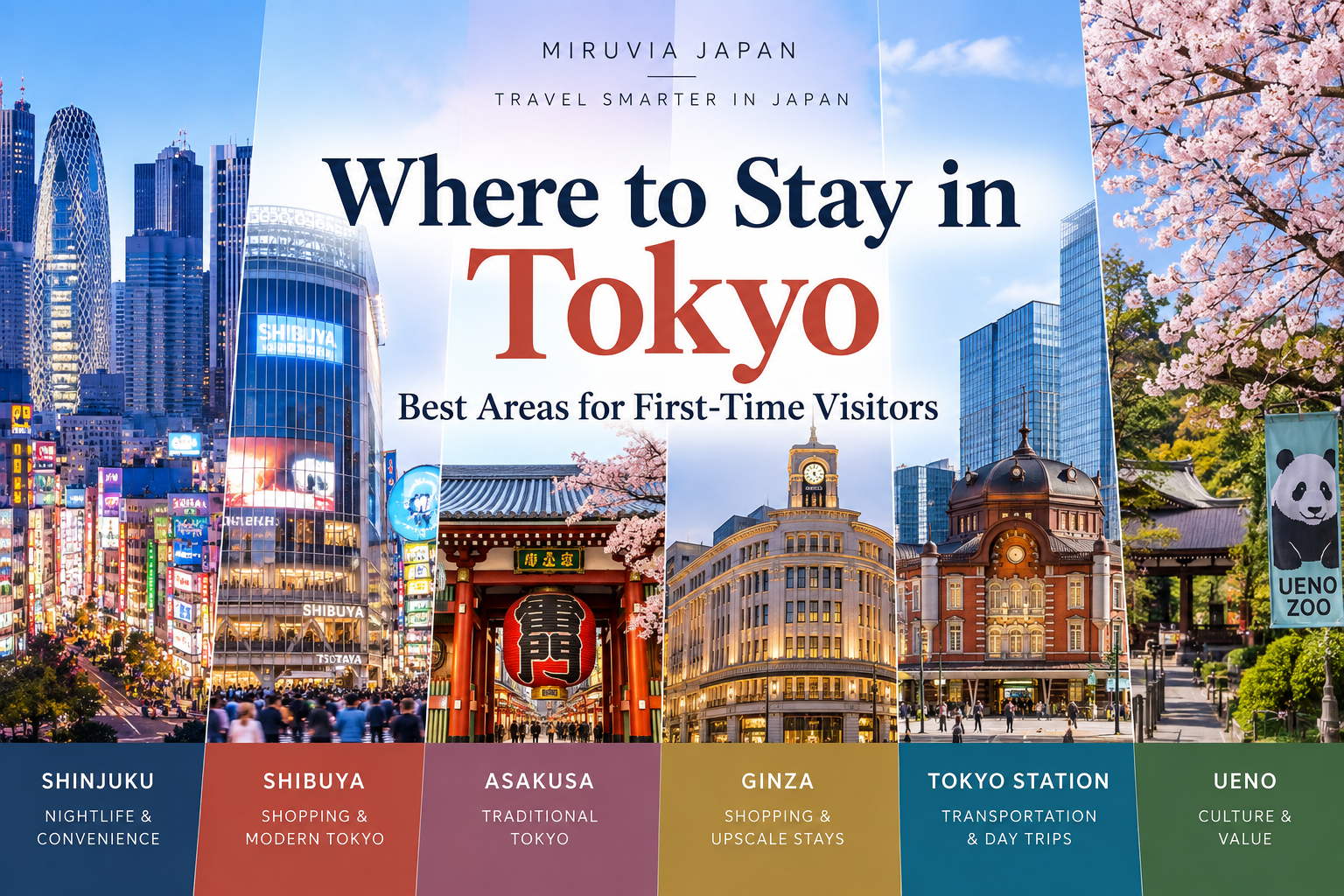
Choosing where to stay in Tokyo can be surprisingly difficult, especially if it’s your first visit. Tokyo is enormous, and each neighborhood offers a very different experience.
Shinjuku is convenient for sightseeing and nightlife, Shibuya puts you close to some of Tokyo’s most famous attractions, while Asakusa offers a more traditional atmosphere. Areas such as Ginza, Tokyo Station, and Ueno can also be excellent choices depending on your travel style and itinerary.
In this guide, we compare the best areas to stay in Tokyo for first-time visitors, including their atmosphere, transportation, nearby attractions, and who each area is best suited for.
By the end, you should have a much clearer idea of which Tokyo neighborhood is the right base for your trip.
Best Areas to Stay in Tokyo at a Glance
Tokyo has many great neighborhoods, but the best place to stay depends on what you want from your trip.
Here is a quick comparison of the best areas for first-time visitors.
| Area | Best For | Atmosphere | Transportation |
|---|---|---|---|
| Shinjuku | First-time visitors & nightlife | Energetic and convenient | Excellent |
| Shibuya | Shopping & modern Tokyo | Trendy and lively | Excellent |
| Asakusa | Traditional Tokyo | Historic and relaxed | Very good |
| Ginza | Shopping & upscale stays | Elegant and sophisticated | Excellent |
| Tokyo Station | Transportation & day trips | Central and convenient | Excellent |
| Ueno | Culture & value | Relaxed and local | Very good |
If you are visiting Tokyo for the first time and want maximum convenience, Shinjuku and Shibuya are excellent starting points. Travelers looking for a more traditional atmosphere may prefer Asakusa, while Ginza and Tokyo Station are particularly convenient for travelers who value comfort and easy transportation.
1. Shinjuku — Best for First-Time Visitors and Nightlife
Shinjuku is one of the most convenient places to stay in Tokyo, particularly for travelers visiting the city for the first time.
Shinjuku Station is one of Tokyo’s largest transportation hubs, providing easy access to many parts of the city. From here, you can reach popular areas such as Shibuya, Harajuku, Tokyo Station, and Ikebukuro without much difficulty.
The neighborhood also offers an enormous variety of restaurants, department stores, entertainment venues, and hotels.
At night, areas such as Kabukicho become especially lively, while nearby Shinjuku Gyoen National Garden provides a completely different, quieter side of the neighborhood during the day.
Shinjuku is best for:
- First-time visitors
- Travelers who want convenient transportation
- Nightlife and entertainment
- Travelers who want plenty of restaurants nearby
The main drawback is that Shinjuku Station can feel overwhelming at first because of its size and many exits. However, once you become familiar with the station, the area is an extremely practical base for exploring Tokyo.
Looking for accommodation? Read our guide to the best hotels in Shinjuku.
2. Shibuya — Best for Shopping and Modern Tokyo
Shibuya is one of the best places to experience the energetic, modern side of Tokyo.
The neighborhood is famous for Shibuya Crossing, but there is much more to explore. Shopping centers, restaurants, cafés, nightlife, and entertainment are concentrated within walking distance of the station.
Shibuya is also particularly convenient if you plan to visit Harajuku, Omotesando, or areas along the JR Yamanote Line.
For travelers who want to step outside their hotel and immediately feel the energy of Tokyo, Shibuya is difficult to beat.
Shibuya is best for:
- Shopping
- Younger travelers
- Couples and friends
- Nightlife
- Visitors who want a lively atmosphere
Because Shibuya remains busy late into the evening, travelers looking for a quiet neighborhood may prefer another area.
See our complete guide to the best hotels in Shibuya.
3. Asakusa — Best for Traditional Tokyo
Asakusa offers a very different experience from Shinjuku and Shibuya.
The neighborhood is centered around Senso-ji, one of Tokyo’s most famous temples, and retains a more traditional atmosphere than many of the city’s major commercial districts.
Walking through Nakamise Shopping Street, exploring the streets surrounding Senso-ji, and seeing Tokyo Skytree across the Sumida River make this area particularly memorable for first-time visitors.
Asakusa can also be a good choice for travelers who prefer a slightly calmer environment while still having convenient access to central Tokyo.
Asakusa is best for:
- Traditional Japanese atmosphere
- Temples and cultural attractions
- Families
- Travelers who prefer quieter evenings
- First-time visitors interested in historic Tokyo
The main trade-off is transportation. Asakusa is well connected by subway, but it is not served directly by the JR Yamanote Line.
For accommodation options, see our guide to the best hotels in Asakusa.
4. Ginza — Best for Shopping and an Upscale Stay
Ginza is one of Tokyo’s most sophisticated neighborhoods and an excellent choice for travelers who prioritize shopping, dining, and comfortable accommodation.
The streets are lined with department stores, international luxury brands, restaurants, cafés, and beautifully designed commercial buildings.
Ginza is also within easy reach of Tsukiji, Tokyo Station, and the Imperial Palace area, making it more practical for sightseeing than its luxury reputation might suggest.
Ginza is best for:
- Luxury travelers
- Shopping
- Couples
- Fine dining
- Travelers who prefer a polished and central neighborhood
Accommodation here can be more expensive than in areas such as Ueno or Asakusa, although there are also mid-range hotels available.
Explore our recommendations for the best hotels in Ginza.
5. Tokyo Station — Best for Transportation and Day Trips
Staying near Tokyo Station is particularly useful for travelers planning to explore destinations outside Tokyo.
The station is one of Japan’s most important transportation hubs and provides access to multiple JR lines as well as the Shinkansen.
This makes the area convenient for day trips or onward travel to destinations such as Kyoto, Osaka, or other regions of Japan.
You will also be close to Marunouchi, the Imperial Palace, Nihonbashi, and Ginza.
Tokyo Station is best for:
- Travelers using the Shinkansen
- Day trips from Tokyo
- Short stays
- Business travelers
- Visitors prioritizing transportation convenience
The area becomes quieter in the evening compared with Shinjuku or Shibuya, so it may not be ideal if nightlife is an important part of your trip.
See our guide to the best hotels near Tokyo Station.
6. Ueno — Best for Culture and Value
Ueno is an excellent option for travelers who want convenient transportation without staying in one of Tokyo’s busiest entertainment districts.
Ueno Park is home to museums, cultural attractions, and seasonal scenery, while nearby Ameyoko offers a completely different experience with its busy market streets, casual restaurants, and shops.
The area also provides useful rail connections, including convenient access toward Narita Airport.
Hotels around Ueno can sometimes provide better value than accommodation in areas such as Shibuya or Ginza, making it worth considering for travelers watching their budget.
Ueno is best for:
- Budget-conscious travelers
- Museums and culture
- Families
- Travelers using Narita Airport
- Visitors who prefer a more relaxed base
See our complete guide to the best hotels in Ueno.
Which Area of Tokyo Should You Choose?
There is no single neighborhood that works perfectly for every traveler.
For a first visit, choose based on what matters most to you:
- Choose Shinjuku if you want convenience, nightlife, and easy access around Tokyo.
- Choose Shibuya if you want shopping, entertainment, and modern Tokyo.
- Choose Asakusa if you want temples, traditional atmosphere, and quieter evenings.
- Choose Ginza if you prioritize shopping, dining, and an upscale environment.
- Choose Tokyo Station if transportation and day trips are your priority.
- Choose Ueno if you want culture, good transportation, and potentially better hotel value.
For many first-time visitors, transportation convenience should be one of the biggest factors when choosing accommodation. Tokyo is enormous, and staying near a well-connected station can significantly reduce the amount of time you spend traveling each day.
How Many Nights Should You Stay in Tokyo?
For a first trip, around 3 to 5 nights gives you enough time to experience several major parts of Tokyo without rushing through everything.
With three days, you can focus on essential areas such as Shibuya, Shinjuku, Asakusa, and central Tokyo.
With four or five days, you have more flexibility to explore neighborhoods at a slower pace or take a day trip outside the city.
If Tokyo is your arrival or departure point for a longer Japan itinerary, staying in different neighborhoods at the beginning and end of your trip can also give you two different perspectives on the city.
Tips for Choosing Your Hotel in Tokyo
Location often matters more than the hotel itself when staying in Tokyo.
Try to choose accommodation within a reasonable walking distance of a train or subway station. After a long day of sightseeing, even an additional 10 or 15 minutes of walking can make a noticeable difference.
Also consider which parts of Tokyo you expect to visit most frequently. A hotel that looks inexpensive may not be the best value if you spend significant time and money traveling across the city every day.
Finally, check the room size before booking. Tokyo hotel rooms can be smaller than many international travelers expect, particularly in budget and business hotels.
Final Thoughts
Choosing the right neighborhood can make your first trip to Tokyo considerably easier.
Shinjuku and Shibuya provide excellent transportation and plenty of entertainment, while Asakusa offers a more traditional experience. Ginza provides an upscale central location, Tokyo Station is ideal for transportation, and Ueno combines culture, convenience, and good value.
Rather than searching for one universally “best” neighborhood, choose the area that fits your itinerary, budget, and preferred travel style.
Once you have chosen your area, compare several hotels based on location, room size, transportation access, and price before making your reservation.
A well-located hotel will give you more time to enjoy Tokyo — and less time worrying about how to get around.
