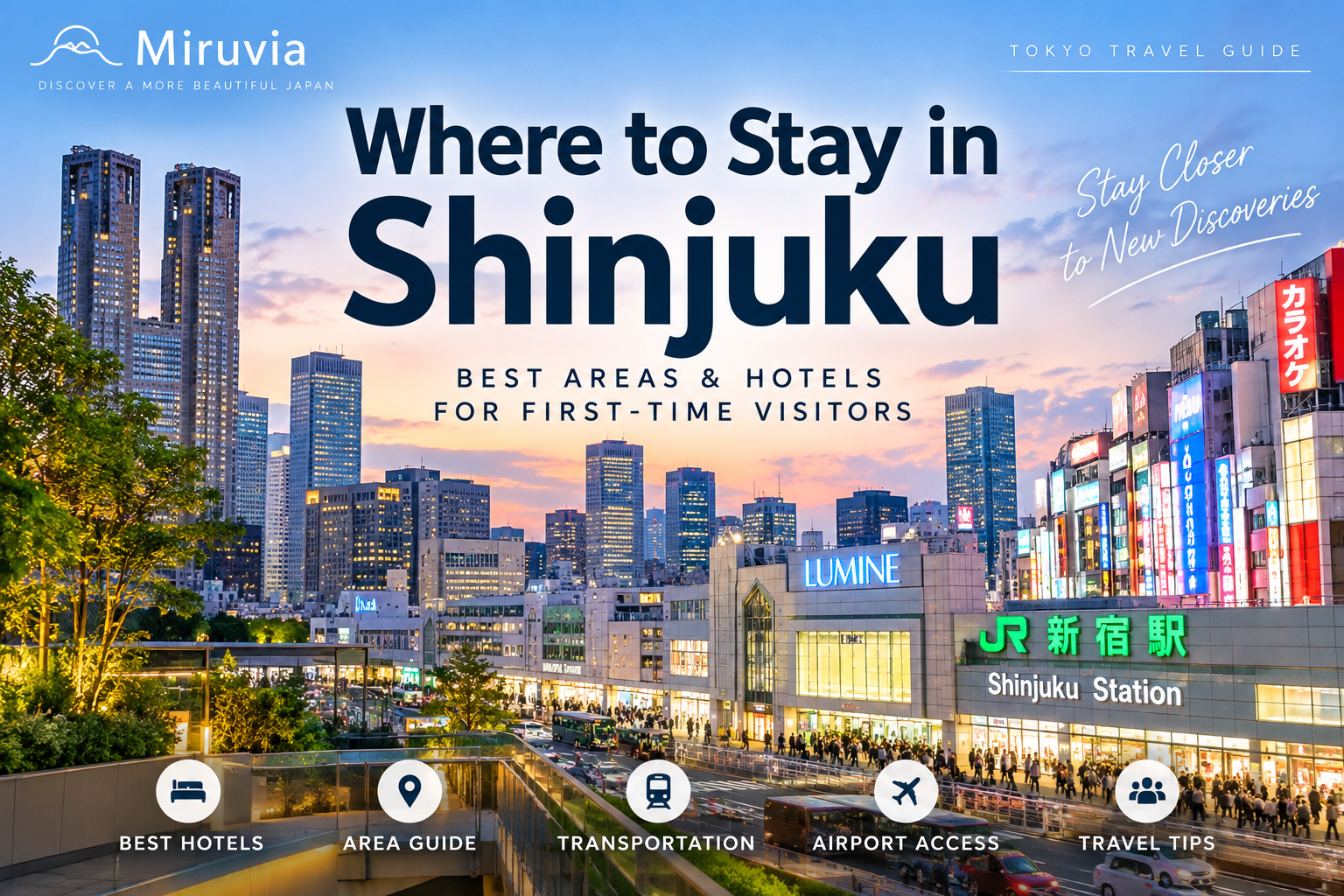
Shinjuku is one of the most convenient and exciting places to stay in Tokyo, especially for first-time visitors. With major train and subway lines, countless restaurants, shopping areas, and easy access to many of Tokyo’s top attractions, it can be an excellent base for exploring the city.
However, Shinjuku is a large and busy area, and choosing the right location can make a big difference to your stay. The atmosphere around West Shinjuku is very different from Kabukicho or the south side of Shinjuku Station, and hotel prices, nightlife, station access, and convenience can vary considerably.
This guide explains the best areas to stay in Shinjuku, what each area is like, and how to choose a hotel based on your budget and travel style. It also covers transportation, airport access, and practical booking tips to help you find the right place to stay for your first trip to Tokyo.
Is Shinjuku a Good Place to Stay in Tokyo?
Yes. Shinjuku is one of the best areas to stay in Tokyo for first-time visitors, particularly if convenience and transportation are priorities.
Shinjuku Station is one of Tokyo’s largest transportation hubs, providing easy access to popular areas such as Shibuya, Harajuku, Ikebukuro, and central Tokyo. It is also convenient for day trips to destinations outside the city, making Shinjuku a practical base for travelers planning a varied itinerary.
Another advantage is convenience. Restaurants, convenience stores, department stores, electronics shops, and entertainment options are available throughout the area, so it is easy to find food or essentials even after a long day of sightseeing.
The main drawback is that Shinjuku can feel overwhelming. The station is enormous, streets around the entertainment districts can be crowded, and the atmosphere changes considerably depending on which side of the station you choose.
For most first-time visitors, the key is not simply deciding to stay in Shinjuku, but choosing the part of Shinjuku that best matches their travel style.
Best Areas to Stay in Shinjuku
Shinjuku is not a single uniform neighborhood. Choosing the right side of the station can affect how quiet your hotel feels, how easy it is to reach transportation, and what kind of restaurants and nightlife you will find nearby.
Here are four areas that first-time visitors should consider.
West Shinjuku
West Shinjuku is a good choice for travelers who want a quieter and more relaxed base while staying close to Shinjuku Station. The area is known for its skyscrapers, office buildings, major hotels, and wide streets, creating a noticeably calmer atmosphere than the entertainment districts on the eastern side of the station.
It is particularly suitable for couples, families, and travelers who prefer returning to a quieter neighborhood after sightseeing. You will also find several higher-end hotels in this area.
The main consideration is distance. Some hotels in West Shinjuku can be a longer walk from the main JR station entrances, so check the exact location and nearest subway station before booking.
Best for: Couples, families, travelers who prefer a quieter atmosphere.
Shinjuku Station South Side
The south side of Shinjuku Station is one of the most convenient locations for first-time visitors. Staying close to the station makes it easier to use JR lines, subways, and other transportation without walking through the busiest entertainment streets.
The area also provides convenient access to shopping, restaurants, and the Shinjuku Expressway Bus Terminal. This can be particularly useful if your itinerary includes highway buses or day trips outside central Tokyo.
Hotels close to the station can be more expensive, but the convenience may be worth the extra cost for travelers with limited time in Tokyo.
Best for: First-time visitors, short stays, travelers prioritizing transportation.
East Shinjuku
East Shinjuku is ideal for travelers who want restaurants, shopping, and entertainment close to their hotel. The area around the eastern side of Shinjuku Station stays lively well into the evening, making it easy to enjoy dinner or explore after a day of sightseeing.
It is a good option for travelers who enjoy being in the middle of the action and want plenty of choices within walking distance.
However, streets can be crowded and noisier than West Shinjuku, so travelers looking for a peaceful stay should check hotel reviews and the exact location carefully.
Best for: Shopping, dining, nightlife, travelers who enjoy lively neighborhoods.
Kabukicho
Kabukicho is Shinjuku’s best-known nightlife and entertainment district. It offers a huge concentration of restaurants, bars, entertainment venues, and late-night activity, with accommodation ranging from budget options to large modern hotels.
Staying here can be convenient for travelers who want nightlife directly outside their hotel and do not mind a busy atmosphere.
However, Kabukicho is not the best choice for everyone. It can be noisy and crowded at night, and some streets contain adult-oriented businesses. Families and travelers who prefer a calmer environment may feel more comfortable elsewhere in Shinjuku.
Best for: Nightlife, entertainment, travelers who prefer an energetic atmosphere.
Best Hotels in Shinjuku for First-Time Visitors
Shinjuku has hundreds of accommodation options, but the best hotel for your trip depends on whether you prioritize station access, a quieter atmosphere, nightlife, or value.
For first-time visitors, these hotels are good starting points because they offer practical locations in different parts of Shinjuku. Hotel rates can change significantly depending on the season and booking date, so compare current prices before making a reservation.
JR Kyushu Hotel Blossom Shinjuku
JR九州ホテル ブラッサム新宿 is one of the most convenient choices for first-time visitors who want to stay close to major transportation. The hotel is approximately a three-minute walk from the South Exit of JR Shinjuku Station and is also close to the Shinjuku Expressway Bus Terminal.
Its location makes it particularly useful for travelers arriving with luggage or planning to use Shinjuku as a base for exploring Tokyo and taking day trips.
Best for: First-time visitors and travelers prioritizing station access.
Hotel Sunroute Plaza Shinjuku
ホテルサンルートプラザ新宿 is another practical option on the south side of Shinjuku Station. Its location provides convenient access to transportation while keeping travelers close to restaurants, shopping, and the main Shinjuku area.
This is a good option for travelers who value convenience but do not necessarily want to stay in the middle of Kabukicho.
Best for: Couples, first-time visitors, and travelers looking for a convenient central base.
Keio Plaza Hotel Tokyo
Keio Plaza Hotel Tokyo is located in West Shinjuku, around a five-minute walk from the West Exit of Shinjuku Station and about one minute from Tocho-mae Station. It also has direct airport limousine bus connections to Haneda and Narita airports.
The West Shinjuku location provides a calmer atmosphere than the nightlife districts east of the station, making it particularly attractive to travelers who want convenience without staying in the busiest part of Shinjuku.
Best for: Families, couples, and travelers looking for a more comfortable stay.
Hotel Gracery Shinjuku
ホテルグレイスリー新宿 is located in Kabukicho, approximately a five-minute walk from JR Shinjuku Station East Exit. It sits in the Shinjuku Toho Building in the heart of one of Tokyo’s busiest entertainment districts.
This location is especially convenient for travelers interested in nightlife, restaurants, and evening entertainment. However, the surrounding area stays busy late into the night, so travelers looking for a quiet neighborhood may prefer West or South Shinjuku.
Best for: Nightlife, dining, and travelers who want to stay in the center of the action.
Best Shinjuku Hotels by Budget
Hotel prices in Shinjuku vary widely depending on the location, room size, season, and how early you book. Instead of choosing a hotel based only on the nightly rate, consider the balance between price, station access, and comfort.
Budget
Budget-conscious travelers can find business hotels, compact hotels, and hostels throughout Shinjuku. Rooms are often small, but this can be a practical choice if you plan to spend most of your time sightseeing.
When comparing cheaper hotels, check the walking distance to the nearest station carefully. Saving a small amount may not be worthwhile if you have to carry luggage a long distance or make extra transfers every day.
Mid-Range
Mid-range hotels are often the best balance for first-time visitors. They typically offer private rooms, convenient locations, and more comfort without the prices of luxury hotels.
Staying near Shinjuku Station can be particularly valuable for a short Tokyo trip because it reduces travel time and makes returning to your hotel easier at the end of the day.
Higher-End
Higher-end hotels are concentrated especially around West Shinjuku and major station areas. They generally offer larger rooms, more facilities, and higher levels of service.
This category can be worth considering for couples, families, longer stays, or travelers who value comfort and a quieter environment after exploring Tokyo.
Where to Stay in Shinjuku for Different Travelers
First-Time Visitors
For most first-time visitors, the south side of Shinjuku Station is the easiest choice. Staying within a short walk of the station makes it simpler to use JR lines and subways while keeping restaurants, shopping, and other conveniences nearby.
If this is your first trip to Tokyo and you are unsure which part of Shinjuku to choose, prioritize station access over nightlife or a slightly cheaper room.
Recommended area: Shinjuku Station South Side
Couples
Couples may prefer West Shinjuku or the south side of the station. Both areas provide convenient transportation while generally feeling calmer than the busiest nightlife streets.
West Shinjuku is particularly suitable if you prefer larger hotels, a quieter evening atmosphere, and a more relaxed place to return to after sightseeing.
Recommended area: West Shinjuku or Shinjuku Station South Side
Families
West Shinjuku is generally the easiest choice for families. The area is less focused on nightlife and offers several larger hotels, while still providing good access to trains and subways.
Families should also check room size carefully when booking. Hotel rooms in Tokyo can be compact, so the cheapest option may not always be the most comfortable when traveling with children and luggage.
Recommended area: West Shinjuku
Solo Travelers
Solo travelers have the most flexibility. East Shinjuku is convenient for restaurants and entertainment, while the south side provides excellent transportation access.
Budget-conscious solo travelers can also consider compact business hotels or hostels, but checking the exact location and late-night surroundings before booking is recommended.
Recommended area: East Shinjuku or Shinjuku Station South Side
Nightlife
Travelers who want restaurants, bars, and entertainment within walking distance should consider East Shinjuku or Kabukicho. These areas remain active late into the evening and offer plenty to do after sightseeing.
Kabukicho is the liveliest option, but it can also be noisy and crowded. If you want nightlife without staying directly in the busiest streets, East Shinjuku may provide a better balance.
Recommended area: East Shinjuku or Kabukicho
Getting Around Tokyo from Shinjuku
One of the biggest advantages of staying in Shinjuku is its excellent transportation network. Shinjuku Station connects multiple JR lines, subway lines, and private railways, making it easy to reach many parts of Tokyo without complicated transfers.
The JR Yamanote Line is particularly useful for first-time visitors, providing direct access to major areas such as Shibuya, Harajuku, Ikebukuro, Ueno, and Tokyo Station. Other rail and subway lines make it convenient to reach destinations throughout the city and beyond.
However, Shinjuku Station is enormous and can be confusing on your first few visits. Check which exit is closest to your hotel before arriving, and allow extra time when changing between different railway operators.
For a complete explanation of trains, subways, IC cards, and practical transportation tips, see our Tokyo Transportation Guide.
Getting to Shinjuku from Haneda and Narita Airports
Shinjuku is well connected to both of Tokyo’s major airports, but the best transportation option depends on your arrival airport, luggage, budget, and hotel location.
From Haneda Airport
Haneda Airport is closer to central Tokyo, so reaching Shinjuku is relatively straightforward. Common options include trains and airport limousine buses.
Train travel usually requires a transfer before reaching Shinjuku, while an airport limousine bus can be more convenient if it stops at or near your hotel. Travelers carrying large luggage may prefer the option that minimizes transfers rather than simply choosing the fastest route.
Before traveling, check the latest timetable and the most convenient route for your accommodation.
From Narita Airport
Narita Airport is farther from central Tokyo, so the journey to Shinjuku takes longer. One of the most convenient rail options is the Narita Express, which provides direct service between Narita Airport and Shinjuku on selected services.
Airport limousine buses are another useful option, particularly when they serve your hotel or a nearby stop. They can reduce the need to navigate large stations with luggage.
Travel times and schedules can vary, so check current information before departure.
Things to Check Before Booking a Hotel in Shinjuku
A hotel that looks convenient on a map may feel very different once you arrive. Before booking accommodation in Shinjuku, check these practical details carefully.
Distance from the Station
Do not look only at whether a hotel is described as being “near Shinjuku Station.” The station and surrounding area are enormous, and a hotel can technically be near Shinjuku while still requiring a significant walk.
Check the actual walking time from the hotel to the entrance you are most likely to use.
Nearest Station Exit
Knowing the nearest station exit can make arriving with luggage much easier. Shinjuku Station has many exits, and emerging from the wrong side can add unnecessary walking and confusion.
Save your hotel’s nearest exit before arriving in Tokyo.
Room Size
Hotel rooms in Tokyo are often smaller than international visitors expect. Check the room size in square meters, bed configuration, and available luggage space rather than relying only on room photos.
This is particularly important for couples, families, or travelers carrying large suitcases.
Noise and Nightlife
Hotels around East Shinjuku and Kabukicho may be surrounded by restaurants, bars, and late-night activity. This can be an advantage if nightlife is part of your trip, but less appealing if you prefer quiet evenings.
Check recent guest reviews for comments about street noise and the immediate surroundings.
Airport Access
If you are arriving with heavy luggage, check whether an airport limousine bus stops at your hotel or nearby. A slightly more expensive hotel with convenient airport access can sometimes make arrival and departure considerably easier.
Check-In and Luggage Storage
Check the hotel’s check-in time and luggage storage policy, especially if your flight arrives early or departs late. Being able to leave your luggage before check-in or after check-out can make your travel days much easier.
Frequently Asked Questions About Staying in Shinjuku
Is Shinjuku a good place to stay for first-time visitors?
Yes. Shinjuku is one of the most convenient areas for first-time visitors because of its extensive transportation network, restaurants, shopping, and accommodation options. The main challenge is choosing the right part of Shinjuku for your travel style.
Which part of Shinjuku is best to stay in?
For most first-time visitors, the south side of Shinjuku Station offers an excellent balance of transportation and convenience. West Shinjuku is better for travelers who prefer a quieter atmosphere, while East Shinjuku and Kabukicho are better suited to nightlife and entertainment.
Is Shinjuku safe for tourists?
Shinjuku is generally easy for tourists to explore, including in the evening. However, Kabukicho is a major nightlife district, so visitors should use normal precautions and avoid following street touts or entering businesses when prices and services are unclear.
Is it better to stay in Shinjuku or Shibuya?
Both are convenient bases. Shinjuku has a larger transportation network and a wider variety of accommodation, while Shibuya may appeal more to travelers interested in fashion, shopping, and a youthful atmosphere. The better choice depends on your itinerary and travel style.
How many nights should I stay in Shinjuku?
You do not need to divide your Tokyo trip between multiple hotels just to explore different neighborhoods. Shinjuku can work well as a base for your entire Tokyo stay, whether you are visiting for three days or a week.
Should I stay near Shinjuku Station?
For a first trip, staying within comfortable walking distance of Shinjuku Station can save considerable time. However, check the exact station exit and walking route because the station area is much larger than it may appear on a map.
Final Thoughts
Shinjuku is one of the most practical places to stay in Tokyo, but choosing the right part of the neighborhood is more important than simply choosing Shinjuku itself.
For most first-time visitors, the south side of Shinjuku Station offers the easiest balance of transportation and convenience. West Shinjuku is a strong choice for a quieter stay, while East Shinjuku and Kabukicho are better suited to travelers who want restaurants, nightlife, and entertainment close by.
Before booking, compare the exact location, station access, room size, and surrounding atmosphere rather than choosing a hotel based only on price.
If you are still comparing different parts of the city, see our Tokyo Accommodation Guide for a broader overview of where to stay in Tokyo.
